Shamanic Retreats vs. Ayahuasca Retreats: What’s the Difference?
Affiliate Disclosure
We partner with retreat centers and booking platforms. When you book through our links, we may earn a commission at no extra cost to you. This supports our work and allows us to keep providing honest, in-depth reviews. Read our editorial policy
Table Of Content
- Affiliate Disclosure
- Introduction
- The Core Difference: Quick Overview
- What Are Shamanic Retreats?
- What Are Ayahuasca Retreats?
- Side-by-Side Comparison: Shamanic vs Ayahuasca Retreats
- Who Should Choose Shamanic Retreats (Non-Medicine)?
- Who Should Choose Ayahuasca Retreats?)
- Contraindications: Who Should NOT Do Ayahuasca
- The Preparation Difference
- Cost Comparison
- Can You Do Both? Combining Approaches
- How to Choose: Decision Framework
- FAQ: Shamanic vs Ayahuasca Retreats
- Final Thoughts
Introduction
You’re drawn to deep healing work. You’ve heard about shamanic retreats. You’ve heard about ayahuasca. But what’s the actual difference? And which one is right for you?
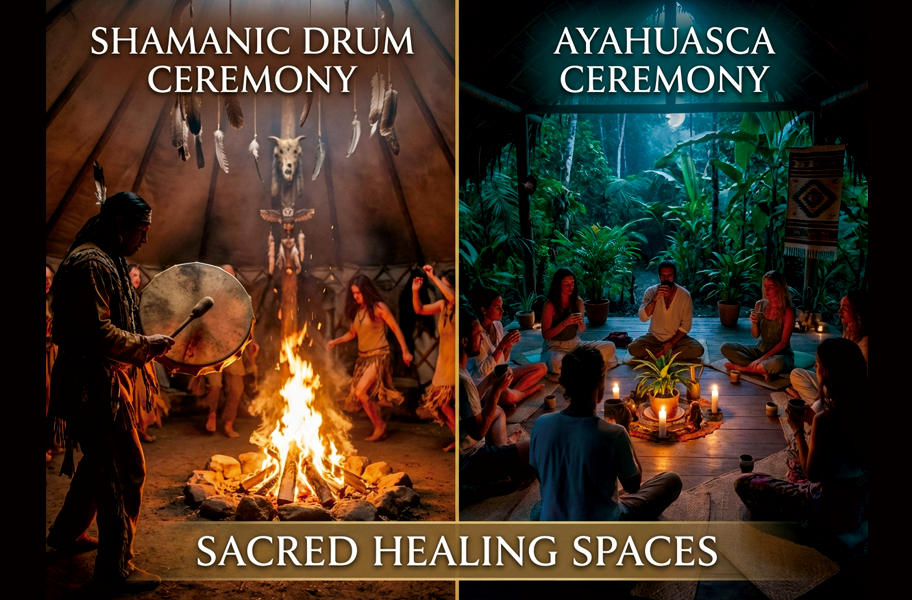
If you’re comparing shamanic vs ayahuasca retreats, you’re not alone. These terms often get confused, used interchangeably, or lumped together—when they’re actually quite different experiences with different requirements, risks, and rewards.
Here’s the short version: Ayahuasca retreats are a type of shamanic retreat, but not all shamanic retreats involve ayahuasca. It’s like the difference between “fruit” and “apples”—all apples are fruit, but not all fruit is apples.
This guide breaks down everything you need to know about shamanic vs ayahuasca retreats. We’ll compare the experiences, intensity levels, preparation requirements, safety considerations, and who each type serves best. By the end, you’ll have clarity on which path calls to you.
Let’s untangle the confusion.
The Core Difference: Quick Overview
Before diving deep into shamanic vs ayahuasca retreats, here’s the essential distinction:
| Aspect | Shamanic Retreats (General) | Ayahuasca Retreats |
|---|---|---|
| Definition | Retreats using any shamanic practices | Retreats specifically centered on ayahuasca ceremonies |
| Plant medicine | Usually none; sometimes mild (cacao, rapé) | Yes—ayahuasca is the central practice |
| Altered states | Achieved through drumming, breathwork, ceremony | Achieved through psychoactive plant medicine |
| Intensity | Low to moderate (usually) | High to very high |
| Duration of effects | Hours (during ceremony) | 4-8 hours per ceremony |
| Legal status | Legal everywhere | Illegal in most countries |
| Physical effects | Minimal | Significant (purging common) |
| Preparation required | Moderate | Extensive (diet, medications, screening) |
| Who can attend | Most people | Restricted (medical/psychiatric contraindications) |
The key insight: Shamanic retreats offer a broad category of indigenous healing practices. Ayahuasca retreats are a specific, intensive subset that uses a powerful psychoactive brew.
What Are Shamanic Retreats?
Understanding the broader category helps clarify shamanic vs ayahuasca retreats.
Shamanic Retreats Defined
Shamanic retreats draw on humanity’s oldest healing traditions—practices that exist across virtually every indigenous culture worldwide. They use ceremony, altered states, and connection with spirit to facilitate healing and transformation.
Core elements of shamanic retreats:
- Ceremony and ritual as containers for healing
- Altered states of consciousness (achieved various ways)
- Connection with spirits, guides, ancestors, or nature
- Energy work and extraction of negative energies
- Soul retrieval and power animal work
- Community and witnessed healing
Types of Shamanic Retreats (Non-Ayahuasca)
| Type | Primary Practice | Altered State Method | Intensity |
|---|---|---|---|
| Drum Journey | Rhythmic drumming to journey to spirit realms | Sound-induced trance | Low-Moderate |
| Sweat Lodge | Ceremonial sauna for purification and vision | Heat and prayer | Moderate-High |
| Vision Quest | Solo time in nature for guidance | Fasting, isolation, nature | Moderate-High |
| Fire Ceremony | Sacred fire for release and transformation | Ritual, focus, prayer | Low-Moderate |
| Soul Retrieval | Shaman journeys to retrieve lost soul parts | Practitioner journeys for you | Low (for recipient) |
| Shamanic Breathwork | Conscious breathing for altered states | Hyperventilation-induced | High |
| Nature-Based | Deep connection with land and elements | Presence, ceremony, attunement | Low-Moderate |
What Happens at Non-Medicine Shamanic Retreats
Typical experience:
- Opening circle and intention setting
- Teaching about shamanic worldview
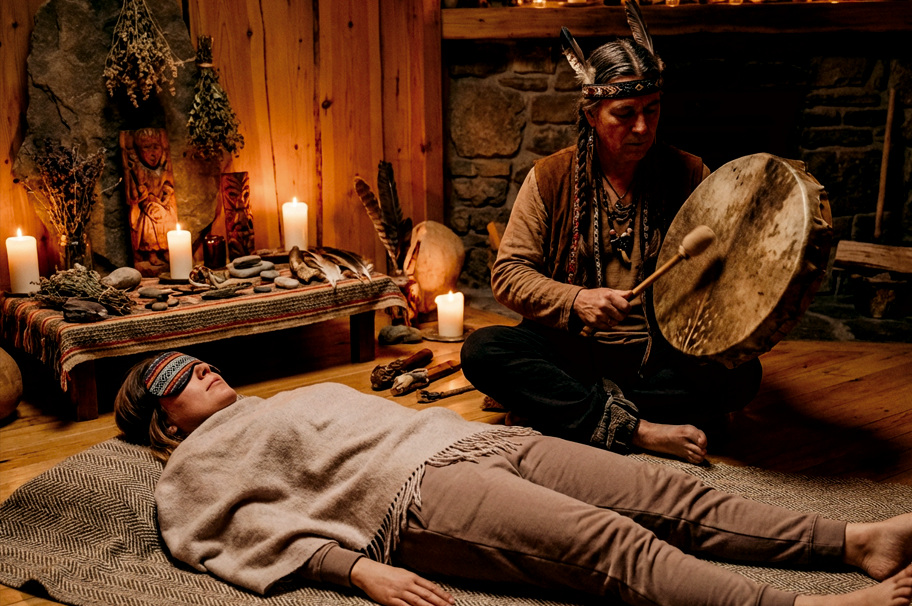
- Guided drum journeys (you lie down, drum plays, you journey inward)
- Ceremonies (fire, water, earth, air)
- Healing sessions (extraction, soul retrieval)
- Sharing circles
- Integration practices
- Closing ceremony
What you might experience:
- Vivid inner imagery and journeys
- Meeting power animals or guides
- Emotional release
- Insights and messages
- Deep relaxation and peace
- Sense of connection to something greater
- Subtle but meaningful shifts
What Are Ayahuasca Retreats?
Now let’s examine the other side of shamanic vs ayahuasca retreats.
Ayahuasca Defined
Ayahuasca is a psychoactive brew originating from the Amazon basin, traditionally used by indigenous peoples for healing, divination, and spiritual connection. The name means “vine of the soul” or “vine of the dead” in Quechua.
The brew contains:
- Banisteriopsis caapi (the ayahuasca vine) — contains MAO inhibitors
- Psychotria viridis (chacruna) or similar — contains DMT
The combination creates a powerful, visionary experience lasting 4-8 hours.
Ayahuasca Retreats Defined
Ayahuasca retreats are immersive programs centered on ceremonial ayahuasca use, typically including:
- Multiple ceremonies (usually 3-7 over a week or more)
- Traditional or trained facilitators (curanderos, shamans)
- Strict dietary preparation (dieta)
- Integration support
- Often held in South America or legal/decriminalized locations
What Happens at Ayahuasca Retreats
Typical structure:
| Phase | What Happens |
|---|---|
| Arrival (Day 1) | Welcome, orientation, beginning dieta, settling in |
| Preparation days | Light diet, intention setting, teachings, gentle practices |
| Ceremony nights | Evening ceremonies (typically 4-8 hours each) |
| Integration days | Rest, journaling, sharing, processing between ceremonies |
| Closing | Final integration, teachings for returning home, departure |
During ceremony:
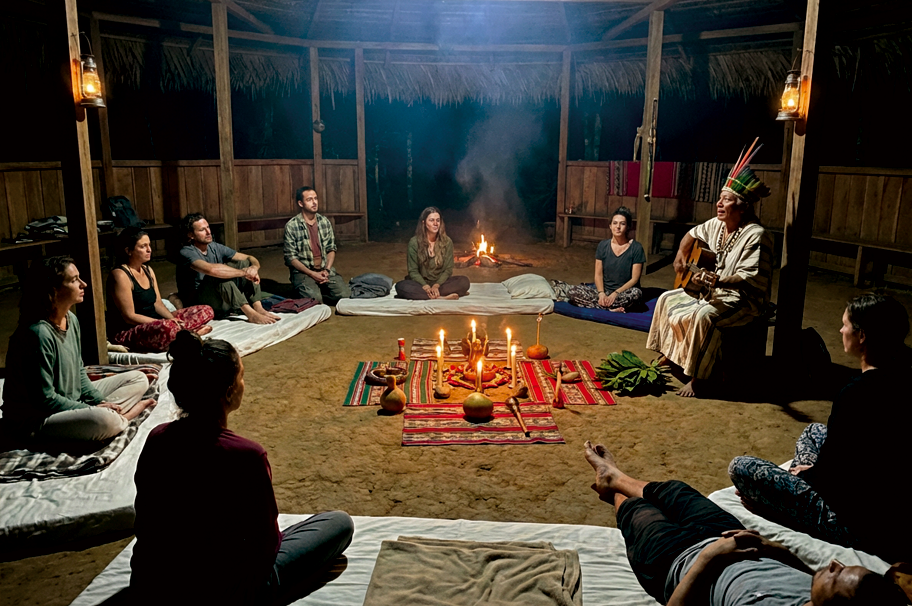
- Gather in ceremonial space (maloca) at night
- Opening prayers and protection
- Drink ayahuasca when called
- Lie or sit in darkness
- Shaman sings icaros (medicine songs)
- Experience unfolds over 4-8 hours
- Purging (vomiting, diarrhea) is common
- Ceremony closes with prayers
What You Might Experience with Ayahuasca
Common experiences:
| Category | Experiences |
|---|---|
| Visual | Geometric patterns, visions, entities, past memories, symbolic imagery |
| Physical | Nausea, purging, temperature changes, energy moving through body |
| Emotional | Intense emotions surfacing and releasing, grief, joy, fear, love |
| Cognitive | Insights, life review, understanding patterns, receiving teachings |
| Spiritual | Encounters with spirits/entities, sense of divine presence, ego dissolution |
| Challenging | Facing fears, difficult visions, feeling overwhelmed, dark content |
According to Johns Hopkins research, psychedelic experiences (including ayahuasca) can produce lasting positive changes in mental health when used in supported settings.
Side-by-Side Comparison: Shamanic vs Ayahuasca Retreats
Let’s directly compare shamanic vs ayahuasca retreats across key dimensions.
Experience Comparison
| Aspect | Shamanic (Non-Medicine) | Ayahuasca |
|---|---|---|
| How altered states are achieved | Drumming, breathwork, ceremony, fasting | Ingesting psychoactive plant medicine |
| Intensity of experience | Gentle to moderate | Intense to overwhelming |
| Control during experience | More control; can stop anytime | Less control; must ride it out |
| Duration of altered state | 20-60 minutes per journey | 4-8 hours per ceremony |
| Physical effects | Minimal | Significant (purging, physical sensations) |
| Visual experiences | Subtle to moderate imagery | Often vivid, complex visions |
| Emotional intensity | Moderate | Can be extreme |
| Predictability | More predictable | Highly unpredictable |
Practical Comparison
| Aspect | Shamanic (Non-Medicine) | Ayahuasca |
|---|---|---|
| Legal status | Legal everywhere | Illegal most places; legal in Peru, Brazil, some others |
| Where offered | Worldwide | Primarily South America; some Europe, Costa Rica |
| Typical duration | Weekend to 1 week | 1-2 weeks recommended |
| Cost range | $300-$2,000 | $1,500-$5,000+ |
| Preparation required | Moderate (intention, openness) | Extensive (2+ week dieta, medication changes) |
| Medical screening | Basic | Thorough (contraindications are serious) |
| Who can attend | Most adults | Restricted (many contraindications) |
| Travel required | Often local options available | Usually international travel |
Safety Comparison
| Aspect | Shamanic (Non-Medicine) | Ayahuasca |
|---|---|---|
| Physical risk | Very low | Moderate (interactions, heart strain, purging) |
| Psychological risk | Low | Moderate-high (can surface difficult material) |
| Contraindications | Few | Many (medications, heart conditions, psychiatric) |
| Facilitator requirements | Training helpful but less critical | Experienced facilitator essential |
| Emergency potential | Rare | Possible (medical and psychological) |
| Integration needs | Moderate | High (experiences can be destabilizing) |
Outcome Comparison
| Aspect | Shamanic (Non-Medicine) | Ayahuasca |
|---|---|---|
| Depth of experience | Meaningful but often subtle | Often profound and life-changing |
| Speed of transformation | Gradual, cumulative | Can be rapid and dramatic |
| Lasting change | Builds over time with practice | Can create lasting shifts from single retreat |
| Skills learned | Can practice independently after | Requires ceremony context |
| Integration challenge | Manageable | Can be significant |
Who Should Choose Shamanic Retreats (Non-Medicine)?
When comparing shamanic vs ayahuasca retreats, consider if shamanic retreats fit you better.
Shamanic Retreats Are Ideal For:
Beginners to inner work:
- You’re new to healing retreats
- You want to test the waters before deeper work
- You’re curious but cautious
Those with restrictions:
- You take medications that contraindicate ayahuasca (SSRIs, MAOIs, etc.)
- You have heart conditions or other health concerns
- You have psychiatric conditions (bipolar, schizophrenia history)
- You’re pregnant or nursing
Practical considerations:
- You can’t travel internationally
- You have limited time (weekend retreat possible)
- You have a smaller budget
- Legal concerns matter to you
Personal preferences:
- You want more control over your experience
- Intense altered states feel too scary
- You prefer gradual transformation
- You want skills you can practice at home
Specific goals:
- Building relationship with guides/power animals
- Learning shamanic practices for ongoing use
- Gentle healing without overwhelming intensity
- Connecting with nature and earth-based spirituality
What Shamanic Retreats Offer That Ayahuasca Doesn’t
- Accessibility — Available to almost everyone, everywhere
- Repeatability — Learn practices you can do at home
- Gentleness — Transformation without overwhelm
- Control — You can stop or slow down anytime
- Safety — Minimal physical or psychological risk
- Legality — No legal concerns anywhere
- Flexibility — Weekend to week-long options
Who Should Choose Ayahuasca Retreats?)
On the other side of shamanic vs ayahuasca retreats, consider if ayahuasca calls you.
Ayahuasca Retreats Are Ideal For:
Those ready for intensity:
- You’ve done personal growth work before
- You’re prepared for a challenging experience
- You’re not afraid of facing difficult material
- You have emotional stability and support
Specific healing needs:
- Deep-rooted trauma that hasn’t shifted with other approaches
- Addiction patterns
- Depression or anxiety (treatment-resistant)
- Existential crisis or spiritual emergency
- Feeling fundamentally stuck despite other efforts
Spiritual seekers:
- Strong call to plant medicine specifically
- Drawn to Amazonian traditions
- Seeking direct spiritual experience
- Ready for ego dissolution and expanded consciousness
Those who can meet requirements:
- No contraindicated medications (or can safely stop them)
- No serious heart conditions
- No history of psychosis or schizophrenia
- Can commit to dietary preparation
- Can travel to legal locations
- Have time for proper integration afterward
What Ayahuasca Offers That Other Shamanic Work Doesn’t
- Intensity — Profound experiences in concentrated time
- Depth — Access to material that may not surface otherwise
- Speed — Transformation that might take years in therapy
- Visions — Direct visual and spiritual experiences
- Purging — Physical release of stored toxins and energy
- Plant intelligence — Relationship with the medicine itself
- Tradition — Connection to ancient Amazonian lineage
Contraindications: Who Should NOT Do Ayahuasca
Critical safety information when considering shamanic vs ayahuasca retreats.
Medical Contraindications
| Condition/Medication | Risk Level | Why |
|---|---|---|
| SSRIs (antidepressants) | DANGEROUS | Serotonin syndrome risk—potentially fatal |
| MAOIs | DANGEROUS | Dangerous interaction with ayahuasca MAOIs |
| Heart conditions | HIGH RISK | Ayahuasca increases heart rate and blood pressure |
| High blood pressure (uncontrolled) | HIGH RISK | Cardiovascular strain |
| Lithium | DANGEROUS | Seizure risk |
| Tramadol | DANGEROUS | Seizure and serotonin syndrome risk |
| Stimulants (ADHD meds) | HIGH RISK | Cardiovascular strain |
| St. John’s Wort | MODERATE RISK | Serotonin interaction |
| Certain antibiotics | VARIES | Some interact with MAOIs |
If you take any psychiatric medication, consult with both your prescriber AND the retreat center before considering ayahuasca.
Psychiatric Contraindications
| Condition | Risk |
|---|---|
| Schizophrenia | Can trigger psychotic episodes |
| Bipolar disorder | Can trigger manic episodes |
| History of psychosis | Risk of recurrence |
| Severe PTSD (unstabilized) | Risk of destabilization |
| Active suicidality | Not appropriate for crisis states |
| Severe dissociative disorders | Risk of fragmentation |
Other Contraindications
- Pregnancy or nursing
- Recent surgery
- Severe liver or kidney disease
- Epilepsy (uncontrolled)
- Certain eye conditions (glaucoma)
Non-medicine shamanic retreats have far fewer contraindications—making them accessible to people who cannot safely work with ayahuasca.
The Preparation Difference
Preparation requirements differ significantly in shamanic vs ayahuasca retreats.
Shamanic Retreat Preparation (Non-Medicine)
1-2 weeks before:
- Set clear intention
- Begin journaling
- Reduce alcohol and substances
- Spend time in nature
- Start turning inward
What to bring:
- Comfortable clothing
- Journal
- Meaningful objects (optional)
- Open mind and heart
Dietary requirements: Usually none or minimal
Ayahuasca Retreat Preparation
2-4 weeks before:
| Avoid | Why |
|---|---|
| Alcohol | Stresses liver, interferes with medicine |
| Recreational drugs | Interactions, unclear energy |
| SSRIs and certain medications | Dangerous interactions (taper with doctor) |
| Fermented foods | MAO interactions |
| Aged cheeses | MAO interactions |
| Processed foods | Cleaner vessel for medicine |
| Pork and red meat | Traditional restriction |
| Sexual activity | Conserves energy |
| Excessive media | Mental clarity |
1 week before (strict dieta):
- Very simple foods (rice, vegetables, chicken/fish, fruits)
- No salt, sugar, spices, oil (in traditional dietas)
- No caffeine
- Increased water intake
- Solitude and reflection
This preparation is not optional. Ignoring the dieta can result in dangerous interactions, reduced effectiveness, or more difficult experiences.
Cost Comparison
Budget considerations for shamanic vs ayahuasca retreats.
Shamanic Retreats (Non-Medicine)
| Type | Duration | Typical Cost |
|---|---|---|
| Weekend drum journey workshop | 2 days | $200-$500 |
| Week-long shamanic retreat | 5-7 days | $1,000-$2,500 |
| Sweat lodge ceremony | 1 day | $50-$200 |
| Vision quest (guided) | 4-7 days | $800-$2,000 |
| Shamanic healing intensive | 3-5 days | $600-$1,500 |
Additional costs:
- Travel (often domestic)
- Minimal preparation costs
Ayahuasca Retreats
| Location | Duration | Typical Cost |
|---|---|---|
| Peru (budget) | 7-10 days | $1,500-$2,500 |
| Peru (mid-range) | 7-14 days | $2,500-$4,000 |
| Peru (luxury) | 7-14 days | $4,000-$8,000 |
| Costa Rica | 7-10 days | $3,000-$6,000 |
| Europe (legal retreats) | 5-7 days | $2,000-$5,000 |
Additional costs:
- International flights ($500-$1,500)
- Travel insurance
- Preparation costs (special foods, supplements)
- Time off work (longer duration)
- Integration support afterward
Total ayahuasca retreat investment: Often $3,000-$7,000+ all-in
Can You Do Both? Combining Approaches
Many people exploring shamanic vs ayahuasca retreats eventually experience both.
A Recommended Progression
| Stage | Experience | Purpose |
|---|---|---|
| First | Non-medicine shamanic retreat | Learn basics, test your response to altered states |
| Second | Deeper shamanic work or breathwork | Build capacity, go deeper without medicine |
| Third | Ayahuasca (if called and appropriate) | Profound transformation with plant medicine |
| Ongoing | Regular shamanic practice + occasional ceremony | Maintain connection, continue growth |
Why Start with Non-Medicine Shamanic Work
- Tests your response — How do you handle altered states?
- Builds skills — Grounding, journeying, working with energy
- Creates foundation — Relationship with guides and practices
- Reveals readiness — Are you truly called to deeper work?
- No risk — If it’s not for you, no harm done
When to Consider Ayahuasca After Shamanic Work
- You’ve done non-medicine shamanic work and feel called to go deeper
- You’ve addressed basic stability and have support systems
- You’ve researched thoroughly and feel prepared
- You have no contraindications
- The call persists over time (not just curiosity)
- You can commit to proper preparation and integration
How to Choose: Decision Framework
Use this framework to decide between shamanic vs ayahuasca retreats.
Step 1: Check Contraindications
Ask yourself:
- Do I take any psychiatric medications?
- Do I have heart conditions or high blood pressure?
- Do I have a history of psychosis, schizophrenia, or bipolar disorder?
- Am I pregnant or nursing?
If YES to any: Start with non-medicine shamanic work (or consult medical professionals carefully before considering ayahuasca).
Step 2: Assess Your Experience Level
| Your Experience | Recommendation |
|---|---|
| New to inner work | Start with shamanic (non-medicine) |
| Some therapy/personal growth | Either could work; consider your goals |
| Experienced with altered states | Either; follow your calling |
| Previous shamanic/psychedelic experience | Follow your intuition |
Step 3: Consider Your Goals
| If You Want… | Consider… |
|---|---|
| Gentle introduction to shamanic worldview | Shamanic (non-medicine) |
| Skills you can practice at home | Shamanic (non-medicine) |
| Profound, potentially life-changing experience | Ayahuasca |
| Healing deep trauma | Either (ayahuasca often more powerful) |
| Spiritual awakening | Either (ayahuasca often more direct) |
| Accessible, legal, local options | Shamanic (non-medicine) |
| Connection with Amazonian traditions | Ayahuasca |
Step 4: Evaluate Practical Factors
| Factor | Shamanic | Ayahuasca |
|---|---|---|
| Budget | Lower | Higher |
| Time available | Flexible | Need 1-2+ weeks |
| Travel ability | Local options | Usually international |
| Preparation capacity | Moderate | Extensive |
| Integration support | Helpful | Essential |
Step 5: Trust Your Intuition
After analysis, check in:
- What does your gut say?
- What are you genuinely drawn to?
- What feels right for THIS moment in your life?
- Is the call to ayahuasca persistent and clear, or just curiosity?
There’s no wrong answer. Both paths offer genuine transformation. The right choice is the one that honors where you are now.
Learn more:
→ How to prepare for a Ayahuasca Retreat
FAQ: Shamanic vs Ayahuasca Retreats
Is ayahuasca “more powerful” than other shamanic practices? Ayahuasca is more intense and often produces more dramatic experiences, but “powerful” depends on what you need. A drum journey that reconnects you with your purpose can be more transformative than an ayahuasca ceremony you weren’t ready for. Power isn’t just intensity—it’s the right medicine at the right time. Many experienced practitioners consider non-medicine shamanic work equally profound, just different.
Can I get the same benefits from drumming as from ayahuasca? You can access similar states and receive similar types of healing, though the experiences feel different. Drumming produces gentler, more controlled journeys. Ayahuasca produces more intense, less controllable experiences. Some healing may happen faster with ayahuasca; some people prefer the gradual path of drum work. Both access non-ordinary reality and facilitate genuine transformation.
Is ayahuasca dangerous? Ayahuasca carries real risks that non-medicine shamanic work doesn’t. Physical risks include dangerous interactions with medications and cardiovascular strain. Psychological risks include destabilization, difficult experiences, and surfacing of traumatic material. With proper screening, experienced facilitators, and appropriate preparation, these risks are manageable—but they’re not zero. Deaths have occurred, usually due to medication interactions or negligent facilitation.
Do I need to do shamanic work before ayahuasca? It’s not required, but it’s often recommended. Non-medicine shamanic work helps you understand the shamanic worldview, build skills for navigating altered states, and assess your readiness for more intense experiences. That said, some people are called directly to ayahuasca and do well. Trust your path, but don’t skip preparation out of impatience.
What if ayahuasca is illegal where I live? Ayahuasca is illegal in most countries, including the US, UK, and most of Europe. Legal options include Peru, Brazil, Costa Rica, Portugal (decriminalized), and the Netherlands (in certain forms). Many people travel to these locations for retreats. Non-medicine shamanic retreats are legal everywhere, making them accessible regardless of where you live.
Can shamanic retreats help with addiction? Yes. Both shamanic and ayahuasca retreats have helped people with addiction. Ayahuasca has received particular attention for addiction treatment, with some research supporting its effectiveness. Non-medicine shamanic work—especially soul retrieval and extraction—can also address the spiritual roots of addiction. For serious addiction, look for retreats specifically designed for this purpose with appropriate clinical support.
How do I know if I’m “called” to ayahuasca? A genuine call usually persists over time, feels like a pull rather than just curiosity, and remains even after learning about the challenges involved. It often comes with synchronicities—the medicine seems to find you. If you’re unsure, wait. The call will clarify or fade. Rushing to ayahuasca out of curiosity or trend-following often leads to difficult experiences. Let the call mature.
What if I do ayahuasca and have a bad experience? Difficult ayahuasca experiences are common and often contain important healing—but they can also be destabilizing. Quality retreats provide support during and after difficult experiences. If you’re struggling after a ceremony, reach out to facilitators, integration therapists, or psychedelic integration support services. Difficult experiences usually integrate with time and support, but don’t try to process alone if you’re struggling.
Final Thoughts
The question of shamanic vs ayahuasca retreats isn’t about which is “better”—it’s about which is right for you, right now.
Shamanic retreats offer accessible, gentle, legal pathways to healing and spiritual connection. They welcome almost everyone, teach skills you can practice for life, and carry minimal risk. For many people, this is exactly what’s needed—and it’s enough.
Ayahuasca retreats offer intense, potentially life-changing experiences through one of the world’s most powerful plant medicines. They require more preparation, carry more risk, and demand more integration—but they can catalyze transformation that other approaches haven’t achieved.
Neither path is superior. The drum and the vine are different medicines for different moments.
If you’re new to this world, start with non-medicine shamanic work. Learn the territory. Build your skills. See how you respond. If ayahuasca is truly calling you, that call will remain—and you’ll approach it better prepared.
If you’re experienced and feel a clear, persistent call to ayahuasca, honor that. Do your research. Find a reputable center. Prepare properly. Approach with respect.
Whatever you choose, approach it with sincerity, humility, and openness. The spirits don’t care which door you enter through. They care that you show up with an open heart.
The healing is waiting. Choose your path.
Ready to explore your options?
We’ve curated both shamanic and ayahuasca retreats worldwide—from gentle drum journeys to transformative plant medicine ceremonies.