How to Choose a Safe Ayahuasca Retreat: Everything You Need to Know
Affiliate Disclosure
We partner with retreat centers and booking platforms. When you book through our links, we may earn a commission at no extra cost to you. This supports our work and allows us to keep providing honest, in-depth reviews. Read our editorial policy
Table Of Content
- Affiliate Disclosure
- Introduction
- Why Safety Matters More Than You Think
- Red Flags: Warning Signs to Avoid
- Green Flags: Signs of a Safe Retreat
- Questions to Ask Before Booking
- How to Research a Retreat
- Special Considerations
- Understanding Different Retreat Models
- Price and Value
- After You Book: Staying Safe
- Reporting and Accountability
- FAQ
- Final Thoughts
Introduction
The ayahuasca retreat industry has exploded. What was once a hidden practice in remote Amazonian villages is now a global phenomenon, with hundreds of retreat centers competing for your attention—and your money.
This growth has brought ayahuasca to people who genuinely need its healing. But it has also attracted opportunists, undertrained facilitators, and outright predators. People have been harmed. People have died. People have been sexually assaulted. These aren’t scare tactics—they’re documented realities.
Choosing a safe ayahuasca retreat isn’t just about having a good experience. It’s about protecting your physical health, psychological wellbeing, and personal safety. The difference between a transformative healing journey and a traumatic nightmare often comes down to the retreat you choose.
This guide gives you the tools to tell the difference. You’ll learn the red flags that signal danger, the green flags that indicate quality, the questions to ask before booking, and how to trust your instincts when something feels off.
Your safety is non-negotiable. Let’s make sure you know how to protect it.
Why Safety Matters More Than You Think
The Real Risks
Ayahuasca is powerful medicine. In the right hands, it heals. In the wrong hands, it harms. Here’s what can go wrong:
Medical emergencies:
- Dangerous interactions with medications (serotonin syndrome, hypertensive crisis)
- Cardiac events in people with unscreened heart conditions
- Seizures in people with unscreened epilepsy
- Severe psychological distress without adequate support
Psychological harm:
- Retraumatization without proper support
- Psychotic breaks in vulnerable individuals
- Lasting psychological destabilization
- Unintegrated experiences causing ongoing distress
Sexual abuse:
- Facilitators taking advantage of vulnerable, altered states
- Inappropriate touch disguised as “healing”
- Assault during or after ceremonies
- Grooming and manipulation
Physical dangers:
- Inadequate facilities (fire hazards, unsanitary conditions)
- Remote locations without emergency access
- Drowning (some deaths have occurred near water)
- Accidents during altered states
The Uncomfortable Truth
Not everyone offering ayahuasca ceremonies is qualified. Not everyone is ethical. The lack of regulation means anyone can call themselves a shaman, open a retreat center, and start serving medicine to vulnerable people.
This isn’t meant to frighten you away from ayahuasca. It’s meant to empower you to choose wisely.
Red Flags: Warning Signs to Avoid
Learn to recognize these warning signs. Any single red flag warrants caution. Multiple red flags mean walk away.
Medical Screening Red Flags
| Red Flag | Why It’s Dangerous |
|---|---|
| No medical intake form | Can’t screen for contraindicated conditions |
| No questions about medications | Risk of deadly drug interactions |
| No questions about mental health history | Risk of psychological crisis |
| Dismissive attitude toward medical concerns | Indicates lack of safety awareness |
| “Ayahuasca is safe for everyone” | False and dangerous claim |
| Accepting participants on SSRIs/MAOIs | Life-threatening interaction risk |
Bottom line: If a retreat doesn’t ask detailed questions about your health, medications, and mental health history, they cannot keep you safe.
Facilitator Red Flags
| Red Flag | Why It’s Concerning |
|---|---|
| No clear training or lineage | May lack essential knowledge and skills |
| Self-proclaimed “shaman” with vague background | Title without substance |
| Unwilling to discuss their training | Hiding lack of qualifications |
| Very young or inexperienced facilitators | Insufficient experience for emergencies |
| Single facilitator for large groups | Cannot provide adequate support |
| Facilitator drinks heavily during ceremony | Impaired ability to help participants |
| History of misconduct allegations | Pattern of harmful behavior |
Ceremony Red Flags
| Red Flag | Why It’s Dangerous |
|---|---|
| Very large groups (20+ people) | Inadequate individual attention |
| Pressure to drink more than comfortable | Overriding your autonomy |
| Mixing ayahuasca with other substances | Unpredictable and dangerous interactions |
| No facilitators present during ceremony | No support during emergencies |
| Ceremonies in unsafe locations | Physical danger risks |
| No clear emergency protocols | Unprepared for medical crises |
Boundary Red Flags
| Red Flag | Why It’s Alarming |
|---|---|
| Sexual energy or innuendo from facilitators | Grooming behavior |
| Private “healing sessions” alone with facilitator | Opportunity for abuse |
| Inappropriate touch during ceremony | Violation of boundaries |
| Facilitator pursuing romantic/sexual relationships | Exploitation of power dynamic |
| Discouraging contact with outside world | Isolation tactic |
| Cult-like dynamics or worship of leader | Manipulation and control |
Business Red Flags
| Red Flag | What It Suggests |
|---|---|
| No online presence or reviews | Impossible to verify reputation |
| Only glowing reviews (no nuance) | Possibly fake or curated |
| Aggressive marketing tactics | Prioritizing profit over safety |
| Unrealistic promises (“guaranteed healing”) | Manipulative and dishonest |
| Very low prices | Cutting corners on safety |
| No refund policy or contracts | Lack of professionalism |
| Unwilling to answer questions | Hiding something |
Green Flags: Signs of a Safe Retreat
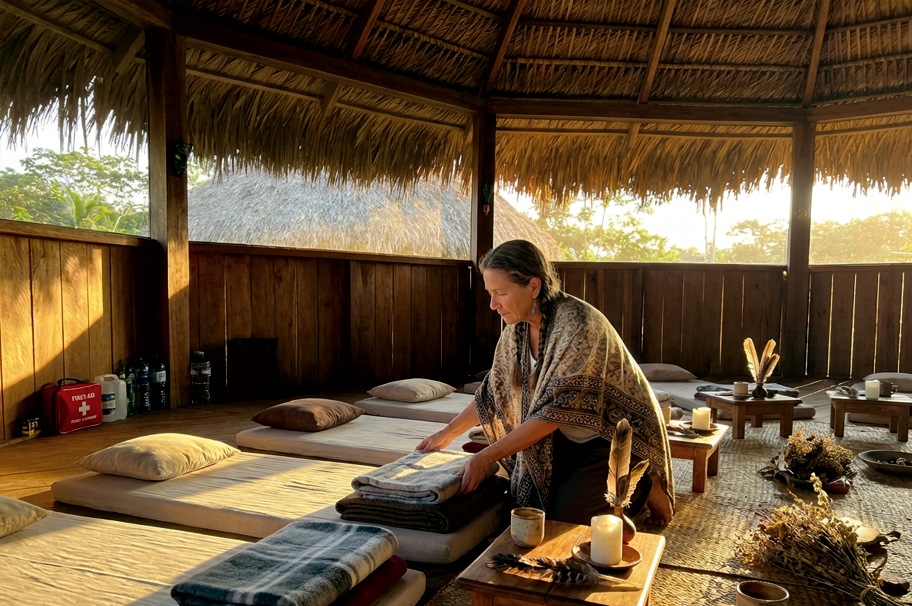
Now let’s look at what quality looks like. These green flags indicate a retreat that prioritizes your safety and wellbeing.
Medical Screening Green Flags
| Green Flag | What It Indicates |
|---|---|
| Detailed medical intake form | Thorough screening process |
| Questions about all medications and supplements | Awareness of interaction risks |
| Mental health history assessment | Screening for contraindications |
| Follow-up questions or phone screening | Taking your safety seriously |
| Clear list of contraindicated conditions | Transparency about who shouldn’t participate |
| Willingness to decline unsuitable applicants | Prioritizing safety over profit |
| Medical professional on staff or on call | Prepared for emergencies |
Facilitator Green Flags
| Green Flag | What It Indicates |
|---|---|
| Clear training lineage and apprenticeship | Legitimate knowledge transmission |
| Years of experience (ideally 5+) | Developed skills and wisdom |
| Transparent about their background | Nothing to hide |
| Multiple facilitators for groups | Adequate support capacity |
| Facilitators remain sober during ceremony | Fully present and capable |
| Positive reputation and references | Track record of safe practice |
| Ongoing training and development | Commitment to growth |
Ceremony Green Flags
| Green Flag | What It Indicates |
|---|---|
| Small group sizes (under 15 ideal) | Individual attention possible |
| Good facilitator-to-participant ratio (1:4–1:6) | Adequate support available |
| Clear ceremony structure and protocols | Organized and professional |
| Respect for participant autonomy | Your boundaries honored |
| Emergency protocols in place | Prepared for crises |
| Safe, clean ceremonial space | Attention to physical safety |
| No mixing of substances | Responsible practice |
Integration Green Flags
| Green Flag | What It Indicates |
|---|---|
| Integration circles or sharing sessions | Processing support provided |
| One-on-one check-ins available | Individual attention to your needs |
| Post-retreat integration resources | Long-term support |
| Referrals to therapists if needed | Recognizing limits of their role |
| Emphasis on integration as essential | Understanding that ceremony is just the beginning |
Boundary Green Flags
| Green Flag | What It Indicates |
|---|---|
| Clear ethical guidelines communicated | Professional standards |
| No private sessions alone with facilitators | Structural protection against abuse |
| Appropriate physical boundaries | Respect for your body |
| Encouragement to stay connected to outside world | No isolation tactics |
| Healthy power dynamics | Facilitators as guides, not gurus |
Questions to Ask Before Booking
Don’t be shy about asking questions. Reputable retreats welcome them. Evasive answers are themselves a red flag.
About Medical Safety
- “What medical conditions do you screen for?”
- “What medications are contraindicated?”
- “What is your process if someone has a medical emergency?”
- “Do you have medical professionals on staff or on call?”
- “What happens if you determine I’m not suitable for ayahuasca?”
About Facilitators
- “What is your facilitators’ training and lineage?”
- “How many years of experience do they have?”
- “How many facilitators will be present during ceremony?”
- “Do facilitators drink during ceremony? How much?”
- “Can I speak with the facilitators before booking?”
About the Ceremony
- “How many participants per ceremony?”
- “What is the facilitator-to-participant ratio?”
- “What does a typical ceremony look like?”
- “What happens if someone has a difficult experience?”
- “Do you ever mix ayahuasca with other substances?”
About Integration
- “What integration support do you provide?”
- “Are there sharing circles or group processing?”
- “Do you offer one-on-one sessions?”
- “What post-retreat support is available?”
- “Do you provide referrals if someone needs ongoing help?”
About Safety and Ethics
- “What are your ethical guidelines?”
- “How do you handle boundary violations?”
- “Have there been any safety incidents? How were they handled?”
- “Can I contact past participants for references?”
- “What is your refund/cancellation policy?”
How to Interpret Answers
Good signs:
- Detailed, transparent answers
- Willingness to discuss difficult topics
- Clear protocols and procedures
- Offering references or testimonials
- Taking time to address your concerns
Warning signs:
- Vague or evasive answers
- Defensiveness or irritation at questions
- “Trust us” without specifics
- Unwillingness to provide references
- Pressure to book quickly
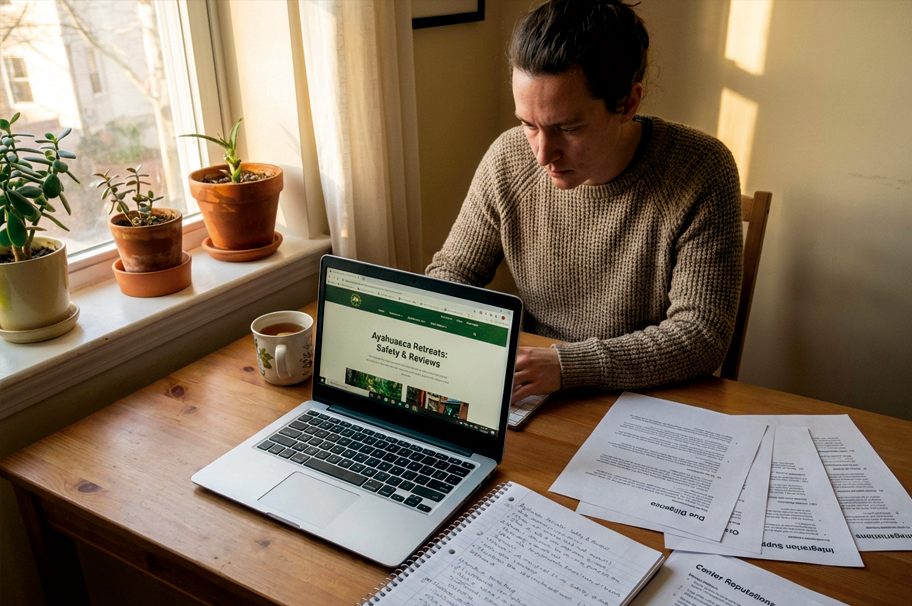
How to Research a Retreat
Step 1: Online Presence
- Website: Professional, informative, transparent about practices?
- Social media: Active, authentic, showing real retreat life?
- Contact responsiveness: Do they reply promptly and thoroughly?
Step 2: Reviews and Testimonials
Where to look:
- Google reviews
- TripAdvisor
- Retreat booking platforms (Retreat Guru, BookRetreats)
- Ayahuasca-specific forums (Reddit r/ayahuasca, DMT-Nexus)
- Facebook groups focused on ayahuasca
What to look for:
- Consistent positive experiences across multiple sources
- Specific details (not just “amazing experience!”)
- How negative reviews are handled
- Red flags mentioned by multiple reviewers
- Recent reviews (things change)
Red flags in reviews:
- Safety concerns mentioned
- Boundary violations reported
- Facilitator misconduct allegations
- Medical emergencies mishandled
- Pressure tactics or manipulation
Step 3: References
Ask the retreat for references—past participants you can contact directly. Reputable retreats will provide them.
Questions for references:
- Did you feel safe throughout?
- How were difficult experiences handled?
- Were facilitators professional and boundaried?
- Would you return or recommend this retreat?
- Is there anything you wish you’d known beforehand?
Step 4: Background Check on Facilitators
- Search their names online
- Look for interviews, articles, or videos
- Check for any misconduct allegations
- Verify claimed training or lineage if possible
- Trust your gut when you see/hear them
Step 5: Trust Your Instincts
After all your research, check in with yourself:
- Does this feel right?
- Do I trust these people?
- Are my concerns being addressed?
- Is anything nagging at me?
Your intuition is data. If something feels off, honor that feeling.
Special Considerations
For Women
Women face additional safety concerns at ayahuasca retreats. Sexual abuse by facilitators—often disguised as “healing work”—is a documented problem in the ayahuasca world.
Extra precautions for women:
- Research facilitator history specifically for misconduct allegations
- Look for retreats with female facilitators present
- Avoid private one-on-one sessions with male facilitators
- Trust your instincts about any uncomfortable energy
- Know that legitimate healing never requires sexual contact
- Connect with other women who’ve attended the retreat
Red flags specific to women:
- Male facilitator insisting on private “healing” sessions
- Sexual innuendo or energy from facilitators
- Facilitator entering your space during ceremony without clear reason
- Any touch that feels inappropriate, even if framed as healing
- Isolation from other participants
Remember: You have the right to say no to any touch, any private session, any situation that feels wrong. A legitimate facilitator will respect your boundaries completely.
For People with Mental Health Histories
Ayahuasca can be profoundly healing for many mental health conditions—but it can also be destabilizing for others.
Higher risk conditions:
- Schizophrenia or psychotic disorders (contraindicated)
- Bipolar disorder, especially with manic episodes (high caution)
- Severe PTSD (requires experienced facilitation)
- Active suicidal ideation (requires professional support first)
- Personality disorders (variable, requires assessment)
If you have mental health history:
- Disclose everything honestly during screening
- Choose retreats with mental health professionals on staff
- Ensure facilitators have experience with your condition
- Have a therapist at home for post-retreat support
- Consider whether this is the right time
A good retreat will:
- Ask detailed mental health questions
- Possibly request therapist clearance
- Decline participants who aren’t suitable
- Have protocols for psychological emergencies
- Provide integration support
For People on Medications
Medication interactions with ayahuasca can be life-threatening. This is not negotiable.
Absolutely contraindicated:
- SSRIs (Prozac, Zoloft, Lexapro, etc.)
- SNRIs (Effexor, Cymbalta, etc.)
- MAOIs
- Lithium
- Tramadol
- ADHD medications
- Many others (see full list in preparation guide)
If you take medications:
- Disclose everything—prescription, OTC, supplements
- Work with your doctor to taper if appropriate
- Allow adequate washout time (2–6 weeks depending on medication)
- Never stop psychiatric medications abruptly
- Be honest even if you fear being declined
A safe retreat will:
- Ask about all medications
- Know which are contraindicated
- Require adequate washout periods
- Decline participants still on dangerous medications
- Not pressure you to stop medications unsafely
→ Full medication guide: How to Prepare for an Ayahuasca Retreat
For First-Timers
Your first ayahuasca experience sets the tone for your relationship with the medicine. Choosing well matters even more.
First-timer priorities:
- Experienced facilitators (not someone learning on you)
- Small group sizes (more individual attention)
- Multiple ceremonies (one isn’t enough to go deep)
- Strong integration support (you’ll need help processing)
- Clear communication and preparation guidance
- Welcoming attitude toward beginners
→ Complete guide: Ayahuasca Retreats for First-Timers
For Solo Travelers
Traveling alone to a remote location for an intense experience requires extra precautions.
Solo traveler safety:
- Tell someone at home where you’re going and when you’ll return
- Share retreat contact information with a trusted person
- Arrange check-in times during your trip
- Research the location’s general safety
- Have emergency contacts and plans
- Trust your instincts about people and situations
Understanding Different Retreat Models
Not all retreats operate the same way. Understanding the models helps you choose what’s right for you.
Traditional Indigenous Retreats
Characteristics:
- Led by indigenous curanderos/curanderas
- Often in remote jungle locations
- Traditional practices and cosmology
- May have basic facilities
- Deep connection to lineage and tradition
Pros:
- Authentic transmission of traditional knowledge
- Often profound depth of practice
- Supports indigenous communities
- Connection to the medicine’s roots
Cons:
- May have less Western-style safety infrastructure
- Communication barriers possible
- Basic comfort levels
- Remote locations complicate emergencies
Best for: Those seeking traditional experience, comfortable with simplicity, valuing authenticity over comfort.
Western-Style Retreat Centers
Characteristics:
- Often Western-owned or managed
- More comfortable facilities
- Structured programs with clear schedules
- Integration support emphasized
- May blend traditions or use Western therapeutic approaches
Pros:
- Clear safety protocols
- Comfortable accommodations
- Strong integration support
- Easier communication
- Often more accessible locations
Cons:
- May lack traditional depth
- Can feel commercialized
- Higher prices
- Variable connection to authentic lineage
Best for: First-timers, those prioritizing safety and comfort, those wanting strong integration support.
Hybrid Models
Characteristics:
- Indigenous facilitators with Western support staff
- Traditional ceremony with modern safety infrastructure
- Comfortable facilities with authentic practice
- Bridge between worlds
Pros:
- Best of both worlds potentially
- Traditional depth with modern safety
- Cultural respect with accessibility
- Often strong overall
Cons:
- Quality varies widely
- Some may be superficially “traditional”
- Can be expensive
Best for: Those wanting authenticity with safety, willing to pay for quality.
Underground/Private Ceremonies
Characteristics:
- Often in private homes
- Small groups or individual sessions
- Variable facilitator backgrounds
- No official oversight
Pros:
- Can be intimate and personalized
- Sometimes led by highly experienced facilitators
- May be more affordable
- Available in locations where retreats aren’t
Cons:
- No accountability structures
- Highly variable quality and safety
- Difficult to research beforehand
- Legal risks in many locations
Best for: Only those with trusted personal referrals and experience to assess quality.
Price and Value
What Influences Price
- Location: Amazon jungle vs. Costa Rica vs. Europe
- Facilities: Basic huts vs. luxury accommodations
- Duration: Weekend vs. week-long vs. extended
- Group size: Smaller groups cost more per person
- Facilitator experience: Top facilitators command higher fees
- Included services: Meals, transport, integration support
- Staffing levels: More staff = higher costs
Price Ranges (2026)
| Type | Typical Range |
|---|---|
| Budget Amazon retreat | $500–$1,000/week |
| Mid-range Amazon retreat | $1,000–$2,500/week |
| Premium Amazon retreat | $2,500–$5,000/week |
| Costa Rica/Mexico retreat | $2,000–$5,000/week |
| European retreat | $1,500–$4,000/week |
| Luxury retreat center | $4,000–$10,000+/week |
Is Cheaper Dangerous?
Not necessarily—but it warrants scrutiny.
Low prices might mean:
- Cutting corners on safety
- Inexperienced facilitators
- Large group sizes
- Basic facilities (which is fine if expected)
- Location with lower costs (Amazon vs. Costa Rica)
Questions to ask about budget options:
- Why is this priced lower than comparable retreats?
- What’s the facilitator-to-participant ratio?
- What safety protocols are in place?
- What’s included vs. extra?
Is Expensive Safer?
Not automatically. High prices don’t guarantee quality or safety.
Expensive retreats might offer:
- Luxury accommodations (nice but not essential)
- Premium locations
- Marketing budgets (you’re paying for)
- Genuinely superior facilitation and safety
- Or just higher profit margins
The key: Evaluate based on the criteria in this guide, not price alone.
Value Assessment
The best value isn’t the cheapest or most expensive—it’s the retreat that offers:
- Qualified, experienced facilitators
- Appropriate safety protocols
- Good facilitator-to-participant ratio
- Adequate integration support
- Fair price for what’s provided
After You Book: Staying Safe
Your safety work doesn’t end when you book. Stay vigilant throughout.
Before Arrival
- Complete all medical forms honestly
- Follow preparation guidelines (diet, medications)
- Arrange emergency contacts
- Share your itinerary with someone at home
- Research local emergency services
- Have travel insurance (note: some exclude “drug use”)
Upon Arrival
- Assess the facilities and people
- Trust your first impressions
- Note emergency exits and procedures
- Connect with other participants
- Communicate any concerns early
- Remember: you can leave if something feels wrong
During Ceremony
- Stay in the ceremonial space
- Call for help if you need it
- Maintain awareness of your surroundings
- Report any inappropriate behavior
- Trust your instincts about safety
If Something Goes Wrong
Medical emergency:
- Alert facilitators immediately
- Know if medical help is available
- Don’t minimize symptoms
Boundary violation:
- Remove yourself from the situation
- Tell other participants or staff
- Document what happened
- Report to retreat management
- Consider leaving if not addressed
Feeling unsafe:
- Trust your instincts
- You can leave at any time
- Contact your emergency person at home
- Don’t let anyone pressure you to stay
Reporting and Accountability
If you experience or witness harm, reporting helps protect future participants.
Where to Report
- Retreat management: First step for immediate issues
- Booking platforms: If you booked through one
- Online communities: Warn others (factually, not defamatory)
- Local authorities: For criminal behavior
- Ayahuasca safety organizations: ICEERS, Chacruna Institute
Why Reporting Matters
- Protects future participants
- Creates accountability
- Documents patterns of behavior
- Supports systemic change
- Validates your experience
Barriers to Reporting
- Shame or self-blame (not your fault)
- Fear of not being believed
- Uncertainty about what happened
- Desire to move on
- Protecting the “medicine” or community
Remember: Reporting harm doesn’t harm ayahuasca or legitimate practitioners. It harms predators and protects the vulnerable.
FAQ
How can I verify a facilitator’s training? Ask directly about their lineage and apprenticeship. Research their teachers if named. Look for interviews or articles about them. Check if they’re known in ayahuasca communities. Be wary of vague claims like “trained with shamans in Peru” without specifics.
What should I do if a retreat won’t answer my questions? Consider it a red flag. Reputable retreats welcome questions and answer transparently. Evasiveness suggests they have something to hide. Find a retreat that respects your need for information.
Is it safe to attend a retreat alone? Yes, with proper precautions. Most participants attend solo. Tell someone at home where you’re going, share contact information, arrange check-ins, and trust your instincts about people and situations.
How do I know if reviews are fake? Look for specific details rather than generic praise. Check multiple platforms. Be suspicious if all reviews are glowing with no nuance. Look for reviewer profiles that seem real. Recent reviews matter more than old ones.
What if I realize the retreat isn’t safe after I arrive? You can leave. Your safety matters more than money spent or social awkwardness. Trust your instincts. Contact your emergency person at home. Don’t let anyone pressure you to stay in an unsafe situation.
Are underground ceremonies ever safe? They can be, with trusted personal referrals from people you know well. But they lack accountability structures, making quality highly variable. Without the ability to research beforehand, risk is higher. Only consider with strong personal recommendations.
What’s the minimum facilitator-to-participant ratio? Ideally 1:4 to 1:6. One facilitator for 10+ people is inadequate for proper support. During intense experiences, participants need individual attention that large ratios can’t provide.
Should I be concerned about legal issues? Ayahuasca’s legality varies by country. In Peru, Brazil, and some other countries, it’s legal. In Costa Rica, Portugal, and Netherlands, it exists in legal gray areas. In the US, UK, and many countries, it’s illegal. Research your destination’s laws and understand the risks.
Final Thoughts
Choosing a safe ayahuasca retreat requires diligence, discernment, and trust in your own judgment. The time you invest in research protects not just your safety, but the quality of your entire experience.
The ayahuasca path offers profound healing—but only when walked with care. The medicine itself is wise, but the humans who serve it vary enormously in skill, ethics, and intentions.
You deserve facilitators who are qualified, ethical, and genuinely committed to your wellbeing. You deserve a container that holds you safely through the most vulnerable experience of your life. You deserve to emerge transformed, not traumatized.
Don’t settle for less. Ask the hard questions. Trust your instincts. And when you find the right retreat—one that meets all the criteria, answers all your questions, and feels right in your gut—you can surrender to the journey knowing you’ve done everything possible to protect yourself.
The medicine will do the rest.
Ready to find your safe container?
The right retreat makes all the difference. Experienced facilitators. Proper protocols. Genuine care for your wellbeing. Your transformation deserves nothing less.