10-Day Shamanic Pilgrimage in Cusco, Peru: A Powerful Deep Reset

Some retreats are built for rest. This 10-day shamanic pilgrimage in Cusco, Peru, is built for remembrance—of clarity, direction, and the parts of the self that get quieted by routine. Rather than staying in one location, the experience moves through Andean sacred geography, where ceremony, Inca medicine, and place-based teachings form a coherent arc of cleansing, insight, and reconnection.
Table Of Content
- The experience in one sentence
- Setting & atmosphere: Cusco as a threshold
- What “shamanic pilgrimage” looks like in practice
- Inca medicine: grounded spirituality, not performance
- The inner arc: how transformation tends to unfold over 10 days
- Practical expectations (the real-world side)
- Who this pilgrimage is best for (and who should pause)
- The overall feel
- FAQ—Shamanic Pilgrimage in Cusco, Peru
Affiliate disclosure: This page contains an affiliate link. If a booking is made through it, a commission may be earned at no extra cost. The review stays honest and practical either way. Read our editorial policy.
Cusco brings its own gravity. The altitude changes breathing. The light feels sharper. The mountains invite humility before any ritual begins. For travelers already exploring Peru retreats, this is the kind of setting that naturally slows the mind down—so the inner work can become clearer, more honest, and surprisingly grounded.
The experience in one sentence
A medicine-centered journey through Andean sacred sites, held with shamanic guidance and cultural reverence—designed to reset the inner compass.
Setting & atmosphere: Cusco as a threshold
Cusco isn’t a neutral backdrop. History, devotion, and landscape are layered here—stonework, mountains, and living traditions that still shape daily life. Because this is a pilgrimage, the environment keeps changing, and that often mirrors the internal process: each site carries a different emotional tone, a different kind of insight, a different invitation.
Rather than feeling like a tour, the overall tone is more intentional—moving with purpose, pausing for ceremony, and treating place as medicine. For many participants, that alone is a reset: the mind stops consuming experiences and starts receiving them.
What “shamanic pilgrimage” looks like in practice
A pilgrimage differs from a retreat in one key way: it’s not only about what happens inside a ceremonial space. The entire journey becomes the practice.
Expect a blend of:
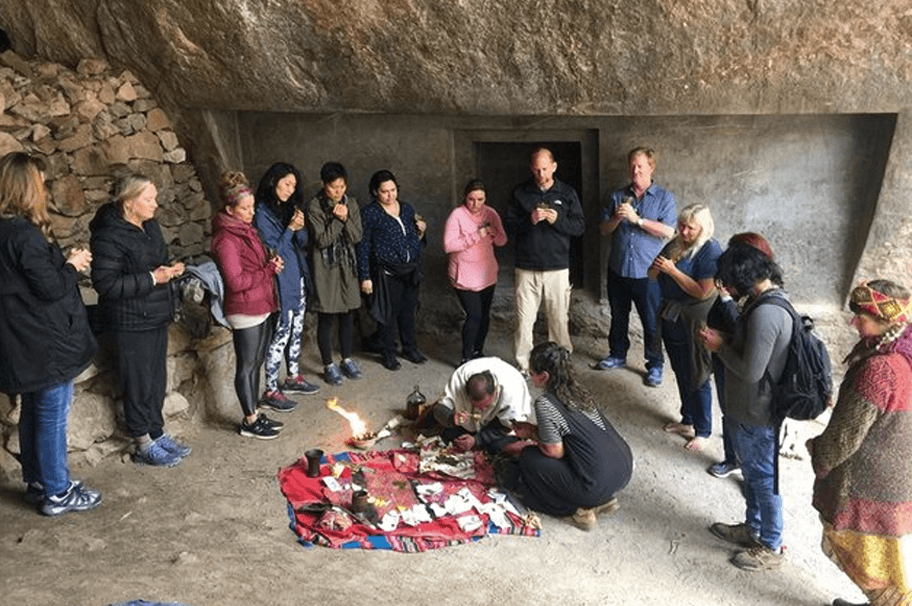
- Sacred-site visits approached as ritual (not sightseeing)
- Guided ceremony and shamanic teachings (lineage-respectful, grounded)
- Reflection time for journaling, prayer/intentionality, and integration
- A structured arc that makes travel feel purposeful, not scattered
If you’re comparing different containers within shamanic retreats, this pilgrimage format is distinct because movement and landscape are part of the method—not just the scenery.

Inca medicine: grounded spirituality, not performance
“Inca medicine” can mean different things depending on lineage, but the felt experience in a well-held container is often consistent: earth-based spirituality that emphasizes reciprocity, respect, and relationship—rather than spectacle.
Participants often describe this style of work as clarifying. It doesn’t chase dramatic visions; it supports alignment—mentally, emotionally, and spiritually—so choices feel cleaner and the inner compass steadier. For readers drawn to spiritual retreats, this is a more place-led, earth-rooted approach to transformation.
The inner arc: how transformation tends to unfold over 10 days
Ten days is long enough for a real process to develop, especially when travel and sacred-site work are part of the container.
Days 1–3: Arrival, acclimatization, and energetic clearing
Cusco’s altitude and intensity tend to strip away noise quickly. Early days often focus on landing, orienting, and beginning the cleansing process—physically and energetically. Many people notice sleep changes, vivid dreams, and emotional sensitivity as the system adjusts.
Days 4–7: Deepening through place (insight becomes embodied)
Mid-journey is often where the pilgrimage becomes unmistakably personal. Sacred sites can bring up themes—ancestry, purpose, grief, devotion, fear—without forcing them. The work often feels less like “thinking” and more like remembering through the body.
Days 8–10: Integration, consolidation, and a new baseline
Toward the end, the process often shifts from opening to integrating. The most valuable outcome is not a single revelation but a clearer internal compass: what matters, what needs to change, and what can be released.
Practical expectations (the real-world side)
A pilgrimage asks for a bit more flexibility than a single-location retreat. It helps to arrive with:
- A willingness to move with the group rhythm
- Comfort with changing environments and variable days
- Extra patience for altitude (slower pacing early on, hydration, rest)
This is also a retreat where cultural respect matters. The best participants arrive not to consume tradition, but to meet it with humility—and to let the teachings land slowly.
Safety and legality
Health considerations and local regulations vary. Always check local laws and consult a qualified medical professional if you have health conditions, take medications, or have mental health concerns.
Who this pilgrimage is best for (and who should pause)
This experience is best suited for someone who wants a guided journey through Andean sacred sites where ceremony and place itself become the teacher—without rushing the process.
It’s especially supportive for people navigating transitions—identity shifts, grief, big life decisions, or a sense that the old way of living no longer fits. If your search intent is more explicitly emotional repair and recovery, it can also help to compare with dedicated healing retreats to find the right level of support.
The overall feel
The impression is of a journey that is both spiritual and surprisingly practical: sacred sites that open perspective, Inca medicine that clears and grounds, and a structure that turns travel into a coherent healing arc. For the right person, it can feel like stepping onto a path that was already waiting—one that doesn’t just inspire but reorients.
If you’re not looking for a simple retreat but a guided journey through Andean sacred sites where Inca medicine, ceremony, and place itself become the teacher, this Cusco pilgrimage is a powerful choice.
FAQ—Shamanic Pilgrimage in Cusco, Peru
What’s the difference between a shamanic pilgrimage and a retreat?
A retreat usually stays in one place. A pilgrimage uses movement through sacred sites as part of the practice—travel becomes the container, not just the backdrop.
Is Cusco’s altitude a big factor?
Altitude affects people differently. Many travelers benefit from arriving early, hydrating, resting more, and keeping the first days gentle.
How should someone prepare for a 10-day Andean pilgrimage?
Preparation usually means simplifying: lighter meals, fewer stimulants, clear intentions, and a flexible mindset. Follow the organizer’s guidance closely.
Is this suitable for beginners?
It can be if someone is respectful, open to guidance, and willing to prepare. The key is readiness for depth—not prior experience.