What to Expect at Your First Ayurveda Retreat

Affiliate Disclosure
We partner with retreat centers and booking platforms. When you book through our links, we may earn a commission at no extra cost to you. This supports our work and allows us to keep providing honest, in-depth reviews. Read our editorial policy
Table Of Content
- Affiliate Disclosure
- Introduction
- Before You Arrive: Setting the Stage
- Day One: Arrival and Orientation
- The Daily Rhythm: What Your Days Will Look Like
- The Treatments: What Actually Happens
- The Food: Ayurvedic Cuisine
- The Yoga and Meditation
- Common Experiences and How to Navigate Them
- Day-by-Day: How Your Experience Typically Evolves
- Making the Most of Your First Ayurveda Retreat
- After Your Retreat: Integration
- FAQ
- Final Thoughts
- Final CTA
Introduction
The taxi turns down a narrow road lined with coconut palms. Through the window, you catch glimpses of terracotta rooftops and flowering gardens. Your heart beats a little faster—anticipation mixed with uncertainty. You’ve read about Ayurveda, watched videos, maybe even taken a dosha quiz online. But now you’re actually here, about to step into a world that’s been healing people for five thousand years.
What will it actually be like?
If you’re preparing for your first Ayurveda retreat, this question probably keeps surfacing. Will the food be strange? Will the treatments be uncomfortable? Will you understand what’s happening? Will it actually help?
These questions are natural. Ayurveda is a complete medical system with its own language, philosophy, and practices. Walking into that world for the first time can feel like arriving in a foreign country without a phrasebook.
This guide is your phrasebook.
We’ll walk through every aspect of your first retreat experience: from the moment you arrive to the day you leave. You’ll learn what happens during consultations, what treatments feel like, what you’ll eat, how your days will flow, and how to navigate the inevitable moments of confusion or discomfort.
By the time you finish reading, the unknown will feel familiar. And when you step out of that taxi, you’ll be ready—not just to participate, but to truly receive what Ayurveda has to offer.
Let’s begin.
Before You Arrive: Setting the Stage
Your retreat experience actually begins before you arrive. Here’s how to prepare.
What to Do in the Weeks Before
2–4 weeks before:
- Complete any health questionnaires the retreat sends
- Begin reducing caffeine, alcohol, and processed foods
- Start going to bed earlier (Ayurveda emphasizes early sleep)
- Research your dosha if you haven’t already
- Set intentions for what you hope to receive
1 week before:
- Simplify your diet (less meat, sugar, fried foods)
- Reduce screen time and stimulation
- Begin a simple morning routine (warm water, gentle movement)
- Prepare mentally for a slower pace
- Arrange work and home responsibilities so you can truly disconnect
The day before:
- Pack light, comfortable clothing (natural fabrics preferred)
- Bring any medical records or medication lists
- Download books or journals (many retreats limit WiFi)
- Set out-of-office messages
- Get a good night’s sleep
What to Pack
| Category | Items |
|---|---|
| Clothing | Loose, comfortable clothes; layers for varying temperatures; modest swimwear (if pool/beach); yoga clothes; comfortable walking shoes; sandals |
| Personal care | Natural toiletries (many retreats provide); sunscreen; insect repellent; any prescription medications |
| Wellness items | Journal and pen; books for quiet time; meditation cushion (optional); eye mask and earplugs |
| Practical | Passport/ID; insurance documents; retreat confirmation; small amount of cash for tips |
| Leave behind | Work laptop (if possible); excessive electronics; tight or synthetic clothing; expectations of luxury spa experience |
Mindset Preparation
Your first Ayurveda retreat will be more transformative if you arrive with the right mindset:
Embrace:
- Beginner’s mind (you don’t need to know everything)
- Curiosity about ancient wisdom
- Willingness to try new things
- Patience with yourself and the process
- Openness to unexpected experiences
Release:
- Need for constant stimulation
- Attachment to your usual routine
- Expectations of instant results
- Comparison to spa experiences
- Resistance to rest and stillness
Day One: Arrival and Orientation
The first day sets the tone for your entire retreat. Here’s what typically happens.
Arrival and Welcome
Most retreats have specific arrival times (often early afternoon). You’ll be greeted by staff who will:
- Welcome you and offer refreshments (often herbal tea or coconut water)
- Show you to your room
- Give you time to settle in
- Provide an orientation packet or schedule
- Explain house rules and facilities
First impressions: The pace will feel slower than you’re used to. Embrace it. This slowness is intentional and therapeutic.
Your Room
Ayurveda retreat accommodations vary widely, but typically include:
- Simple, clean room (often with natural materials)
- Private or shared bathroom
- Minimal electronics (some rooms have no TV intentionally)
- Natural ventilation or air conditioning
- Basic amenities (towels, toiletries, drinking water)
Don’t expect: Luxury hotel amenities, mini-bar, room service, or entertainment systems. The simplicity is part of the healing.
Initial Consultation
The most important event of day one is your consultation with the Ayurvedic practitioner. This typically lasts 45–90 minutes.
What happens:
- Health history: Detailed questions about your medical history, current symptoms, lifestyle, diet, sleep, digestion, elimination, stress levels, and goals
- Pulse diagnosis (Nadi Pariksha): The practitioner reads your radial pulse to assess dosha balance. This ancient technique reveals information about your constitution and current imbalances.
- Physical examination: May include examination of tongue, eyes, nails, skin, and overall appearance
- Discussion: The practitioner explains their findings, your dosha type, current imbalances, and recommended treatment plan
- Questions: Opportunity to ask anything about your program
What you’ll learn:
- Your prakriti (birth constitution)
- Your vikriti (current imbalances)
- Which treatments you’ll receive
- Dietary recommendations
- Lifestyle guidance
Tips for your consultation:
- Be completely honest about your health and habits
- Mention all medications and supplements
- Share your goals and concerns
- Ask questions if you don’t understand
- Take notes if helpful

Orientation Session
Most retreats hold a group or individual orientation covering:
- Daily schedule and meal times
- Treatment protocols and what to expect
- Yoga and meditation schedules
- Rules and guidelines (quiet hours, dietary restrictions, etc.)
- Facilities tour
- Emergency procedures
- Questions and answers
First Evening
Your first evening is usually gentle:
- Light dinner (your first Ayurvedic meal)
- Perhaps a welcome ceremony or group introduction
- Early bedtime encouraged
- Time to settle, journal, and rest
Common feelings on day one:
- Excitement mixed with uncertainty
- Tiredness from travel
- Slight overwhelm at new information
- Curiosity about what’s to come
- Relief at having arrived
All of these are normal. Rest well—the journey begins tomorrow.
The Daily Rhythm: What Your Days Will Look Like
Ayurveda emphasizes routine (dinacharya) as medicine. Your days will follow a consistent rhythm aligned with natural cycles.
Typical Daily Schedule
| Time | Activity |
|---|---|
| 5:30–6:00 AM | Wake up (before sunrise ideally) |
| 6:00–6:30 AM | Morning practices (tongue scraping, oil pulling, warm water) |
| 6:30–7:30 AM | Yoga class |
| 7:30–8:30 AM | Breakfast |
| 9:00–11:30 AM | Treatment session |
| 11:30–12:30 PM | Rest / free time |
| 12:30–1:30 PM | Lunch (main meal of the day) |
| 1:30–3:00 PM | Rest period (napping encouraged) |
| 3:00–4:00 PM | Lecture, workshop, or free time |
| 4:00–5:30 PM | Second treatment or activity |
| 5:30–6:30 PM | Meditation or gentle yoga |
| 6:30–7:30 PM | Dinner (light) |
| 8:00–9:00 PM | Free time, journaling |
| 9:00–9:30 PM | Bedtime |
Why This Schedule?
The timing isn’t arbitrary—it’s based on Ayurvedic understanding of natural rhythms:
- Early rising: Vata time (2–6 AM) is ideal for waking; rising with the sun aligns your body with nature
- Morning practices: Clear overnight accumulations, prepare body for the day
- Morning treatments: Kapha time (6–10 AM) is optimal for oil therapies
- Lunch as main meal: Pitta time (10 AM–2 PM) is when digestion is strongest
- Afternoon rest: Supports treatment integration and healing
- Light dinner: Allows complete digestion before sleep
- Early bedtime: Kapha time (6–10 PM) supports deep, restful sleep
Adjusting to the Rhythm
For your first Ayurveda retreat, this schedule may feel challenging:
If you’re used to late nights: The early bedtime might feel restrictive. Trust the process—most people find their sleep quality dramatically improves.
If you’re used to skipping breakfast: You’ll be encouraged to eat at regular times. Ayurveda sees regular meals as essential medicine.
If you’re used to constant activity: The rest periods may feel boring initially. This is where deep healing happens.
If you’re used to heavy dinners: Light evening meals may leave you hungry at first. Your body will adjust within days.
The Treatments: What Actually Happens
Treatments are the heart of your retreat experience. Here’s what to expect from common Ayurvedic therapies.
Abhyanga (Oil Massage)
What it is: Full-body massage with warm herbal oil, often performed by two therapists working in synchronization.
What happens:
- You’ll undress (underwear optional) and lie on a wooden treatment table
- Warm oil (selected for your dosha) is applied liberally
- Therapists massage in long, flowing strokes following energy channels
- Treatment typically lasts 45–60 minutes
- Oil is left on your skin to absorb (you won’t shower immediately)
What it feels like: Deeply relaxing, nurturing, grounding. The warm oil and rhythmic strokes calm the nervous system profoundly.
Benefits: Reduces Vata, calms anxiety, improves circulation, nourishes skin, promotes sleep, releases tension.
Shirodhara (Oil on Forehead)
What it is: Warm oil poured in a continuous stream onto the forehead (third eye area).
What happens:
- You lie face-up on the treatment table
- A vessel suspended above drips warm oil onto your forehead
- The oil flows in a gentle, rhythmic pattern
- Treatment lasts 30–45 minutes
- Deeply meditative state often occurs
What it feels like: Profoundly calming, almost hypnotic. Many people enter altered states of consciousness or deep relaxation.
Benefits: Calms the mind, reduces anxiety and insomnia, balances hormones, relieves headaches, promotes mental clarity.
Swedana (Steam Therapy)
What it is: Herbal steam treatment to open channels and promote sweating.
What happens:
- After oil massage, you sit or lie in a steam chamber
- Your head remains outside (cool) while body receives steam
- Herbs are added to the steam for therapeutic effect
- Treatment lasts 15–20 minutes
- You’ll sweat significantly
What it feels like: Warming, opening, purifying. Can be intense if you’re not used to heat.
Benefits: Opens channels, loosens toxins, relieves stiffness, promotes elimination, enhances oil absorption.
Udvartana (Herbal Powder Massage)
What it is: Vigorous massage using dry herbal powders instead of oil.
What happens:
- Herbal powder is rubbed onto skin in upward strokes
- More vigorous than oil massage
- Stimulating rather than relaxing
- Treatment lasts 30–45 minutes
What it feels like: Invigorating, stimulating, sometimes slightly abrasive. Energizing rather than calming.
Benefits: Reduces Kapha, stimulates circulation, promotes weight loss, improves skin texture, increases energy.
Nasya (Nasal Treatment)
What it is: Administration of herbal oils or powders through the nasal passages.
What happens:
- Face and sinus massage first
- Steam applied to face
- Herbal oil drops placed in each nostril
- You inhale gently
- May cause temporary discharge
What it feels like: Unusual at first, sometimes causes sneezing or watering eyes. Clears the head remarkably.
Benefits: Clears sinuses, improves breathing, enhances mental clarity, relieves headaches, balances prana.
Basti (Enema Therapy)
What it is: Herbal oil or decoction enemas (part of Panchakarma, sometimes included in general retreats).
What happens:
- Administered in private treatment room
- Herbal preparation introduced rectally
- You retain the liquid for a period
- Then release in bathroom
What it feels like: Unfamiliar and potentially uncomfortable initially, but most people find it less difficult than expected.
Benefits: Balances Vata profoundly, relieves constipation, nourishes colon, addresses many chronic conditions.
What to Expect During Treatments
Rest after: You’ll be encouraged to rest after treatments rather than immediately showering or being active. This allows the oils and therapies to penetrate deeply.
Emotional release: Treatments can release stored emotions. Crying, laughing, or feeling unexpectedly emotional is normal and welcomed.
Timing: Treatments typically happen in the morning when your body is most receptive. Afternoon treatments are usually lighter.
The Food: Ayurvedic Cuisine
Food is medicine in Ayurveda. Your meals will be carefully prepared to support your healing.
What Ayurvedic Meals Look Like
Breakfast:
- Often light and warm
- Cooked grains (rice porridge, oatmeal)
- Stewed fruits
- Herbal tea
- Sometimes eggs or light protein
Lunch (main meal):
- The largest meal of the day
- Rice or other grains
- Dal (lentil soup)
- Cooked vegetables (multiple preparations)
- Chutneys and pickles
- Sometimes fish or chicken (depending on retreat)
- Buttermilk or digestive drinks
Dinner:
- Lighter than lunch
- Soups, kitchari (rice and lentil dish)
- Cooked vegetables
- Herbal tea
- Early timing (before 7 PM ideally)

Dietary Principles You’ll Experience
| Principle | What It Means |
|---|---|
| Dosha-appropriate | Foods selected to balance your specific constitution |
| Freshly prepared | Meals cooked fresh; no leftovers or processed foods |
| Warm and cooked | Emphasis on cooked foods for easier digestion |
| Six tastes | Each meal includes sweet, sour, salty, pungent, bitter, astringent |
| Mindful eating | Eating in silence or calm environment, chewing thoroughly |
| Proper timing | Regular meal times; no snacking between meals |
| Digestive support | Spices and preparations that enhance digestion |
What You Won’t Find
- Caffeine (or very limited)
- Alcohol
- Refined sugar
- Processed foods
- Cold or iced drinks
- Raw salads (usually limited)
- Heavy meats (often vegetarian)
- Leftovers or reheated food
Adjusting to Ayurvedic Eating
Common challenges:
Missing coffee: Headaches may occur for the first 2–3 days. Herbal teas and rest help. The clarity that emerges after withdrawal is worth it.
Simpler flavors: Without heavy salt, sugar, and processed flavors, food may taste “bland” initially. Your palate will reset within days, and natural flavors will become more vibrant.
Vegetarian meals: If you’re used to meat at every meal, the vegetarian focus may feel unsatisfying at first. Ayurvedic cooking is designed to be nourishing and complete.
Smaller portions: Meals may seem smaller than you’re used to. Ayurveda emphasizes eating until 75% full. You’ll likely find this is actually enough.
No snacking: The gap between meals supports complete digestion. Hunger between meals often decreases after the first few days.
Tips for Enjoying Ayurvedic Food
- Approach each meal with curiosity
- Eat slowly and chew thoroughly
- Notice how different foods make you feel
- Ask about unfamiliar dishes
- Appreciate the care that goes into preparation
- Trust that the food is designed to heal you
The Yoga and Meditation
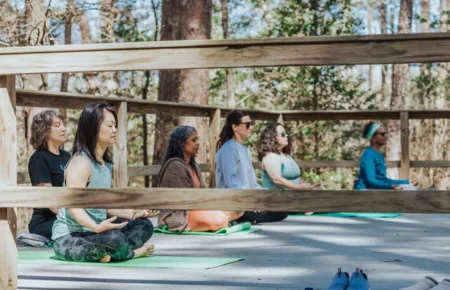
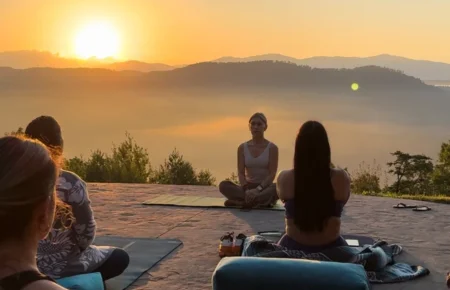
Most Ayurveda retreats include daily yoga and meditation as essential components of healing.
What to Expect from Yoga Classes
Style: Usually gentle, therapeutic yoga rather than vigorous vinyasa. Hatha, restorative, or Ayurvedic yoga styles are common.
Pace: Slower than typical Western yoga classes. Emphasis on breath, alignment, and internal awareness.
Modifications: Classes accommodate all levels. Props are usually available. No pressure to perform advanced poses.
Timing: Often early morning (6–7 AM) to align with natural rhythms.
Duration: 60–90 minutes typically.
What you’ll practice:
- Pranayama (breathing exercises)
- Gentle asanas (postures)
- Stretching and joint movements
- Relaxation (savasana)
- Sometimes chanting or mantra
What to Expect from Meditation
Style: Varies by retreat—may include guided meditation, silent sitting, mantra meditation, or visualization.
Duration: Usually 20–45 minutes.
Timing: Often morning and/or evening.
Guidance: Instruction provided for beginners. No prior experience necessary.
Challenges: Sitting still may be difficult at first. This is normal. The practice develops over time.
If You’re New to Yoga or Meditation
Your first Ayurveda retreat is a perfect place to begin:
- Classes are beginner-friendly
- Teachers are accustomed to newcomers
- The supportive environment makes practice easier
- You’ll have time and space to develop a practice
- No judgment or competition
Tips:
- Tell teachers you’re a beginner
- Don’t compare yourself to others
- Focus on your own experience
- Rest when needed
- Ask questions
Common Experiences and How to Navigate Them
Your first Ayurveda retreat will likely include some unexpected moments. Here’s what commonly arises and how to handle it.
Detox Symptoms
As your body begins to cleanse, you may experience:
| Symptom | What’s Happening | What to Do |
|---|---|---|
| Headaches | Caffeine withdrawal, toxin release | Rest, drink warm water, be patient |
| Fatigue | Body redirecting energy to healing | Sleep more, reduce activity |
| Skin breakouts | Toxins releasing through skin | Keep skin clean, don’t pick, it will pass |
| Digestive changes | System recalibrating | Follow dietary guidelines, drink warm water |
| Emotional ups and downs | Stored emotions releasing | Allow feelings, journal, talk to staff |
| Vivid dreams | Subconscious processing | Note them, discuss with practitioner |
| Temporary worsening | “Healing crisis” as toxins mobilize | Rest, trust the process, inform staff |
Important: Inform your practitioner about any symptoms. They can adjust your program if needed.
Boredom and Restlessness
Without constant stimulation, you may feel:
- Restless and fidgety
- Bored with the slow pace
- Urge to check phone/email
- Desire to “do something”
- Difficulty with stillness
What helps:
- Recognize this as withdrawal from overstimulation
- Journal about what arises
- Take slow walks in nature
- Read books you’ve been meaning to read
- Practice being present with discomfort
- Trust that this restlessness will pass
Homesickness or Doubt
It’s common to experience:
- Missing home, family, or routine
- Questioning why you came
- Wanting to leave early
- Feeling like this isn’t working
- Comparing unfavorably to expectations
What helps:
- These feelings usually peak around day 3–4
- Talk to staff or other guests
- Write in your journal
- Remember why you came
- Commit to staying through the initial adjustment
- Most people feel very differently by day 5–7
Emotional Release
Ayurvedic treatments can unlock stored emotions:
- Unexpected crying during or after treatments
- Memories surfacing
- Grief, anger, or fear arising
- Feeling emotionally raw
- Mood swings
What helps:
- This is healing, not breakdown
- Allow emotions without judgment
- Cry if you need to
- Journal about what comes up
- Talk to practitioners (they’ve seen this before)
- Rest and be gentle with yourself
Physical Discomfort
You might experience:
- Oiliness (you’ll be very oily from treatments)
- Unfamiliar treatment sensations
- Digestive adjustment
- Muscle soreness from yoga
- Difficulty with early schedule
What helps:
- Communicate with therapists during treatments
- Embrace the oil (it’s medicine)
- Give your body time to adjust
- Modify yoga as needed
- Nap during rest periods
Day-by-Day: How Your Experience Typically Evolves
Understanding the typical arc helps you navigate each phase.
Days 1–2: Arrival and Adjustment
What happens:
- Arrival, orientation, first consultation
- Learning the schedule and facilities
- First treatments and meals
- Getting settled
How you might feel:
- Excited but uncertain
- Tired from travel
- Slightly overwhelmed
- Curious
What to do:
- Rest as much as possible
- Don’t try to figure everything out
- Follow the schedule
- Ask questions
- Be patient with yourself
Days 3–4: The Dip
What happens:
- Routine establishing
- Detox symptoms may peak
- Caffeine/sugar withdrawal
- Deeper treatments beginning
How you might feel:
- Headaches or fatigue
- Restless or bored
- Questioning the experience
- Emotionally sensitive
- Wanting to go home
What to do:
- Know this is the hardest part
- Push through (it gets better)
- Rest extra
- Drink warm water
- Talk to staff if struggling
- Journal your experience
Days 5–7: The Shift
What happens:
- Body adjusting to rhythm
- Treatments deepening
- Detox symptoms easing
- Sleep improving
How you might feel:
- More relaxed
- Clearer mentally
- Energy stabilizing
- Starting to enjoy the pace
- Insights emerging
What to do:
- Notice the changes
- Deepen your practices
- Engage more fully
- Start thinking about integration
Days 8–14: Deepening
What happens:
- Full immersion in the experience
- Treatments having cumulative effect
- Rhythm feeling natural
- Transformation occurring
How you might feel:
- Peaceful and grounded
- Clear and present
- Grateful for the experience
- Not wanting to leave
- Insights and clarity
What to do:
- Savor the experience
- Go deeper in practices
- Prepare for transition home
- Discuss post-retreat recommendations
- Plan for integration
Final Days: Completion and Transition
What happens:
- Final treatments
- Closing consultation
- Recommendations for home
- Saying goodbyes
- Preparing to leave
How you might feel:
- Sad to leave
- Grateful and transformed
- Anxious about returning to normal life
- Committed to maintaining changes
- Peaceful yet energized
What to do:
- Have a thorough closing consultation
- Get written recommendations
- Exchange contacts with new friends
- Plan your first days home carefully
- Commit to specific practices to continue
Making the Most of Your First Ayurveda Retreat
Do:
- ✅ Surrender to the schedule: Trust the rhythm even when it feels strange
- ✅ Communicate openly: Tell practitioners about symptoms, concerns, and preferences
- ✅ Rest deeply: Use rest periods for actual rest, not productivity
- ✅ Stay present: Resist the urge to plan, worry, or mentally be elsewhere
- ✅ Journal daily: Capture insights, experiences, and questions
- ✅ Ask questions: No question is too basic
- ✅ Try everything: Be open to unfamiliar treatments and foods
- ✅ Connect with others: Fellow guests can enrich your experience
- ✅ Embrace discomfort: Growth often feels uncomfortable initially
- ✅ Trust the process: Even when you don’t understand, the system works
Don’t:
- ❌ Bring work: Truly disconnect if at all possible
- ❌ Fight the schedule: Resistance creates stress
- ❌ Compare to spa experiences: This is medicine, not pampering
- ❌ Expect instant results: Transformation takes time
- ❌ Skip treatments or meals: Consistency is key
- ❌ Isolate completely: Some connection supports healing
- ❌ Judge the experience too early: Wait until day 5+ to evaluate
- ❌ Ignore symptoms: Report anything concerning to practitioners
- ❌ Plan to return to full activity immediately: Allow transition time
- ❌ Forget to prepare for home: Integration planning is essential
After Your Retreat: Integration
Your first Ayurveda retreat plants seeds. Integration helps them grow.
Immediate Post-Retreat (Days 1–7)
What to do:
- Maintain early sleep schedule
- Continue simple, warm foods
- Avoid alcohol, caffeine, processed foods
- Practice yoga or meditation daily
- Rest more than usual
- Avoid overstimulation
- Take prescribed herbs
- Journal about your experience
What to avoid:
- Immediately returning to stressful routine
- Heavy, cold, or processed foods
- Late nights and overstimulation
- Intense exercise
- Making major life decisions
First Month Home
Maintain:
- Morning routine (warm water, gentle movement)
- Regular meal times
- Earlier bedtime than before
- Daily practice (even 10 minutes)
- Herbal protocols from retreat
- Awareness of your dosha
Gradually reintroduce:
- Normal work schedule
- Social activities
- Exercise intensity
- Some flexibility in diet
Long-Term Integration
Sustainable practices:
- Seasonal eating aligned with Ayurveda
- Daily self-massage (even brief)
- Regular sleep schedule
- Mindful eating habits
- Periodic cleansing or retreats
- Ongoing learning about Ayurveda
Ayurveda Retreats vs Panchakarma →
FAQ
Do I need to know anything about Ayurveda before my first retreat? No prior knowledge is required. Retreats are designed to introduce you to Ayurvedic principles. However, basic familiarity with doshas can enhance your experience. Reading an introductory article or taking a dosha quiz beforehand is helpful but not essential.
Will I be hungry on the Ayurvedic diet? Initially, you might feel hungry between meals or find portions smaller than expected. This typically resolves within 2–3 days as your body adjusts. Ayurvedic meals are designed to be deeply nourishing, and most people find they need less food than they thought.
What if I have dietary restrictions or allergies? Inform the retreat before arrival. Ayurvedic cooking is naturally accommodating (often vegetarian, gluten-free options available). Most retreats can adapt to allergies, intolerances, and preferences. Communicate clearly and early.
Is it okay to go alone? Absolutely. Many guests come solo, and retreats are designed to support individual journeys. You’ll have opportunities to connect with others while also having plenty of solitude. Solo retreats can be deeply transformative.
What if I don’t like a treatment? Communicate with your therapist and practitioner. Treatments can be modified or substituted. Your comfort matters, and good practitioners want your feedback. Never suffer in silence through a treatment.
How much should I tip? Tipping practices vary by location and retreat. Ask at orientation or check your retreat’s guidelines. In India, tipping is appreciated but amounts are modest. Some retreats include service charges; others don’t. When in doubt, ask staff directly.
Can I use my phone/laptop? Policies vary. Some retreats restrict devices; others allow them. Regardless of policy, minimizing screen time dramatically enhances your experience. Consider this a digital detox opportunity. If you must work, limit it to specific short periods.
What if I want to leave early? This urge is common around days 3–4. Talk to staff before deciding. Most people who push through the difficult middle phase are grateful they stayed. If you truly need to leave for valid reasons, retreats will accommodate, though refunds may be limited.
Final Thoughts
Your first Ayurveda retreat is an invitation—to slow down, to listen, to remember what your body has always known about healing.
You’ll arrive with questions and perhaps some nervousness. You’ll leave with answers you didn’t know you were seeking. Between arrival and departure, something shifts—not dramatically, not with fireworks, but with the quiet certainty of a river finding its course.
The warm oil seeping into your skin. The rhythm of meals eaten in mindful silence. The early mornings when the world is still and your thoughts finally quiet. The practitioner who reads your pulse and somehow knows what you haven’t said. The taste of food prepared with healing intention. The sleep that comes easily and deeply for the first time in years.
These experiences accumulate. They don’t just relax you—they remind you of something essential about how humans are meant to live: in rhythm with nature, nourished by simple foods, supported by ancient wisdom, connected to our bodies.
Ayurveda has been doing this for five thousand years. It will do it for you too, if you let it.
Your only job is to arrive, to participate, and to receive.
The rest unfolds naturally.
Welcome to Ayurveda.
Final CTA
Ready to experience Ayurveda?
We’ve curated the best Ayurveda retreats worldwide—from gentle introductions to transformative Panchakarma programs.