How to Choose a Safe and Authentic Shamanic Retreat
Affiliate Disclosure
We partner with retreat centers and booking platforms. When you book through our links, we may earn a commission at no extra cost to you. This supports our work and allows us to keep providing honest, in-depth reviews. Read our editorial policy
Table Of Content
- Affiliate Disclosure
- Introduction
- Why Safety Matters in Shamanic Work
- Essential Safety Criteria for a Safe Shamanic Retreat
- Authenticity Markers: How to Identify Genuine Shamanic Retreats
- Red Flags: Warning Signs to Avoid
- Questions to Ask Before Booking
- Special Considerations for Plant Medicine Retreats
- How to Research and Verify
- The Screening Process: What to Expect
- Cost Considerations
- After Booking: Preparation and Arrival
- FAQ: Choosing a Safe Shamanic Retreat
- Final Thoughts
Introduction
The growing interest in shamanic healing has created a problem: not all retreats offering “shamanic” experiences are safe or authentic. Some are led by undertrained facilitators. Some mix traditions carelessly. Some lack basic safety protocols. And some are outright dangerous.
Finding a safe shamanic retreat requires knowing what to look for—and what to avoid.
This isn’t about being paranoid. Most shamanic retreats are run by sincere people with good intentions. But sincerity isn’t enough when you’re entering altered states, working with powerful energies, or ingesting plant medicines. You need facilitators who know what they’re doing, environments designed for safety, and practices rooted in genuine tradition or training.
This guide gives you a comprehensive framework for evaluating any safe shamanic retreat. We’ll cover the essential safety criteria, authenticity markers, red flags to avoid, specific questions to ask, and how to trust your own discernment. By the end, you’ll be equipped to choose wisely.
Your safety matters. Your healing matters. Let’s make sure you find a retreat worthy of both.
Why Safety Matters in Shamanic Work
Understanding the stakes helps you prioritize finding a safe shamanic retreat.
What Can Go Wrong
| Risk Category | Examples | Consequences |
|---|---|---|
| Physical | Medication interactions, medical emergencies, accidents | Hospitalization, lasting harm, death (rare but documented) |
| Psychological | Destabilization, retraumatization, psychotic breaks | Mental health crisis, lasting psychological harm |
| Spiritual | Energetic intrusion, improper ceremony, opened without closing | Ongoing disturbance, spiritual crisis |
| Relational | Boundary violations, sexual misconduct, exploitation | Trauma, loss of trust, lasting harm |
| Financial | Scams, hidden costs, no refunds for unsafe conditions | Financial loss |
Documented Incidents
While most shamanic retreats are safe, serious incidents have occurred:
- Deaths at ayahuasca retreats (usually medication interactions or negligence)
- Sexual abuse by facilitators
- Psychological breakdowns without adequate support
- People stranded at remote locations
- Financial exploitation
According to ICEERS (International Center for Ethnobotanical Education, Research & Service), proper screening, qualified facilitators, and appropriate medical support significantly reduce risks in ceremonial settings.
Why This Guide Exists
The shamanic retreat world is unregulated. Anyone can call themselves a shaman. Anyone can offer ceremonies. There’s no licensing board, no required training, no oversight.
This means the responsibility falls on you to evaluate safety and authenticity. This guide helps you do that.
Essential Safety Criteria for a Safe Shamanic Retreat
Use these criteria to evaluate any safe shamanic retreat.
1. Qualified Facilitators
What to look for:
| Credential Type | What It Indicates |
|---|---|
| Lineage or apprenticeship | Trained within a tradition by recognized teachers |
| Years of experience | Time-tested skills and judgment |
| Ongoing relationship with teachers | Accountability and continued learning |
| Training in safety/crisis response | Prepared for emergencies |
| Personal practice | Embodied understanding, not just intellectual |
| References and reputation | Track record of safe, ethical work |
Questions to ask:
- Who trained you and for how long?
- How many years have you been facilitating?
- Do you have ongoing mentorship or supervision?
- What’s your training in handling difficult experiences?
- Can you provide references from past participants?
2. Thorough Screening Process
A safe retreat will ask about:
- Medical history and current conditions
- Psychiatric history
- Medications (all of them)
- Substance use
- Previous trauma or mental health treatment
- Current life stability
- Previous experience with shamanic work or altered states
- Intentions and expectations
Red flag: Retreats that accept anyone without screening aren’t prioritizing safety.
3. Appropriate Group Size and Ratio
| Facilitator Ratio | Assessment |
|---|---|
| 1:4 or better | Excellent—high individual support |
| 1:6 | Good—adequate support |
| 1:8 | Acceptable for less intensive work |
| 1:10+ | Concerning—inadequate support for emergencies |
Group size considerations:
- Smaller groups (6-12) allow more individual attention
- Larger groups require more facilitators
- Plant medicine ceremonies especially need adequate support
4. Clear Safety Protocols
Essential protocols include:
| Protocol | What It Means |
|---|---|
| Medical screening | Identifying contraindications before acceptance |
| Emergency procedures | Clear plan for medical or psychological emergencies |
| Medical access | Ability to reach medical care if needed |
| Grounding techniques | Methods to help overwhelmed participants |
| One-on-one support | Individual attention available during ceremonies |
| Opt-out policy | Ability to stop or reduce participation without shame |
| Post-ceremony support | Care continues after ceremonies end |
| Integration resources | Support for processing experiences afterward |
5. Safe Physical Environment
Evaluate:
- Is the location accessible to emergency services?
- Are there safe, private sleeping arrangements?
- Is the ceremonial space appropriate and contained?
- Are there adequate bathroom facilities?
- Is the food safe and appropriate?
- Are there any physical hazards?
6. Clear Boundaries and Ethics
Non-negotiable boundaries:
- No sexual contact between facilitators and participants
- No romantic relationships initiated during retreat
- Clear confidentiality agreements
- Transparent pricing with no hidden costs
- Respect for participants’ autonomy and choices
- No pressure to participate in anything
Authenticity Markers: How to Identify Genuine Shamanic Retreats
Beyond safety, authenticity matters for a safe shamanic retreat.
What Makes a Retreat “Authentic”?
Authenticity in shamanic work means:
- Practices rooted in genuine tradition OR legitimate training
- Respect for the sources of the practices
- Facilitators who embody what they teach
- Integrity between marketing and reality
- Humility about the work and their role
Lineage and Training
Questions to explore:
| Question | Good Answer | Concerning Answer |
|---|---|---|
| Where did you learn? | Specific teachers, traditions, locations | Vague (“I just knew”) or self-taught only |
| How long was your training? | Years of apprenticeship | Brief workshops or weekend certifications |
| Do you have ongoing connection to your teachers? | Yes, with specifics | No, or teachers are unavailable/unknown |
| What tradition do you work in? | Clear answer with context | Mixing everything, unclear lineage |
| Do you have permission to share these practices? | Yes, from specific teachers/elders | Unclear or defensive |
Cultural Respect and Integrity
Signs of cultural respect:
- Clear acknowledgment of where practices come from
- Ongoing relationship with source communities
- Financial or other support to indigenous communities
- Appropriate use of traditional elements
- Willingness to discuss cultural context
Signs of appropriation:
- Taking practices without permission or relationship
- Mixing traditions carelessly
- Claiming titles not earned (calling oneself “shaman” inappropriately)
- Profiting without giving back to source communities
- Dismissing concerns about cultural respect
Consistency and Transparency
Authentic retreats demonstrate:
- Marketing matches reality
- Clear information about what happens
- Transparent pricing
- Honest about limitations and risks
- Consistent stories and information
- Willingness to answer questions
Red Flags: Warning Signs to Avoid
Protect yourself by recognizing these warning signs when seeking a safe shamanic retreat.
Facilitator Red Flags
| Red Flag | Why It’s Concerning |
|---|---|
| Self-proclaimed “shaman” with no clear training | May lack skills to handle what arises |
| Claims special powers or unique abilities | Ego-driven rather than service-oriented |
| Defensive when asked about training or lineage | Hiding lack of credentials |
| Sexual boundary violations (even rumors) | Serious ethical breach; pattern likely |
| Creates dependency rather than empowerment | Exploitation rather than healing |
| Dismisses conventional medicine or therapy | Dangerous absolutism |
| No ongoing teachers or accountability | Operating without oversight |
| Grandiose promises | Unrealistic and manipulative |
Program Red Flags
| Red Flag | Why It’s Concerning |
|---|---|
| No screening or minimal intake | Anyone could be there, including unstable individuals |
| Very large groups, few facilitators | Inadequate support for emergencies |
| No clear safety protocols | Unprepared for problems |
| Pressure to participate fully | Violates consent and autonomy |
| Mixing plant medicines unsafely | Dangerous combinations |
| No integration support | Opens people up without helping them process |
| Isolated location with no way to leave | Removes autonomy |
| Secrecy about practices | Legitimate practices are transparent |
Marketing Red Flags
| Red Flag | Why It’s Concerning |
|---|---|
| “Guaranteed” healing or transformation | No ethical practitioner guarantees outcomes |
| “Ancient secrets” or exclusive access | Marketing hype, not substance |
| Pressure tactics or artificial urgency | Manipulation |
| Attacking conventional therapy/medicine | Dangerous absolutism |
| Testimonials that seem too perfect | Possibly fabricated or curated |
| Vague about what actually happens | Hiding lack of structure |
| Extremely high prices without justification | Possible exploitation |
| No reviews or references available | Can’t verify claims |
Environmental Red Flags
- Very remote with no emergency access
- Pressure to stay if you want to leave
- Confiscation of phones or documents
- Isolation from outside contact
- Cult-like group dynamics
- Facilitator has sexual relationships with participants
Questions to Ask Before Booking
Use these questions to evaluate any safe shamanic retreat.
About Facilitators
- What is your training and background?
- Good: Specific lineage, teachers, years of apprenticeship
- Concerning: Vague, self-taught, brief training
- How long have you been facilitating retreats?
- Good: Multiple years with specific numbers
- Concerning: New, can’t give specifics
- Do you have ongoing mentorship or supervision?
- Good: Yes, with details
- Concerning: No, or isolated practice
- What’s your training in handling difficult experiences?
- Good: Specific training, clear protocols
- Concerning: Vague (“I just know what to do”)
- Can you provide references?
- Good: Yes, readily
- Concerning: No, or reluctant
About Safety
- What’s your screening process?
- Good: Detailed intake, possible phone call, clear contraindications
- Concerning: Minimal or none
- What happens if someone has a difficult experience?
- Good: Specific protocols, trained support, one-on-one care
- Concerning: Vague, “push through” mentality
- What are your contraindications?
- Good: Clear list of who shouldn’t attend
- Concerning: “Everyone is welcome” without nuance
- What’s the facilitator-to-participant ratio?
- Good: 1:6 or better
- Concerning: 1:10 or higher
- How do you handle medical emergencies?
- Good: Clear plan, access to medical care
- Concerning: Vague or dismissive
About the Program
- What does a typical day look like?
- Good: Detailed schedule with balance
- Concerning: Vague or all intensity
- What integration support do you provide?
- Good: Integration sessions, follow-up, resources
- Concerning: None
- What’s your cancellation/refund policy?
- Good: Clear, reasonable policy
- Concerning: No refunds under any circumstances
- What if I need to leave early?
- Good: Supported, transportation available
- Concerning: Pressure to stay, no options
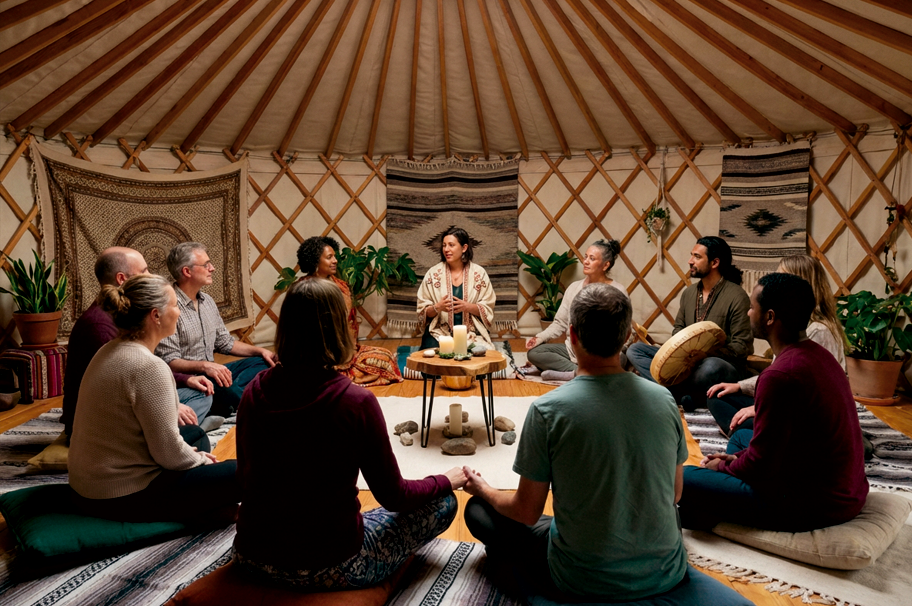
Special Considerations for Plant Medicine Retreats
Extra vigilance is needed for safe shamanic retreat experiences involving plant medicines.
Additional Safety Requirements
For ayahuasca, psilocybin, or other plant medicine retreats:
| Requirement | Why It Matters |
|---|---|
| Thorough medical screening | Medication interactions can be fatal |
| Medication protocols | Clear guidance on what to stop and when |
| Experienced facilitators | Plant medicine requires specialized skills |
| Adequate support staff | More hands needed during ceremonies |
| Medical access | Emergencies can happen |
| Proper dietary preparation | Dieta is safety, not just tradition |
| Multiple ceremonies | One ceremony isn’t enough for safe, deep work |
| Integration support | Plant medicine opens deeply; integration is essential |
Medication Contraindications
Critical—these can be life-threatening with ayahuasca:
| Medication Type | Risk Level |
|---|---|
| SSRIs (antidepressants) | DANGEROUS—serotonin syndrome |
| MAOIs | DANGEROUS—severe interaction |
| Lithium | DANGEROUS—seizure risk |
| Tramadol | DANGEROUS—seizure risk |
| ADHD stimulants | HIGH RISK—cardiovascular |
| Blood pressure medications | MODERATE-HIGH RISK |
| St. John’s Wort | MODERATE RISK |
| Certain antibiotics | VARIES |
A safe plant medicine retreat will:
- Ask detailed questions about ALL medications
- Require stopping certain medications weeks before
- Possibly require medical clearance
- Refuse participants who can’t safely stop contraindicated medications
Verifying Plant Medicine Retreat Safety
Additional questions for plant medicine retreats:
- What medications are contraindicated and why?
- How far in advance must I stop certain medications?
- What medical support is available during ceremonies?
- What’s your protocol for medical emergencies?
- How do you source your medicine? (Quality and purity)
- How many ceremonies are included?
- What’s the integration support?
How to Research and Verify
Practical steps for finding a safe shamanic retreat.
Online Research
Check multiple sources:
- Retreat’s own website (look for transparency and detail)
- Review platforms (Retreat Guru, AyaAdvisors for plant medicine)
- Google reviews
- Social media presence and comments
- Forum discussions (Reddit, Tribe, specialized forums)
What to look for in reviews:
- Consistent positive experiences over time
- How negative experiences were handled
- Mentions of safety and support
- Specific details (not just vague praise)
- Reviews from people similar to you
Direct Communication
Before booking, contact the retreat:
- Ask your questions directly
- Notice how they respond (defensive vs. welcoming)
- Request a phone or video call if possible
- Ask for references from past participants
- Trust your gut feeling about the interaction
Verify Claims
Don’t just take their word:
- Research facilitators’ claimed training
- Check if lineage/teachers are verifiable
- Look for independent confirmation of credentials
- Search for any complaints or warnings
- Ask in shamanic/retreat communities about reputation
Trust Your Intuition
After research, check in with yourself:
- Does this feel right?
- Do I trust these people?
- Are my concerns being addressed?
- Is anything feeling “off”?
Your intuition is data. If something doesn’t feel right, honor that—even if you can’t articulate why.
The Screening Process: What to Expect
A legitimate safe shamanic retreat will screen you thoroughly.
What Good Screening Looks Like
Written intake form covering:
- Contact and emergency contact information
- Medical history (conditions, surgeries, allergies)
- Psychiatric history (diagnoses, hospitalizations, current treatment)
- All current medications and supplements
- Substance use history
- Trauma history (general, not detailed)
- Current life situation and stability
- Previous experience with shamanic work, meditation, or altered states
- Intentions and goals for the retreat
- How you heard about the retreat
Phone or video screening (for intensive retreats):
- Opportunity for them to assess fit
- Opportunity for you to ask questions
- Builds initial relationship
- May include more detailed discussion of concerns
What They’re Evaluating
| Factor | Why It Matters |
|---|---|
| Medical safety | Can you physically handle the practices? |
| Psychological stability | Are you stable enough for intensive work? |
| Medication interactions | Are there dangerous contraindications? |
| Realistic expectations | Do you understand what’s involved? |
| Appropriate fit | Is this retreat right for your needs? |
| Support system | Do you have support for after? |
| Motivation | Are you doing this for healthy reasons? |
If You’re Screened Out
Being declined isn’t rejection—it’s protection.
If a retreat says you’re not appropriate:
- Ask why (they should explain)
- Ask for referrals to more appropriate resources
- Address the concerns (therapy, medication changes, stabilization)
- Try again when circumstances change
A retreat that accepts everyone isn’t being inclusive—it’s being negligent.
Cost Considerations
Understanding costs helps you evaluate a safe shamanic retreat.
What Affects Price
| Factor | Impact on Price |
|---|---|
| Location | Western countries cost more |
| Facilitator experience | More experienced = higher fees |
| Facilitator-to-participant ratio | More support = higher cost |
| Accommodation quality | Basic to luxury |
| Program length | Longer = more expensive |
| Plant medicine inclusion | Adds cost and complexity |
| Integration support | Comprehensive support costs more |
| Remote/special locations | Travel and logistics |
Typical Price Ranges
| Retreat Type | Duration | Price Range |
|---|---|---|
| Weekend drum journey | 2-3 days | $300-$700 |
| Week-long shamanic retreat | 5-7 days | $1,500-$3,500 |
| Ayahuasca retreat (Peru) | 7-10 days | $1,500-$4,000 |
| Ayahuasca retreat (Costa Rica) | 7-10 days | $3,000-$6,000 |
| Luxury shamanic retreat | 7+ days | $5,000-$15,000 |
Price and Safety
Important considerations:
- Very cheap isn’t always good — May indicate inadequate staffing, poor conditions, or inexperienced facilitators
- Very expensive isn’t always better — High prices don’t guarantee quality or safety
- Mid-range often offers best value — Adequate resources without luxury markup
What you’re paying for:
- Qualified facilitators’ time and expertise
- Safe, appropriate facilities
- Adequate support staff
- Quality food and accommodation
- Integration support
- The retreat’s sustainability
Red Flags in Pricing
- Hidden costs revealed after booking
- Pressure to pay immediately
- No refund policy whatsoever
- Prices that seem too good to be true
- Upselling during the retreat
After Booking: Preparation and Arrival
Once you’ve chosen a safe shamanic retreat, prepare well.
Before You Go
Practical preparation:
- Complete all required paperwork honestly
- Follow any dietary or lifestyle guidelines
- Arrange travel and logistics
- Inform emergency contacts
- Prepare for time offline
- Pack appropriately
Mental/emotional preparation:
- Clarify your intentions
- Journal about hopes and fears
- Begin turning inward
- Reduce stimulation and busyness
- Address any lingering concerns with the retreat
Upon Arrival
Assess the environment:
- Does it match what was described?
- Do you feel safe?
- Are facilitators present and welcoming?
- Is the space clean and appropriate?
- Are other participants being screened?
Trust your gut:
- If something feels seriously wrong, you can leave
- Communicate concerns to facilitators
- You always have the right to not participate
During the Retreat
Your ongoing responsibility:
- Communicate honestly with facilitators
- Speak up if you’re struggling
- Respect your own limits
- Follow safety guidelines
- Support fellow participants appropriately
Learn more:
→ Shamanic vs ayahuasca retreats
→ How to choose a trauma-informed retreat
FAQ: Choosing a Safe Shamanic Retreat
How do I know if a facilitator is actually qualified? Ask directly about their training—who taught them, for how long, and in what tradition. Legitimate facilitators are happy to share this information. Look for years of apprenticeship (not just weekend workshops), ongoing connection to teachers, and verifiable lineage. Check reviews and ask for references. Be cautious of those who are vague, defensive, or claim self-taught “natural” abilities without formal training.
What if I can’t find reviews for a retreat? New retreats may have limited reviews, which isn’t automatically a red flag—but it does mean more due diligence. Ask for references directly. Have a detailed conversation with facilitators. Research the facilitators’ backgrounds independently. If you can’t verify anything and they won’t provide references, consider waiting until more information is available or choosing a more established option.
Is it safe to attend a retreat alone? Yes, most people attend shamanic retreats alone. The retreat itself provides community and support. However, ensure someone at home knows where you are and how to reach you. Have a plan for getting home safely. For plant medicine retreats especially, consider having someone available by phone for the days after you return.
What should I do if I feel unsafe during a retreat? Trust your instincts. If something feels wrong, speak to facilitators first—it may be a misunderstanding or something they can address. If your concerns aren’t addressed or the situation is serious (boundary violations, dangerous practices), you have the right to leave. Have emergency contacts and transportation options available. Your safety is more important than completing the retreat.
How important is the facilitator-to-participant ratio? Very important, especially for intensive work or plant medicine. A ratio of 1:6 or better ensures adequate support if multiple people need help simultaneously. Larger groups with few facilitators mean you may not get support when you need it. For gentle practices like basic drum journeys, larger ratios may be acceptable. For ayahuasca or intensive healing work, insist on adequate support.
Should I be concerned about cultural appropriation? It’s worth considering. Authentic shamanic work respects its sources. Look for facilitators who have genuine relationships with the traditions they share, who acknowledge where practices come from, and who give back to source communities. Be cautious of those who mix traditions carelessly, claim titles they haven’t earned, or profit without any connection to indigenous communities. This isn’t just ethics—it often correlates with quality and safety.
What if a retreat has mostly positive reviews but a few negative ones? Read the negative reviews carefully. What specifically went wrong? How did the retreat respond? One-off issues happen everywhere. Patterns of the same problem are concerning. How the retreat handles criticism matters—defensive, dismissive responses are red flags. Thoughtful acknowledgment and improvement indicate integrity. No retreat is perfect; look for how they handle imperfection.
Is it okay to ask a lot of questions before booking? Absolutely. Legitimate retreats welcome questions—they want participants who are well-informed and appropriately prepared. If a retreat is annoyed by your questions, dismissive of your concerns, or pressures you to book without answering, that’s a red flag. Your questions demonstrate that you take this seriously, which is exactly the attitude good retreats want to see.
Final Thoughts
Choosing a safe shamanic retreat is one of the most important decisions you’ll make in your healing journey.
The shamanic path offers profound transformation—connection with spirit, healing of old wounds, guidance for your life’s direction. But this power requires proper containers. The right retreat, with qualified facilitators, appropriate safety protocols, and genuine integrity, creates conditions where deep healing can safely occur.
The wrong retreat—with undertrained facilitators, inadequate safety measures, or questionable ethics—can cause harm that takes years to heal.
You deserve better than that. You deserve facilitators who truly know what they’re doing. You deserve an environment designed for your safety. You deserve practices rooted in genuine tradition or legitimate training. You deserve to be screened, supported, and cared for throughout your experience.
That retreat exists. Your job is to find it.
Take your time. Do your research. Ask hard questions. Trust your gut. And when you find the right fit—when the facilitators are qualified, the safety measures are solid, and something in you says “yes”—then step forward with confidence.
The spirits are waiting. Make sure you meet them in a container worthy of the encounter.
Ready to find a safe, authentic shamanic retreat?
We’ve vetted shamanic retreats worldwide for safety, authenticity, and genuine transformative potential.