How to Choose a 30-Day Wellness Retreat in Colombia

If a weekend retreat is a deep breath, a 30-day wellness retreat in Colombia is a full nervous-system rewrite. This 30-day integral wellness eco-living retreat with IKY in Cali, Colombia, is built for people who don’t just want a break from life—they want a new relationship with it. The promise here isn’t a quick glow-up. It’s a month of steady practice, lifestyle structure, and cultural immersion that makes real change possible because there’s finally enough time for the body and mind to catch up. If you’re browsing longer-term options through Wellness Retreats, this is the kind of container that’s designed to re-pattern daily life—not just inspire it.
Table Of Content
- Retreat snapshot (quick facts)
- The 30-day arc: why long retreats create deeper change
- Daily life: yoga and wellness as lived practice (not a one-off class)
- Eco-living in practice: simplicity that supports clarity
- Community: soft accountability and real support
- Cali, Colombia: Latin culture as part of the reset
- Practical expectations: what to plan for with a 30-day retreat
- Who this retreat is best for
- Want a full-life reset that actually has time to become real life?
- FAQ
Affiliate disclosure: This page contains an affiliate link. If a booking is made through it, a commission may be earned at no extra cost. The review stays honest and practical either way. Read our editorial policy.
Ready to live your wellness for a full month (not just “visit” it)?
Retreat snapshot (quick facts)
- Location: Cali, Colombia
- Length: 30 days
- Core pillars: daily yoga + wellness rhythm + eco-living structure + Latin culture immersion
- Best fit: people who want sustainable habits, calmer baseline, and real-life integration
- Not a fit for: anyone wanting a quick weekend transformation
The 30-day arc: why long retreats create deeper change
Short retreats can be powerful, but they often end right when the system starts to settle. A 30-day retreat gives the process time to unfold in layers—physical, emotional, mental, and behavioral. Instead of trying to “get results” fast, the retreat creates space for something more sustainable: habits that form naturally, a calmer baseline, and a clearer sense of what actually supports well-being in daily life.
Week 1: arrival + decompression (the system starts to exhale)
The first days of a long retreat are often underestimated. They’re not about peak experiences—they’re about landing. This is when the body releases travel tension, the mind stops scanning, and the nervous system begins to trust the environment. In a program like this, yoga and daily rhythm become stabilizers. The goal isn’t intensity. It’s consistency—showing up, breathing, moving, and letting internal noise settle.
Week 2: routine becomes medicine (habits start forming naturally)
Once the schedule becomes familiar, the retreat starts doing what shorter programs can’t: it turns wellness into something that happens with less effort. The body begins to anticipate practice. The mind becomes less resistant. Eco-living and community matter here—when lifestyle is built into the container, discipline becomes less necessary and change becomes more sustainable.

Week 3: integration + identity shift (the deeper work)
By the third week, many guests notice a subtle but powerful shift: wellness stops feeling like a project and starts feeling like a baseline. Emotional clarity often increases because sleep is steadier and the system has fewer spikes. This is also where cultural immersion can become unexpectedly regulating—music, movement, social warmth, and rhythm—less as entertainment and more as nervous-system nourishment. If your readers arrive through Meditation Retreats, this is the “embodied mindfulness” layer: presence that’s lived, not performed.
Week 4: consolidation + “how to take this home”
The final stretch is where a long retreat becomes truly valuable: translating the experience into real life. A month-long container gives enough time to test what works, refine routines, and leave with a plan that feels realistic. Instead of leaving inspired but overwhelmed, the best long retreats send people home with something quieter and stronger: confidence that the new baseline is real.
Daily life: yoga and wellness as lived practice (not a one-off class)
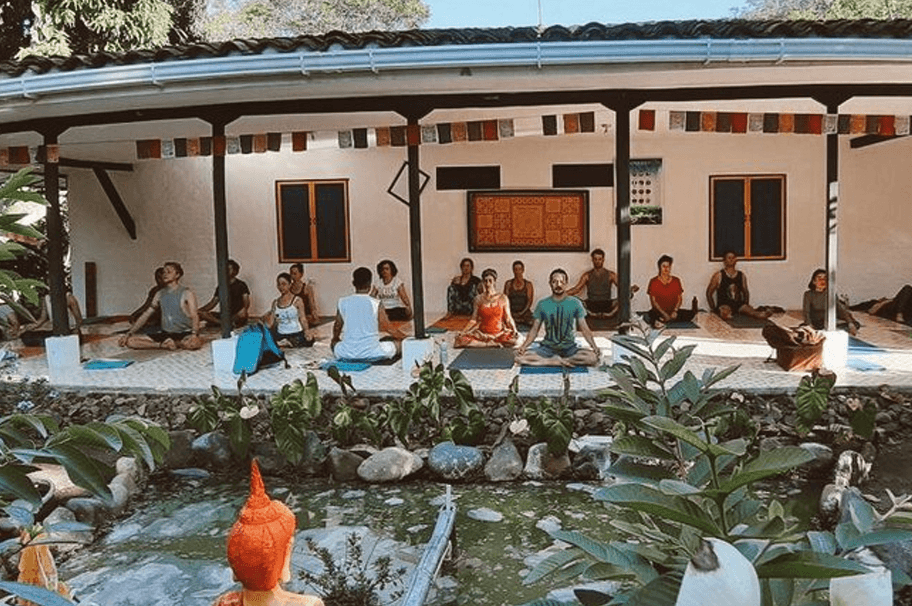
This retreat includes yoga as a core pillar, but the real power is repetition over time. Over 30 days, yoga becomes less about flexibility and more about regulation, consistency, and self-trust. Expect the experience to feel more like living in practice than attending sessions—especially for readers who typically browse wellness retreats and want something that actually sticks.
Eco-living in practice: simplicity that supports clarity
Eco-living isn’t just a theme—it’s a structure. It tends to bring people back to basics: simpler choices, more presence, and a lifestyle that supports well-being rather than draining it. In a month-long container, eco-living often translates into fewer decisions, cleaner rhythms, and a quieter mind. This simplicity can feel surprisingly luxurious—not because it’s flashy, but because it’s calm.
Community: soft accountability and real support
A month in a community container creates a specific kind of accountability—human, consistent, and supportive. Not pressure. Just the quiet pull of being around others who are also choosing health, clarity, and growth every day. Over time, community becomes part of the medicine: you don’t have to “motivate” yourself as much, because the environment keeps you oriented.
Cali, Colombia: Latin culture as part of the reset
Cali is known for its vibrant cultural energy. In a retreat like this, Latin culture isn’t a side activity—it becomes part of the reset: movement, rhythm, social warmth, and aliveness that can soften rigidity and bring the system back into joy. If you’re building topical clusters, it also helps to connect this page to your Columbia destination hub so visitors can explore other Colombia-based retreats without bouncing.
Practical expectations: what to plan for with a 30-day retreat
A longer retreat asks for a different mindset than a short one. It helps to arrive with:
- enough flexibility (work, responsibilities, and mental space)
- willingness to go slow (the first week is often just landing)
- a plan for re-entry (lighter schedule afterward supports integration)
Who this retreat is best for
This 30-day IKY retreat is ideal for someone who wants sustainable change, not a temporary high. It’s especially suited for people who’ve tried to “fix everything” in bursts—then watched old patterns return. A month gives the system enough time to actually change.
Best for
- People who want long-form habit change and a calmer baseline
- Guests who thrive with structure, community, and daily practice
Not ideal for
- Anyone looking for a quick getaway or instant results
- Travelers who can’t commit to a full month of consistent rhythm
Want a full-life reset that actually has time to become real life?
If you’re ready for more than a getaway—ready to live your wellness for a full month, supported by yoga, eco-living structure, and the warmth of Latin culture—this IKY retreat in Cali is a rare opportunity.
FAQ
Is a 30-day retreat too long for a first retreat?
Not necessarily—but it helps to be ready for a slower arc. The first week is often just decompression, and the value comes from consistency over time.
What makes a long retreat more effective than a 7-day program?
Time. A month allows routines to become automatic, sleep to stabilize, and integration to happen while you’re still inside the container.
Is this more “wellness” or “spiritual”?
It reads as lifestyle-based wellness: daily practice, eco-living structure, community, and cultural immersion. For more overtly inner-work-focused options, readers often compare with Healing Retreats.
What should I plan for before I arrive?
Plan for flexibility (work/responsibilities), a willingness to go slow, and a softer re-entry afterward so the new baseline can stick.
What’s typically included?
Inclusions vary by date/package, so confirm on the booking page (accommodation, meals, yoga schedule, and any cultural activities).