Yoga Retreat Styles Explained: Find Your Perfect Practice
Affiliate Disclosure
We partner with retreat centers and booking platforms. When you book through our links, we may earn a commission at no extra cost to you. This supports our work and allows us to keep providing honest, in-depth reviews. Read our editorial policy
Table Of Content
- Affiliate Disclosure
- Introduction
- Quick Comparison: All Yoga Retreat Styles
- Vinyasa Yoga Retreats
- Hatha Yoga Retreats
- Yin Yoga Retreats
- Restorative Yoga Retreats
- Ashtanga Yoga Retreats
- Kundalini Yoga Retreats
- Iyengar Yoga Retreats
- Power Yoga Retreats
- Hot Yoga / Bikram Retreats
- Yoga Nidra Retreats
- Comparing Yoga Retreat Styles: Which Is Right for You?
- Mixed-Style Retreats
- FAQ: Yoga Retreat Styles
- Final Thoughts
Introduction
You’ve decided to book a yoga retreat. Exciting! But then you see the options: Vinyasa Flow, Hatha Yoga, Yin Yoga, Ashtanga, Kundalini, Restorative… What do these yoga retreat styles actually mean? And which one is right for you?
Choosing the wrong style can mean spending a week in classes that don’t match your energy, goals, or fitness level. Choosing the right one can be transformative.
This guide breaks down all major yoga retreat styles in plain language. No jargon, no assumptions about what you already know. We’ll explain what each style involves, who it’s best for, what to expect at a retreat, and how to decide which fits your needs.
Whether you want a workout, deep relaxation, spiritual exploration, or foundational learning—there’s a yoga retreat style designed for exactly that. Let’s find yours.
Quick Comparison: All Yoga Retreat Styles
Before diving deep, here’s an overview of all major yoga retreat styles at a glance:
| Style | Pace | Intensity | Focus | Best For |
|---|---|---|---|---|
| Vinyasa | Flowing | Medium-High | Movement, breath | Those wanting workout + yoga |
| Hatha | Slow | Low-Medium | Alignment, basics | Beginners, foundational learning |
| Yin | Very slow | Low | Deep stretch, stillness | Flexibility, stress relief |
| Restorative | Very slow | Very low | Deep relaxation | Burnout, recovery, healing |
| Ashtanga | Structured | High | Discipline, strength | Committed practitioners |
| Kundalini | Variable | Variable | Energy, spirituality | Spiritual seekers |
| Iyengar | Slow | Low-Medium | Precision, props | Injury recovery, alignment |
| Power | Fast | High | Fitness, strength | Athletes, fitness enthusiasts |
| Hot/Bikram | Structured | High | Heat, detox | Those who enjoy intense heat |
| Yoga Nidra | Still | None | Sleep, relaxation | Anxiety, insomnia, deep rest |
Vinyasa Yoga Retreats
Vinyasa is one of the most popular yoga retreat styles worldwide—and for good reason.
What Is Vinyasa?
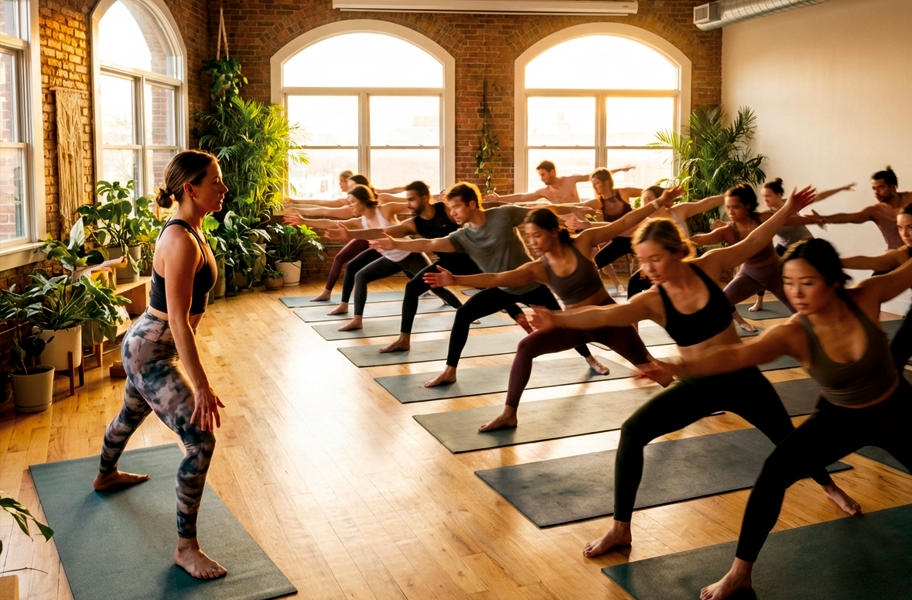
Vinyasa means “to place in a special way.” In practice, it refers to flowing sequences where movement is synchronized with breath. Each inhale and exhale guides you into the next pose, creating a moving meditation.
Unlike styles with fixed sequences, Vinyasa classes vary. Teachers create unique flows, so no two classes are identical. This variety keeps the practice fresh and engaging.
What to Expect at a Vinyasa Retreat
- Class length: 60-90 minutes typically
- Daily practice: 2-4 hours of yoga
- Pace: Continuous movement with brief holds
- Typical sequence: Sun salutations, standing poses, balances, backbends, inversions, cool-down
- Breath focus: Ujjayi (ocean breath) throughout
- Music: Often included, varies by teacher
- Sweat factor: Moderate to high
Who Vinyasa Retreats Are Best For
✓ Those who enjoy movement and flow ✓ People wanting physical fitness benefits ✓ Practitioners who get bored with repetition ✓ Anyone seeking stress relief through movement ✓ Those with some yoga experience (though beginners welcome at “all levels” retreats)
Who Should Consider Other Styles
✗ Those recovering from injury (too dynamic) ✗ People seeking deep relaxation (too active) ✗ Complete beginners wanting detailed instruction (moves too fast) ✗ Those who prefer structure and predictability
Vinyasa Retreat Snapshot
| Aspect | Details |
|---|---|
| Physical demand | ★★★★☆ |
| Flexibility required | Moderate |
| Spiritual elements | Varies by teacher |
| Beginner friendly | Yes (all levels) |
| Best destinations | Bali, Costa Rica, Portugal |
Hatha Yoga Retreats
Hatha is the foundation of most modern yoga retreat styles—the classic approach.
What Is Hatha?
Hatha is the umbrella term for physical yoga practices. In retreat contexts, “Hatha” typically means a slower, more deliberate practice focused on holding poses and understanding alignment.
The word “Hatha” combines “ha” (sun) and “tha” (moon), representing the balance of opposing energies. Classes emphasize this balance: effort and ease, strength and flexibility, activity and stillness.
What to Expect at a Hatha Retreat
- Class length: 60-90 minutes
- Daily practice: 2-4 hours
- Pace: Slow, deliberate, educational
- Typical sequence: Warm-up, standing poses, seated poses, twists, cool-down, relaxation
- Hold times: 30 seconds to 2 minutes per pose
- Instruction: Detailed alignment cues
- Props: Commonly used (blocks, straps, blankets)
Who Hatha Retreats Are Best For
✓ Complete beginners wanting solid foundations ✓ Those returning to yoga after a break ✓ Anyone wanting to understand poses deeply ✓ Practitioners seeking balance (not too intense, not too gentle) ✓ Those who prefer clear instruction over flowing sequences
Who Should Consider Other Styles
✗ Those wanting an intense workout (too gentle) ✗ Experienced practitioners seeking challenge (may feel basic) ✗ People who prefer continuous movement (too many pauses)
Hatha Retreat Snapshot
| Aspect | Details |
|---|---|
| Physical demand | ★★★☆☆ |
| Flexibility required | Low |
| Spiritual elements | Moderate |
| Beginner friendly | Excellent |
| Best destinations | India, Bali, Thailand |
Yin Yoga Retreats
Yin is one of the most distinctive yoga retreat styles—slow, deep, and profoundly still.
What Is Yin?
Yin yoga targets the connective tissues: ligaments, fascia, joints, and bones. Unlike “yang” styles that work muscles through active movement, Yin uses passive, long-held poses to stress (in a healthy way) deeper tissues.
Poses are held for 3-5 minutes, sometimes longer. This duration allows tissues to release and lengthen gradually. The practice is physically simple but mentally challenging—sitting with discomfort and stillness reveals a lot.
What to Expect at a Yin Retreat
- Class length: 60-90 minutes
- Daily practice: 2-3 hours (often combined with meditation)
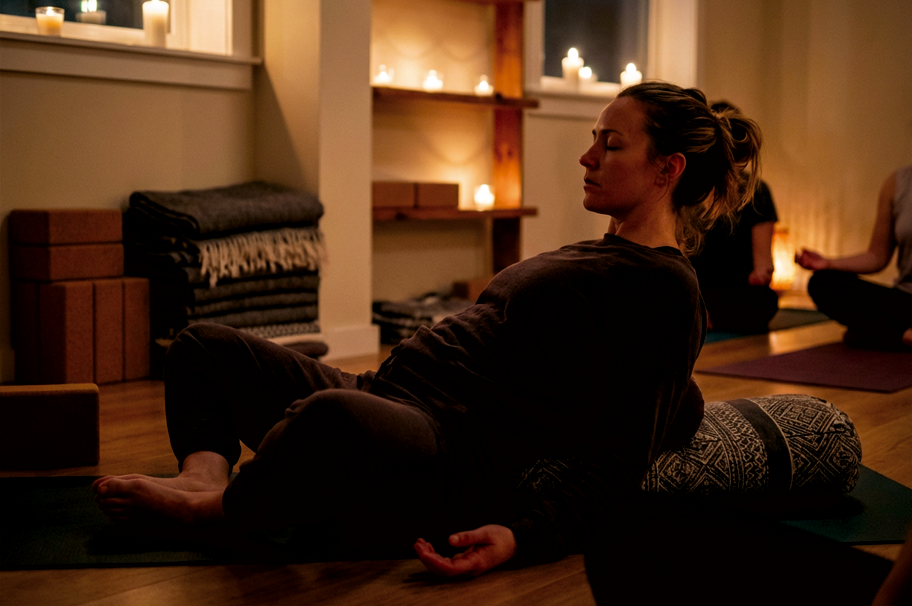
- Pace: Very slow, meditative
- Typical poses: Seated forward folds, hip openers, twists, supported backbends
- Hold times: 3-5+ minutes per pose
- Props: Extensively used (bolsters, blocks, blankets)
- Atmosphere: Quiet, introspective, often candlelit
The Science Behind Yin
Research published in the Journal of Bodywork and Movement Therapies shows that sustained stretching affects fascia and connective tissue differently than brief stretches. Long holds allow the “creep” response—gradual tissue lengthening that doesn’t occur in shorter holds.
Who Yin Retreats Are Best For
✓ Those with tight hips, hamstrings, or lower back ✓ People needing to slow down and de-stress ✓ Athletes wanting to complement intense training ✓ Anyone seeking meditative, introspective practice ✓ Those who sit at desks all day
Who Should Consider Other Styles
✗ Those wanting a workout (no cardiovascular or strength component) ✗ People uncomfortable with stillness and silence ✗ Anyone with hypermobility (may overstretch) ✗ Those seeking dynamic, energizing practice
Yin Retreat Snapshot
| Aspect | Details |
|---|---|
| Physical demand | ★★☆☆☆ |
| Flexibility required | None (props adapt everything) |
| Spiritual elements | Moderate to high |
| Beginner friendly | Yes |
| Best destinations | Thailand, Bali, Portugal |
Restorative Yoga Retreats
Restorative is the gentlest of all yoga retreat styles—pure relaxation.
What Is Restorative?
Restorative yoga uses props to support the body completely, allowing total relaxation without effort. Unlike Yin (which involves some sensation), Restorative aims for zero discomfort. The nervous system shifts into “rest and digest” mode.
Classes typically include only 4-6 poses in 60-90 minutes. Each pose is held for 10-20 minutes with full prop support. The goal isn’t stretching—it’s deep, healing rest.
What to Expect at a Restorative Retreat
- Class length: 60-90 minutes
- Daily practice: 1-3 hours (often combined with meditation, yoga nidra)
- Pace: Extremely slow
- Typical poses: Supported child’s pose, reclined twists, legs up the wall, supported savasana
- Hold times: 10-20 minutes per pose
- Props: Extensive (bolsters, blankets, blocks, eye pillows, straps)
- Atmosphere: Dim lighting, soft music, deeply peaceful
Who Restorative Retreats Are Best For
✓ Those recovering from burnout or exhaustion ✓ People with chronic stress, anxiety, or insomnia ✓ Anyone healing from illness or injury ✓ Those who never allow themselves to rest ✓ Complement to intense work or training schedules
Who Should Consider Other Styles
✗ Those wanting physical challenge (none here) ✗ People who get restless lying still ✗ Anyone seeking fitness benefits ✗ Those wanting to learn yoga poses (minimal instruction)
Restorative Retreat Snapshot
| Aspect | Details |
|---|---|
| Physical demand | ★☆☆☆☆ |
| Flexibility required | None |
| Spiritual elements | Low to moderate |
| Beginner friendly | Excellent |
| Best destinations | Bali, Costa Rica, spa resorts worldwide |
Ashtanga Yoga Retreats
Ashtanga is one of the most demanding yoga retreat styles—structured, disciplined, transformative.
What Is Ashtanga?
Ashtanga follows a fixed sequence of poses, always practiced in the same order. There are six series, each progressively more challenging. Most practitioners spend years on the Primary Series alone.
Traditional Ashtanga is practiced six days a week (rest on Saturdays and moon days). “Mysore style” means self-practice with teacher adjustments; “led class” means the teacher guides everyone through the sequence together.
What to Expect at an Ashtanga Retreat
- Class length: 90-120 minutes
- Daily practice: 2-4 hours
- Pace: Steady, breath-counted
- Sequence: Fixed (Primary Series for most retreats)
- Style: Mysore (self-paced) and/or led classes
- Breath: Ujjayi with specific breath counts per pose
- Adjustments: Hands-on assists common
Who Ashtanga Retreats Are Best For
✓ Disciplined practitioners who love structure ✓ Those wanting to deepen an existing Ashtanga practice ✓ People seeking physical and mental challenge ✓ Anyone drawn to traditional, systematic approach ✓ Those who thrive with daily routine
Who Should Consider Other Styles
✗ Complete beginners (too intense, too fast) ✗ Those with injuries (demanding on body) ✗ People who dislike repetition (same sequence daily) ✗ Anyone seeking gentle, relaxing experience
Ashtanga Retreat Snapshot
| Aspect | Details |
|---|---|
| Physical demand | ★★★★★ |
| Flexibility required | Moderate to high |
| Spiritual elements | Moderate |
| Beginner friendly | No (intro programs only) |
| Best destinations | India (Mysore), Bali, Europe |

Kundalini Yoga Retreats
Kundalini is unlike other yoga retreat styles—more spiritual technology than physical exercise.
What Is Kundalini?
Kundalini yoga aims to awaken dormant energy at the base of the spine and raise it through the chakras. Classes combine physical postures (kriyas), breathwork (pranayama), chanting (mantra), and meditation.
The practice can feel unusual to newcomers: rapid breathing, repetitive movements, extended arm holds, and chanting in Gurmukhi (a Punjabi script). But many find it profoundly transformative.
What to Expect at a Kundalini Retreat
- Class length: 60-90 minutes
- Daily practice: 2-4 hours
- Components: Kriyas (exercise sets), pranayama, meditation, mantra
- Typical elements: Breath of Fire, arm exercises, spinal movements, chanting “Sat Nam”
- Dress code: Often white clothing recommended
- Music: Mantras and Kundalini music throughout
- Atmosphere: Spiritual, devotional, community-oriented
Who Kundalini Retreats Are Best For
✓ Spiritual seekers wanting energetic experience ✓ Those drawn to chanting, mantra, and meditation ✓ People seeking emotional release and transformation ✓ Anyone curious about chakras and energy work ✓ Those wanting something different from physical yoga
Who Should Consider Other Styles
✗ Those uncomfortable with chanting or spiritual elements ✗ People wanting purely physical practice ✗ Anyone skeptical of energy/chakra concepts ✗ Those preferring quiet, introspective practice
Kundalini Retreat Snapshot
| Aspect | Details |
|---|---|
| Physical demand | ★★★☆☆ |
| Flexibility required | Low |
| Spiritual elements | Very high |
| Beginner friendly | Yes (but unique) |
| Best destinations | India, New Mexico, Bali |
Iyengar Yoga Retreats
Iyengar is the most precise of all yoga retreat styles—alignment perfected.
What Is Iyengar?
Founded by B.K.S. Iyengar, this style emphasizes precise alignment and uses props extensively. Poses are held longer to develop awareness, strength, and correct positioning. Teachers undergo rigorous multi-year certification.
Iyengar is therapeutic by nature. The detailed attention to alignment makes it excellent for those with injuries, chronic conditions, or physical limitations.
What to Expect at an Iyengar Retreat
- Class length: 90-120 minutes
- Daily practice: 2-4 hours
- Pace: Slow, meticulous
- Instruction: Extremely detailed alignment cues
- Props: Extensive (blocks, straps, blankets, chairs, ropes, bolsters)
- Holds: Long, with continuous refinement
- Adjustments: Verbal and hands-on, very precise
Who Iyengar Retreats Are Best For
✓ Those recovering from or managing injuries ✓ People wanting to understand poses deeply ✓ Anyone with physical limitations needing modifications ✓ Detail-oriented practitioners ✓ Those seeking therapeutic benefits
Who Should Consider Other Styles
✗ Those wanting flow and movement (too static) ✗ People who dislike detailed instruction ✗ Anyone seeking spiritual or energetic focus ✗ Those wanting a workout (too slow)
Iyengar Retreat Snapshot
| Aspect | Details |
|---|---|
| Physical demand | ★★☆☆☆ |
| Flexibility required | None (props adapt) |
| Spiritual elements | Low |
| Beginner friendly | Excellent |
| Best destinations | India (Pune), Europe, USA |
Power Yoga Retreats
Power Yoga is the fitness-focused end of yoga retreat styles—strength, sweat, and athleticism.
What Is Power Yoga?
Power Yoga emerged in the 1990s as a Western adaptation of Ashtanga. It keeps the athletic intensity but drops the fixed sequence, giving teachers creative freedom. Classes are challenging, fast-paced, and strength-focused.
This style appeals to fitness enthusiasts who want yoga benefits without the spiritual elements. It’s yoga as workout.
What to Expect at a Power Yoga Retreat
- Class length: 60-75 minutes
- Daily practice: 2-4 hours
- Pace: Fast, continuous
- Focus: Strength, endurance, flexibility
- Typical elements: Core work, arm balances, challenging flows
- Music: Upbeat, often contemporary
- Sweat factor: High
Who Power Yoga Retreats Are Best For
✓ Athletes and fitness enthusiasts ✓ Those wanting yoga as workout ✓ People with existing fitness base ✓ Anyone seeking physical challenge ✓ Those less interested in spiritual aspects
Who Should Consider Other Styles
✗ Complete beginners (too intense) ✗ Those with injuries (high demand) ✗ People seeking relaxation (too active) ✗ Anyone wanting traditional yoga philosophy
Power Yoga Retreat Snapshot
| Aspect | Details |
|---|---|
| Physical demand | ★★★★★ |
| Flexibility required | Moderate |
| Spiritual elements | Low |
| Beginner friendly | No |
| Best destinations | USA, Costa Rica, Mexico |
Hot Yoga / Bikram Retreats
Hot yoga is one of the most intense yoga retreat styles—heat amplifies everything.
What Is Hot Yoga?
Hot yoga is practiced in rooms heated to 95-105°F (35-40°C) with high humidity. Bikram is the original, with a fixed 26-pose sequence. Other hot yoga styles vary the sequence but keep the heat.
The heat increases flexibility, promotes sweating (perceived as detoxifying), and intensifies the workout. It’s not for everyone—but devotees love it.
What to Expect at a Hot Yoga Retreat
- Class length: 60-90 minutes
- Daily practice: 1-2 classes (heat limits volume)
- Room temperature: 95-105°F / 35-40°C
- Sequence: Fixed (Bikram) or varied (other hot styles)
- Hydration: Critical—drink constantly
- What to bring: Towel, water, change of clothes
- Sweat factor: Extreme
Who Hot Yoga Retreats Are Best For
✓ Those who enjoy heat and sweating ✓ People wanting intense physical challenge ✓ Anyone seeking perceived detox benefits ✓ Those who’ve tried hot yoga and loved it
Who Should Consider Other Styles
✗ Those who dislike heat (miserable experience) ✗ People with heart conditions or blood pressure issues ✗ Anyone prone to dehydration or heat exhaustion ✗ Complete beginners (too intense for learning) ✗ Those with certain medical conditions (consult doctor)
Hot Yoga Retreat Snapshot
| Aspect | Details |
|---|---|
| Physical demand | ★★★★★ |
| Flexibility required | Low (heat helps) |
| Spiritual elements | Low |
| Beginner friendly | No |
| Best destinations | Thailand, Mexico, specialty studios |
Yoga Nidra Retreats
Yoga Nidra is the stillest of all yoga retreat styles—conscious sleep.
What Is Yoga Nidra?
Yoga Nidra means “yogic sleep.” You lie down, close your eyes, and follow guided instructions that lead you through stages of relaxation into a state between waking and sleeping. The body rests deeply while awareness remains.
One hour of Yoga Nidra is said to equal several hours of regular sleep in terms of restoration. It’s profoundly healing for stress, anxiety, trauma, and insomnia.
What to Expect at a Yoga Nidra Retreat
- Session length: 30-60 minutes
- Daily practice: 1-3 sessions, often combined with gentle yoga
- Position: Lying down (savasana)
- Activity: Following verbal guidance, zero physical effort
- Experience: Deep relaxation, possible insights, sometimes sleep
- Props: Blankets, bolsters, eye pillows for comfort
Who Yoga Nidra Retreats Are Best For
✓ Those with insomnia or sleep issues ✓ People experiencing anxiety or chronic stress ✓ Anyone recovering from trauma (with appropriate support) ✓ Those who struggle to meditate traditionally ✓ People needing deep rest without physical demands
Who Should Consider Other Styles
✗ Those wanting physical practice (none here) ✗ People who can’t lie still ✗ Anyone seeking fitness benefits ✗ Those wanting to learn yoga poses
Yoga Nidra Retreat Snapshot
| Aspect | Details |
|---|---|
| Physical demand | ☆☆☆☆☆ |
| Flexibility required | None |
| Spiritual elements | Moderate |
| Beginner friendly | Excellent |
| Best destinations | Bali, India, wellness centers worldwide |
Comparing Yoga Retreat Styles: Which Is Right for You?
Use this guide to match yoga retreat styles to your goals:
By Goal
| Your Goal | Best Styles |
|---|---|
| Get fit / workout | Vinyasa, Power, Ashtanga |
| Deep relaxation | Restorative, Yoga Nidra |
| Increase flexibility | Yin, Hatha |
| Learn foundations | Hatha, Iyengar |
| Spiritual growth | Kundalini, traditional Hatha |
| Stress relief | Yin, Restorative, Yoga Nidra |
| Injury recovery | Iyengar, Restorative |
| Mental challenge | Yin, Ashtanga |
| Detox feeling | Hot Yoga, Power |
By Experience Level
| Your Level | Best Styles |
|---|---|
| Complete beginner | Hatha, Restorative, Yin |
| Some experience | Vinyasa (all levels), Hatha, Yin |
| Intermediate | Any style matching your goals |
| Advanced | Ashtanga, Power, advanced Vinyasa |
By Personality
| You Are… | Consider… |
|---|---|
| Active, energetic | Vinyasa, Power, Ashtanga |
| Calm, introspective | Yin, Restorative, Yoga Nidra |
| Detail-oriented | Iyengar, Hatha |
| Spiritually curious | Kundalini |
| Fitness-focused | Power, Hot Yoga |
| Stressed, burned out | Restorative, Yoga Nidra |
Mixed-Style Retreats
Many retreats combine multiple yoga retreat styles—and this can be ideal.
Common Combinations
- Vinyasa + Yin: Active morning practice, restorative evening
- Hatha + Meditation: Foundational yoga with mindfulness training
- Ashtanga + Restorative: Intense practice balanced with recovery
- Kundalini + Yoga Nidra: Energetic work with deep rest
- Vinyasa + Yoga Nidra: Movement and stillness balance
Benefits of Mixed-Style Retreats
✓ Experience variety without committing to one style ✓ Balance active and restorative practices ✓ Discover what resonates with you ✓ Avoid burnout from too much intensity ✓ Get well-rounded benefits
Who Mixed-Style Retreats Are Best For
- First-time retreaters unsure what they’ll enjoy
- Those wanting balanced experience
- People who get bored with repetition
- Anyone seeking both fitness and relaxation
Learn more:
→ How to Choose Your First Yoga Retreat
FAQ: Yoga Retreat Styles
Which yoga retreat style is best for beginners? Hatha, Restorative, and Yin are most beginner-friendly. Hatha teaches foundations with clear instruction. Restorative requires no flexibility or strength. Yin is accessible with props. Vinyasa works for beginners if labeled “all levels,” but moves faster. Avoid Ashtanga, Power, and Hot Yoga until you have experience.
Can I do yoga retreats if I’m not flexible? Absolutely. Flexibility is a result of yoga, not a prerequisite. Yin, Restorative, Iyengar, and Hatha all use props to make poses accessible regardless of flexibility. Even Vinyasa offers modifications. Don’t let inflexibility stop you—that’s exactly why yoga helps.
What’s the difference between Vinyasa and Hatha? Vinyasa flows continuously, linking breath to movement with minimal pauses. Hatha holds poses longer with more instruction between them. Vinyasa feels like a moving meditation; Hatha feels more educational. Vinyasa is more physically demanding; Hatha is more accessible for beginners.
Is Yin yoga actually yoga? Yes, though it looks different. Yin targets connective tissue rather than muscles, using long-held passive poses. It’s based on Chinese meridian theory and Taoist philosophy. While less physical than other styles, Yin develops flexibility, stillness, and mental resilience. It complements active styles beautifully.
What if I choose the wrong style? Most retreats welcome questions before booking. Many offer mixed styles, so you’ll experience variety. If you’re unsure, choose a retreat labeled “all levels” or one combining styles (like Vinyasa + Yin). Even if a style isn’t perfect, you’ll learn what you prefer for next time.
Are spiritual elements required in yoga retreats? No. Styles like Power Yoga, fitness-focused Vinyasa, and Hot Yoga minimize spiritual content. Iyengar focuses on alignment, not philosophy. If you want purely physical practice, these styles deliver. If you want spiritual depth, Kundalini and traditional Hatha offer more.
How do I know if a retreat matches its described style? Read reviews carefully—past participants describe the actual experience. Check teacher credentials and training background. Ask the retreat directly about class structure, intensity, and what to expect. Reputable retreats are transparent about their approach.
Can I combine different styles in my regular practice? Absolutely—many practitioners do. A common approach: active practice (Vinyasa, Ashtanga) 2-3 times weekly, Yin or Restorative 1-2 times weekly. This balances strength, flexibility, and recovery. Retreats are a great place to discover combinations that work for you.
Final Thoughts
Understanding yoga retreat styles transforms your search from overwhelming to exciting. Each style offers something unique—there’s no “best” style, only the best style for you right now.
Trust your instincts. If a style description excites you, explore it. If it sounds exhausting or boring, honor that too. Your body and mind know what they need.
Remember: you can always try another style next time. A retreat is an exploration, not a lifetime commitment. The yoga world is vast and welcoming. Your perfect practice is waiting.
Ready to find your perfect yoga retreat style?
Browse our curated collection of retreats across all styles—from dynamic Vinyasa to peaceful Yin and everything in between.