Juice Fasting vs. Whole Food Detox: Which Retreat Is Right for You?
Affiliate Disclosure
We partner with retreat centers and booking platforms. When you book through our links, we may earn a commission at no extra cost to you. This supports our work and allows us to keep providing honest, in-depth reviews. Read our editorial policy
Table Of Content
- Affiliate Disclosure
- Introduction
- Understanding the Two Approaches
- Juice Fasting vs Whole Food Detox: Side-by-Side Comparison
- The Juice Fasting Experience: What to Expect
- The Whole Food Detox Experience: What to Expect
- Comparing Results: Juice Fasting vs Whole Food Detox
- Making the Choice: Juice Fasting vs Whole Food Detox Decision Guide
- Health Considerations: Juice Fasting vs Whole Food Detox Safety
- Practical Comparison: What Retreat Life Looks Like
- Cost Comparison: Juice Fasting vs Whole Food Detox Retreats
- After the Retreat: Transition and Maintenance
- FAQ: Juice Fasting vs Whole Food Detox
- Final Thoughts: Choosing Your Path
Introduction
You’ve decided a detox retreat is exactly what you need. But now you’re facing a fundamental choice: juice fasting vs whole food detox—which approach is right for you?
This juice fasting vs whole food detox question isn’t just about preference—it’s about matching the right approach to your body, your goals, and your life situation. Choose well, and you’ll experience the transformation you’re seeking. Choose poorly, and you might struggle through an approach that doesn’t serve you.
Both methods can deliver powerful results. Both have devoted advocates. Both have legitimate science behind them. But they work differently, feel differently, and suit different people.
Juice fasting offers rapid results through complete digestive rest. Whole food detox provides gentler cleansing while teaching sustainable habits. One isn’t inherently better than the other—but one is almost certainly better for you.
This guide breaks down everything you need to know about juice fasting vs whole food detox retreats. We’ll compare how each works, what you’ll experience, who each approach suits best, and how to make the right choice for your specific situation.
By the end, you’ll know exactly which path to take.
Let’s compare.
Understanding the Two Approaches
Before comparing, let’s clearly define what each approach involves.
What Is Juice Fasting?
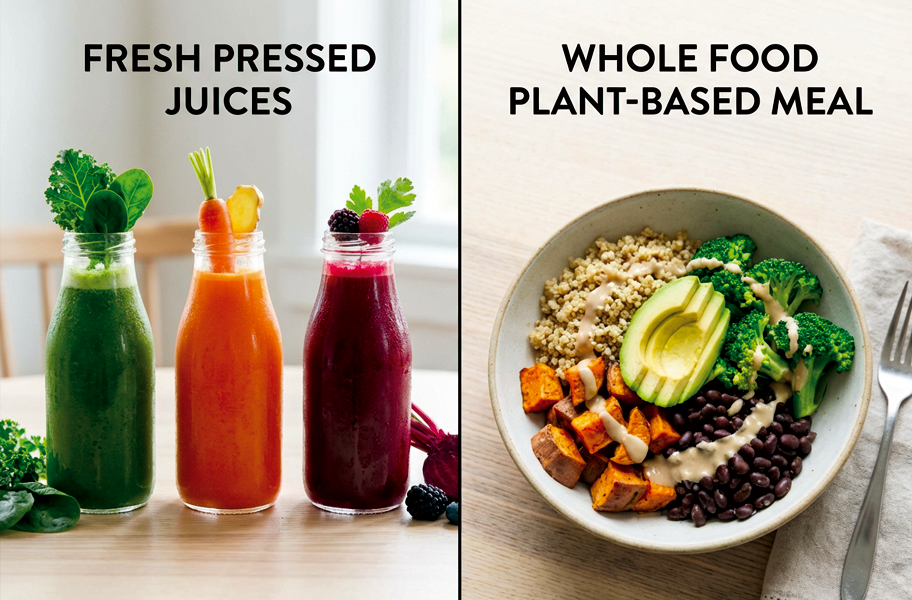
Definition: Consuming only fresh-pressed fruit and vegetable juices (and water/herbal tea) for a set period, typically 3–14 days. No solid food.
The principle: By removing fiber and solid food, you give your digestive system complete rest while flooding your body with easily absorbed nutrients. This allows energy normally used for digestion to be redirected toward healing and detoxification.
What you consume:
- Fresh-pressed vegetable juices (celery, cucumber, leafy greens, beets)
- Fresh-pressed fruit juices (apple, citrus, watermelon—usually less than vegetables)
- Water (often warm with lemon)
- Herbal teas
- Sometimes: coconut water, nut milks, vegetable broths
What you don’t consume:
- Any solid food
- Fiber
- Protein (minimal)
- Fats (minimal)
- Caffeine, alcohol, processed anything
What Is Whole Food Detox?
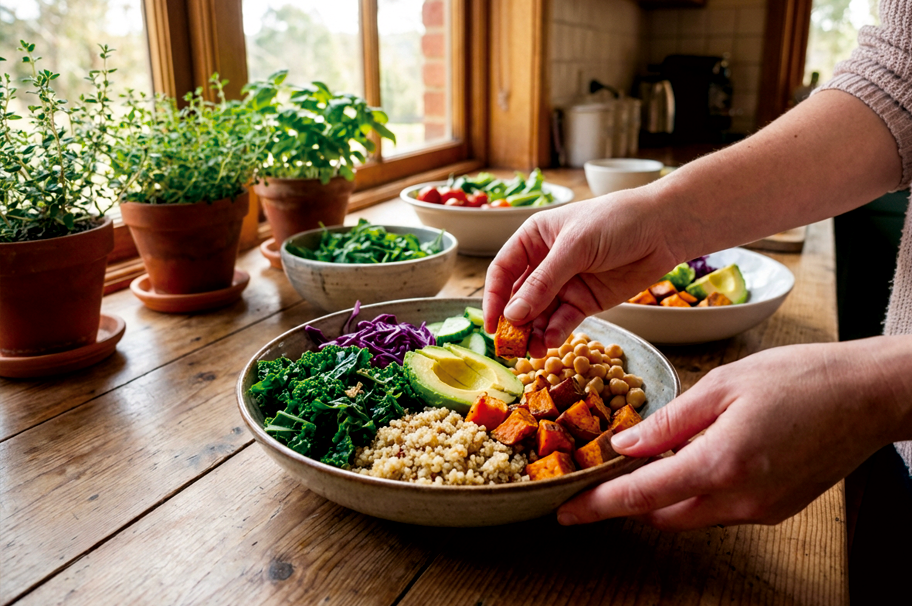
Definition: Eating only clean, unprocessed, typically plant-based whole foods for a set period, usually 7–21 days. You eat solid food, but it’s carefully selected for detoxification support.
The principle: By eliminating processed foods, common allergens, and toxins while eating nutrient-dense whole foods, you support your body’s natural detoxification pathways without the stress of fasting. The fiber in whole foods helps bind and eliminate toxins.
What you consume:
- Vegetables (cooked and raw)
- Fruits
- Whole grains (quinoa, brown rice, millet)
- Legumes (lentils, beans)
- Nuts and seeds
- Healthy fats (avocado, olive oil, coconut)
- Herbs and spices
- Water and herbal teas
What you don’t consume:
- Processed foods
- Refined sugar
- Gluten (often)
- Dairy (usually)
- Caffeine
- Alcohol
- Animal products (often, but not always)
Juice Fasting vs Whole Food Detox: Side-by-Side Comparison
Here’s a comprehensive comparison to help you understand the juice fasting vs whole food detox difference.
Quick Comparison Table
| Factor | Juice Fasting | Whole Food Detox |
|---|---|---|
| Solid food | None | Yes—whole plant foods |
| Hunger level | Moderate to high (especially days 2–4) | Low to moderate |
| Energy during | Variable—low then high | Generally stable |
| Detox symptoms | Often intense | Usually milder |
| Speed of results | Faster, more dramatic | Slower, more gradual |
| Sustainability after | Requires careful transition | Easier to maintain |
| Learning component | Limited (not eating) | High (learning to eat well) |
| Digestive rest | Complete | Partial |
| Suitable for beginners | Moderate (with support) | Yes—very beginner-friendly |
| Typical duration | 3–14 days | 7–21 days |
| Physical challenge | Higher | Lower |
| Social ease | Difficult (not eating with others) | Easier (still eating meals) |
How Each Approach Works in Your Body
Juice Fasting—The Mechanism:
- Digestive rest: Without fiber and solid food, your digestive system essentially takes a vacation. This frees up significant energy (digestion uses 25–30% of daily energy).
- Nutrient flooding: Fresh juices deliver vitamins, minerals, and phytonutrients in easily absorbed form. Your cells get concentrated nutrition without digestive work.
- Autophagy activation: After 24–48 hours without protein, your body begins autophagy—cellular “cleanup” where damaged cells are recycled. This is a key benefit of fasting.
- Ketosis (mild): Without carbohydrate-heavy meals, your body may enter mild ketosis, burning fat for fuel and releasing fat-stored toxins.
- Elimination: Without new food coming in, your body focuses on eliminating accumulated waste. Bowel movements may decrease then increase as cleansing deepens.
Whole Food Detox—The Mechanism:
- Toxin elimination: Removing processed foods, sugar, caffeine, and alcohol stops the influx of toxins, allowing your body to catch up on elimination.
- Fiber binding: The fiber in whole foods binds to toxins in your digestive tract and carries them out. This is gentle but effective detoxification.
- Liver support: Specific foods (cruciferous vegetables, leafy greens, beets, garlic) actively support liver detoxification pathways.
- Gut healing: Whole plant foods feed beneficial gut bacteria, improving your microbiome and digestive function.
- Inflammation reduction: Eliminating inflammatory foods (sugar, processed oils, gluten, dairy) reduces systemic inflammation.
- Nutrient restoration: Nutrient-dense whole foods replenish depleted vitamins and minerals while you cleanse.

The Juice Fasting Experience: What to Expect
Understanding the day-by-day experience helps you decide if juice fasting suits you.
Day-by-Day Timeline
Day 1: Adjustment
- Hunger is present but manageable
- Possible headache (especially if caffeine-dependent)
- Energy may feel normal or slightly low
- Mind frequently thinks about food
- Sleep may be lighter
Days 2–3: The Challenge
- Hunger peaks—this is often the hardest period
- Detox symptoms may intensify (headache, fatigue, irritability)
- Energy typically drops
- Possible: coated tongue, body odor, skin breakouts
- Strong cravings and food thoughts
- Emotional sensitivity
Days 4–5: The Shift
- Hunger often dramatically decreases
- Energy begins returning—sometimes surging
- Mental clarity improves
- Detox symptoms ease
- Sense of lightness and cleanliness
- Food thoughts diminish
Days 6–7+: The Flow
- Minimal hunger
- Stable or high energy
- Significant mental clarity
- Emotional equilibrium
- Feeling “clean” and light
- Possible spiritual or emotional insights
Benefits of Juice Fasting
✅ Rapid results: Weight loss, reduced bloating, and increased energy can be noticeable within days.
✅ Deep digestive rest: Complete break for your digestive system to heal and reset.
✅ Autophagy activation: Cellular cleanup that doesn’t occur when eating regularly.
✅ Mental clarity: Many report profound clarity after the initial adjustment.
✅ Breaking food addiction: Complete abstinence can reset your relationship with food.
✅ Concentrated nutrition: Massive nutrient intake in easily absorbed form.
✅ Spiritual/emotional depth: Fasting has been used for spiritual purposes across cultures for millennia.
Challenges of Juice Fasting
❌ Hunger and cravings: Especially days 2–4, can be intense.
❌ Detox symptoms: Headaches, fatigue, irritability are common.
❌ Social difficulty: Not eating while others eat is challenging.
❌ Energy fluctuations: Low energy periods, especially early on.
❌ Not sustainable: You can’t juice fast forever; transition is required.
❌ Muscle loss risk: Extended juice fasting without protein can cause muscle loss.
❌ Not suitable for everyone: Contraindicated for certain health conditions.
❌ Rebound risk: Without proper transition and lifestyle change, weight returns quickly.
Who Juice Fasting Is Best For
Ideal candidates:
- Those wanting rapid, noticeable results
- People ready for a challenge
- Those with experience in dietary discipline
- People wanting to break food addictions
- Those seeking deep reset over lifestyle education
- People with flexible schedules (energy may be low)
- Those without contraindicated health conditions
Not ideal for:
- Complete beginners to any form of cleansing
- Those with blood sugar issues or diabetes
- Pregnant or breastfeeding women
- Those with eating disorder history
- People who need to maintain high physical activity
- Those seeking sustainable habit change as primary goal
The Whole Food Detox Experience: What to Expect
Now let’s explore what a whole food detox retreat actually feels like.
Day-by-Day Timeline
Days 1–2: Adjustment
- Possible caffeine withdrawal headache
- Sugar cravings if previously high-sugar diet
- Learning new foods and flavors
- Digestion adjusting to increased fiber
- Energy generally stable
- Sleep may improve quickly
Days 3–5: Settling In
- Cravings diminishing
- Digestion normalizing
- Energy stabilizing or improving
- Possible mild detox symptoms (less intense than juice fasting)
- Beginning to enjoy the food
- Feeling lighter
Days 6–10: The Benefits
- Noticeable energy improvement
- Clearer skin beginning
- Digestive comfort
- Reduced bloating
- Better sleep
- Mental clarity improving
- Enjoying the food and routine
Days 11–21: Deep Healing
- Significant improvements across all areas
- New habits feeling natural
- Relationship with food shifting
- Confidence in maintaining changes
- Feeling genuinely well
Benefits of Whole Food Detox
✅ Gentler experience: Less intense hunger, fewer dramatic detox symptoms.
✅ Sustainable learning: You’re learning to eat well, not just not eating.
✅ Easier socially: You’re still eating meals, just healthier ones.
✅ Stable energy: No dramatic energy crashes.
✅ Fiber benefits: Fiber binds toxins and supports elimination.
✅ Gut health: Feeds beneficial bacteria, improves microbiome.
✅ Longer duration possible: Can sustain for weeks without muscle loss.
✅ Easier transition: Already eating solid food, so returning to normal life is smoother.
✅ Suitable for more people: Fewer contraindications than fasting.
Challenges of Whole Food Detox
❌ Slower results: Changes are more gradual than juice fasting.
❌ Less dramatic: May not feel as “transformative” in the moment.
❌ Food preparation: Requires cooking and preparation (at retreat, this is handled for you).
❌ Digestive adjustment: Increased fiber can cause temporary gas and bloating.
❌ Less complete rest: Digestive system still working, just less hard.
❌ May feel restrictive: Even though you’re eating, the restrictions can feel limiting.
❌ No autophagy: Without fasting, you don’t trigger cellular autophagy.
Who Whole Food Detox Is Best For
Ideal candidates:
- Beginners to detox and cleansing
- Those wanting sustainable lifestyle change
- People who struggle with not eating
- Those with blood sugar sensitivities
- People wanting to learn healthy cooking/eating
- Those who need to maintain some activity level
- Anyone wanting a gentler approach
- Those planning longer programs (14+ days)
Not ideal for:
- Those seeking rapid, dramatic results
- People wanting complete digestive rest
- Those specifically wanting autophagy benefits
- People who already eat very clean and want deeper cleansing
Comparing Results: Juice Fasting vs Whole Food Detox
What can you actually expect to achieve with each approach?
Weight Loss Comparison (continued)
| Timeframe | Juice Fasting | Whole Food Detox |
|---|---|---|
| 7 days | 5–12 lbs (much is water weight) | 3–7 lbs (more sustainable) |
| 14 days | 10–18 lbs | 6–12 lbs |
| 21 days | 15–25 lbs | 10–18 lbs |
| Kept off after 3 months | 30–50% typically | 50–70% typically |
Key insight: Juice fasting produces faster weight loss, but more rebounds. Whole food detox produces slower loss, but more stays off because you’ve learned sustainable habits.
Energy and Vitality
| Aspect | Juice Fasting | Whole Food Detox |
|---|---|---|
| During retreat | Variable—low then high | Stable, gradually improving |
| Immediately after | Often very high | Good, sustainable |
| One month later | Depends on lifestyle changes | Often maintained if habits continue |
Mental Clarity
| Aspect | Juice Fasting | Whole Food Detox |
|---|---|---|
| During retreat | Foggy early, then often profound clarity | Gradual improvement |
| Peak clarity | Days 5–7+ can be remarkable | Days 10–14+ noticeable improvement |
| After retreat | May diminish when eating resumes | More likely to maintain |
Digestive Improvements
| Aspect | Juice Fasting | Whole Food Detox |
|---|---|---|
| Bloating reduction | Rapid and significant | Gradual but lasting |
| Gut healing | Rest allows healing | Fiber feeds good bacteria |
| Long-term function | Requires careful refeeding | Often improved long-term |
Skin Improvements
| Aspect | Juice Fasting | Whole Food Detox |
|---|---|---|
| Initial phase | May worsen (breakouts as toxins release) | Usually gradual improvement |
| By end of retreat | Often significantly clearer | Noticeably improved |
| Long-term | Depends on diet after | More likely to maintain |
Making the Choice: Juice Fasting vs Whole Food Detox Decision Guide
Use this section to determine which approach suits you in the juice fasting vs whole food detox debate.
Choose Juice Fasting If…
- You want rapid, noticeable results
- You’re ready for a significant challenge
- You have some experience with dietary discipline or fasting
- You want to break a strong food addiction (sugar, processed foods)
- You’re seeking deep digestive rest
- You want the mental/spiritual benefits of fasting
- You have 7–14 days and want maximum impact
- You’re in good health with no contraindications
- You can handle temporary low energy and discomfort
- You’re motivated by dramatic transformation
Choose Whole Food Detox If…
- You’re new to detox and cleansing
- You want a gentler, more comfortable experience
- You struggle with the idea of not eating
- You have blood sugar issues or diabetes
- You want to learn sustainable eating habits
- You need to maintain some level of activity
- You’re planning a longer program (14+ days)
- You want results that are easier to maintain
- You prefer gradual change over dramatic shifts
- You have social obligations during the retreat
Choose Based on Your Primary Goal
| Your Primary Goal | Better Choice | Why |
|---|---|---|
| Quick weight loss | Juice fasting | Faster results |
| Sustainable weight loss | Whole food detox | Learn habits that last |
| Break sugar addiction | Juice fasting | Complete abstinence resets cravings |
| Learn healthy eating | Whole food detox | Actually eating and learning |
| Digestive healing | Either—depends on condition | Juice = rest; Whole food = fiber healing |
| Maximum detox in short time | Juice fasting | More intensive cleansing |
| Gentle reset | Whole food detox | Less intense experience |
| Mental clarity | Juice fasting | Fasting produces profound clarity |
| Energy restoration | Whole food detox | More stable energy throughout |
| First-time detox | Whole food detox | Gentler introduction |
| Spiritual experience | Juice fasting | Fasting has spiritual dimensions |
| Lifestyle transformation | Whole food detox | Learning sustainable practices |
The Hybrid Option
Some retreats offer combination programs that include both approaches:
Example structure:
- Days 1–3: Whole food detox (preparation)
- Days 4–7: Juice fasting (intensive cleanse)
- Days 8–10: Whole food detox (transition and integration)
Benefits of hybrid:
- Gentler entry into fasting
- Deep cleansing in the middle
- Proper transition out
- Best of both worlds
- Learning component included
Consider hybrid if:
- You want juice fasting benefits but are nervous about jumping straight in
- You have 10+ days available
- You want both rapid results and sustainable learning
Health Considerations: Juice Fasting vs Whole Food Detox Safety
Safety should guide your choice between juice fasting vs whole food detox.
Juice Fasting Contraindications
Do NOT juice fast if you have:
- Diabetes or blood sugar disorders (without medical supervision)
- Eating disorder history
- Pregnancy or breastfeeding
- Kidney disease
- Liver disease (severe)
- Heart conditions (certain types)
- Very low body weight or BMI
- Recent surgery
- Certain medications that require food
Use caution and seek supervision if you have:
- Mild blood sugar issues
- History of fainting or low blood pressure
- Autoimmune conditions
- Chronic fatigue
- Adrenal issues
- Any chronic health condition
Whole Food Detox Contraindications
Fewer contraindications, but use caution if you have:
- Severe digestive disorders (may need modified approach)
- Certain food allergies (ensure retreat can accommodate)
- Eating disorder history (any dietary restriction can be triggering)
- Kidney issues (high vegetable intake affects some conditions)
- Medications affected by dietary changes (e.g., Warfarin with vitamin K)
When to Choose Medical Supervision
Juice fasting: Always recommended for fasts longer than 5–7 days, and essential if you have any health conditions.
Whole food detox: Medical supervision less critical for healthy adults, but recommended if you have chronic conditions.
Consult Your Doctor Before Either If…
- You take any prescription medications
- You have any chronic health condition
- You have a history of eating disorders
- You’re over 65 or under 18
- You’re pregnant, breastfeeding, or trying to conceive
- You’ve had recent surgery or illness
- You have any concerns about your health
Practical Comparison: What Retreat Life Looks Like
Understanding daily life helps you choose between juice fasting vs whole food detox retreats.
Typical Day at a Juice Fasting Retreat
| Time | Activity |
|---|---|
| 6:30 AM | Wake up, warm lemon water |
| 7:00 AM | Gentle yoga or stretching |
| 8:00 AM | Morning juice #1 (green juice) |
| 9:00 AM | Wellness treatment or free time |
| 10:30 AM | Morning juice #2 |
| 11:00 AM | Educational talk or rest |
| 12:30 PM | Midday juice #3 |
| 1:00 PM | Rest period (often mandatory) |
| 3:00 PM | Afternoon juice #4 |
| 3:30 PM | Gentle activity (walking, meditation) |
| 5:30 PM | Evening juice #5 |
| 6:00 PM | Group activity or free time |
| 7:30 PM | Herbal tea, evening program |
| 9:00 PM | Sleep (early bedtime encouraged) |
Total juices: 5–6 per day (approximately 1.5–2 liters) Calories: Approximately 600–1000 per day
Typical Day at a Whole Food Detox Retreat
| Time | Activity |
|---|---|
| 6:30 AM | Wake up, warm lemon water |
| 7:00 AM | Yoga class |
| 8:30 AM | Breakfast (fruit, smoothie bowl, or whole grain porridge) |
| 10:00 AM | Wellness treatment or cooking class |
| 12:30 PM | Lunch (large salad, grain bowl, soup) |
| 2:00 PM | Rest or educational session |
| 3:30 PM | Afternoon activity (hiking, meditation, workshop) |
| 4:30 PM | Healthy snack (fruit, raw treats, juice) |
| 6:30 PM | Dinner (cooked vegetables, legumes, grains) |
| 8:00 PM | Evening program (talk, meditation, free time) |
| 9:30 PM | Sleep |
Total meals: 3 meals + 1–2 snacks Calories: Approximately 1200–1800 per day
Energy Levels Comparison
| Day | Juice Fasting | Whole Food Detox |
|---|---|---|
| Day 1 | Normal to slightly low | Normal |
| Day 2 | Low, possible fatigue | Normal, possible caffeine withdrawal |
| Day 3 | Often lowest point | Stabilizing |
| Day 4 | Beginning to improve | Good |
| Day 5 | Improving significantly | Good to very good |
| Day 6 | Often high and clear | Very good |
| Day 7+ | Stable, often excellent | Excellent |
Cost Comparison: Juice Fasting vs Whole Food Detox Retreats
Budget often influences the choice between juice fasting vs whole food detox retreats.
Price Ranges
| Category | Juice Fasting (per day) | Whole Food Detox (per day) |
|---|---|---|
| Budget | $80–150 | $70–130 |
| Mid-range | $150–250 | $130–220 |
| Upper mid-range | $250–400 | $220–350 |
| Luxury | $400–700+ | $350–600+ |
Why juice fasting often costs more:
- Fresh juice production is labor-intensive
- Requires commercial juicing equipment
- More juices per day than meals
- Specialized supervision often included
- Shorter programs mean higher daily rates
Value Considerations
Juice fasting value factors:
- Rapid results in shorter time
- Intensive experience
- Often includes colonics and treatments
- Concentrated transformation
Whole food detox value factors:
- Longer programs often better daily rates
- Learning component adds lasting value
- Meals are satisfying (feels like more for money)
- Skills transfer to home life
After the Retreat: Transition and Maintenance
How you transition matters as much as the retreat itself.
Post-Juice Fast Transition
Critical: How you break a juice fast determines whether you keep the benefits.
Days 1–2 after fasting:
- Fruits only (watermelon, papaya, citrus)
- Small portions
- Chew thoroughly
- Continue drinking juices
Days 3–4:
- Add raw vegetables (salads, cucumber)
- Light soups
- Still small portions
Days 5–7:
- Add cooked vegetables
- Introduce grains (rice, quinoa)
- Small amounts of plant protein
Week 2:
- Gradually return to normal (healthy) eating
- Avoid processed foods, sugar, alcohol longer
- Maintain some juicing
Common mistakes:
- Eating too much too soon (digestive distress)
- Returning to old habits immediately (rapid weight regain)
- Eating heavy foods too quickly (nausea, bloating)
Post-Whole Food Detox Transition
Easier transition because you’ve been eating solid food throughout.
Week 1 after:
- Continue eating similarly to retreat
- Gradually reintroduce foods you eliminated
- Notice how your body responds to each food
- Keep portions moderate
Week 2–4:
- Slowly expand diet
- Maintain core principles (whole foods, plant-heavy)
- Reintroduce caffeine slowly if desired
- Avoid processed foods and sugar as long as possible
Long-term maintenance:
- Apply what you learned
- Keep some retreat practices (morning routine, vegetable-heavy meals)
- Consider periodic “reset” days eating retreat-style
Which Has Better Long-Term Results?
Research and experience suggest:
- Juice fasting: Powerful short-term results, but higher relapse rate without lifestyle change. Best when followed by ongoing healthy eating.
- Whole food detox: More moderate short-term results, but better long-term maintenance because habits are learned during the retreat.
The winner for lasting change: Whole food detox—unless you use juice fasting as a catalyst for permanent lifestyle change.
How to Choose the Right Detox Retreat →
How to Prepare for a Detox Retreat →
Ayurveda Retreats vs Panchakarma →
FAQ: Juice Fasting vs Whole Food Detox
Can I do juice fasting if I’ve never done any detox before? You can, but it’s more challenging. If you’re a complete beginner, consider starting with a whole food detox or a shorter juice fast (3–5 days) with good support. Alternatively, do a few days of clean eating at home before arriving at a juice fasting retreat to ease the transition.
Will I be hungry on a juice fast? Yes, especially days 2–4. However, hunger typically diminishes significantly after day 4–5 as your body adapts. The juices provide nutrients, so it’s not starvation—but your body and mind will miss chewing and solid food. Whole food detox involves much less hunger since you’re eating satisfying meals.
Which is better for gut health? Both help, but differently. Juice fasting gives your gut complete rest to heal. Whole food detox feeds beneficial bacteria with fiber and supports ongoing gut function. For acute gut issues, juice fasting may help more initially. For long-term gut health, whole food eating patterns are essential.
Can I exercise during a juice fast? Light movement (walking, gentle yoga, stretching) is fine and encouraged. Intense exercise is not recommended—your calorie intake is low, and your body is directing energy toward cleansing, not performance. Whole food detox allows for more activity since you’re eating adequate calories.
Which produces more detox symptoms? Juice fasting typically produces more intense detox symptoms (headaches, fatigue, skin breakouts, irritability) because the cleansing is more rapid and deep. Whole food detox usually produces milder symptoms because the process is gentler and more gradual. If you’re sensitive or worried about detox symptoms, whole food detox is the safer choice.
How much weight will I lose? Juice fasting: typically 5–12 lbs in 7 days (significant portion is water weight that returns). Whole food detox: typically 3–7 lbs in 7 days (more likely to stay off). Long-term weight loss depends entirely on what you do after the retreat, not which method you choose.
Can I do a juice fast if I have diabetes? Not without close medical supervision. The sugar content in fruit juices can spike blood sugar, while the lack of protein and fat can cause dangerous drops. Whole food detox is generally safer for diabetics because meals include fiber, protein, and fat that stabilize blood sugar—but still consult your doctor first.
Which is better for mental clarity? Juice fasting often produces more profound mental clarity, especially after day 4–5. The combination of ketosis, autophagy, and digestive rest creates a state many describe as remarkably clear and focused. Whole food detox improves mental clarity too, but more gradually and less dramatically.
What if I need to work during my retreat? Whole food detox is more compatible with work. Your energy is stable, and you’re eating regular meals. Juice fasting can make concentration difficult, especially in the first few days when energy is low. If you must work, choose whole food detox or schedule juice fasting when you can fully disconnect.
Final Thoughts: Choosing Your Path
The juice fasting vs whole food detox question doesn’t have a universal answer. It has a personal answer—one that depends on your body, your goals, your experience, and your life situation.
Both paths lead to cleansing. Both can transform how you feel. Both have helped thousands of people reset their health and their relationship with food.
Juice fasting offers intensity—rapid results, profound experiences, and deep cleansing. It asks more of you and gives more in return, but the benefits require careful transition and ongoing commitment to maintain.
Whole food detox offers sustainability—gentler progress, practical learning, and habits that transfer directly to your life after the retreat. It may feel less dramatic, but the changes often last longer because you’ve learned a new way of eating, not just stopped eating temporarily.
If you’re still unsure, consider this:
- If the idea of not eating for a week feels exciting and challenging → juice fasting
- If the idea of not eating for a week feels terrifying or impossible → whole food detox
- If you want to jumpstart major change and have discipline to follow through → juice fasting
- If you want to learn skills that last and prefer gradual progress → whole food detox
There’s no wrong choice—only the choice that’s right for you, right now.
Your body wants to heal. Your system wants to cleanse. Whether you give it juice or whole foods, you’re giving it a gift.
Choose your path. Trust your choice. Begin.
Ready to find your perfect detox retreat?
Whether you choose juice fasting or whole food detox, we’ve curated the best programs worldwide. Find the right match for your goals.