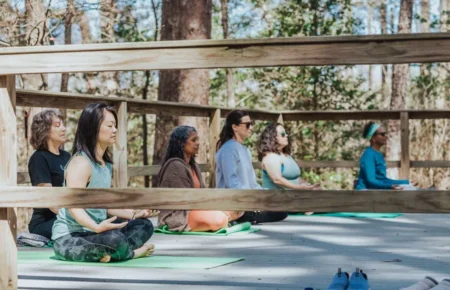
What to Expect at a Yoga Retreat: An Honest, Practical Guide
Affiliate Disclosure
We partner with retreat centers and booking platforms. When you book through our links, we may earn a commission at no extra cost to you. This supports our work and allows us to keep providing honest, in-depth reviews. Read our editorial policy
Table Of Content
- Affiliate Disclosure
- What a typical day at a yoga retreat looks like
- The yoga itself: what to expect in class
- Food and accommodation
- What’s typically included in the price
- How much does a yoga retreat cost?
- Do I need yoga experience?
- Going alone: is it weird?
- What to pack for a yoga retreat
- 5 mistakes first-timers make
- How to choose the right yoga retreat
- Coming home: what to expect after
- Frequently asked questions
- Ready to book?
You’ve been thinking about going on a yoga retreat. Maybe you’ve been scrolling through dreamy photos of open-air shalas in Bali, or a friend came back from one glowing. But underneath the appeal, there’s often a set of very practical questions: what actually happens all day? Do I need to be flexible? Will I be the only beginner? Is it weird to go alone?
This guide answers all of that — honestly, without the fluffy “transformative journey” language. We’ll walk through a typical day, what’s included in the price, what to pack, what most people get wrong, and how to choose a retreat that fits your experience level and budget.
Wat to browse yoga retreats directly? View yoga retreats here.
What a typical day at a yoga retreat looks like
Schedules vary by retreat, but most follow a similar rhythm. Mornings are active and structured, afternoons are free, and evenings wind down. Here’s a representative day at a 7-day yoga retreat:
| Time | Activity |
| 6:30 – 7:00 AM | Optional meditation or pranayama (breathwork) |
| 7:00 – 8:30 | Morning yoga class (usually the most active session) |
| 8:30 – 9:30 | Breakfast (often communal, usually vegetarian) |
| 9:30 – 12:00 | Free time, optional workshop, or excursion |
| 12:00 – 1:00 | Lunch |
| 1:00 – 4:00 | Free time (pool, beach, reading, spa, exploring) |
| 4:00 – 5:30 | Afternoon yoga class (usually gentler: yin, restorative) |
| 5:30 – 6:00 | Guided meditation or sound healing |
| 6:30 – 7:30 | Dinner |
| 8:00+ | Free time (some retreats offer evening activities: cacao ceremony, fire circle, kirtan) |
Note: Intensive retreats and teacher trainings have fuller schedules. Luxury wellness retreats tend to be more relaxed with fewer mandatory sessions. Always check the itinerary before booking.
The yoga itself: what to expect in class
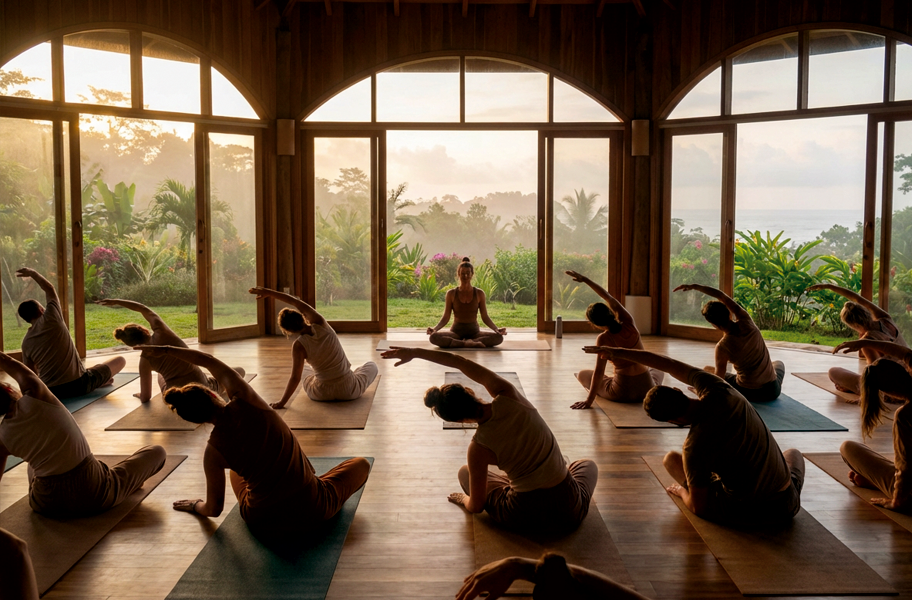
Most retreats offer two yoga sessions per day. The morning class is typically more dynamic (vinyasa, hatha, or ashtanga), while the afternoon or evening session is gentler (yin, restorative, or yoga nidra).
Class size varies widely. Boutique retreats may have 6–12 participants. Larger retreat centres can have 20–30. Smaller groups mean more personal attention and adjustments.
Level: Most retreats welcome all levels and offer modifications. The teacher will typically ask about injuries and experience at the start. You won’t be expected to do headstands on day one — or ever, if that’s not your thing.
Yoga styles you might encounter: Vinyasa (flowing sequences linked to breath), Hatha (slower, holding poses longer), Yin (deep passive stretches held for 3–5 minutes), Restorative (fully supported, deeply relaxing), Ashtanga (a fixed sequence, physically demanding), and Yoga Nidra (guided relaxation — you lie down, the teacher talks you through it). If a retreat lists a style you’re not familiar with, look it up before booking. The difference between vinyasa and yin, for example, is enormous.
Food and accommodation
Meals
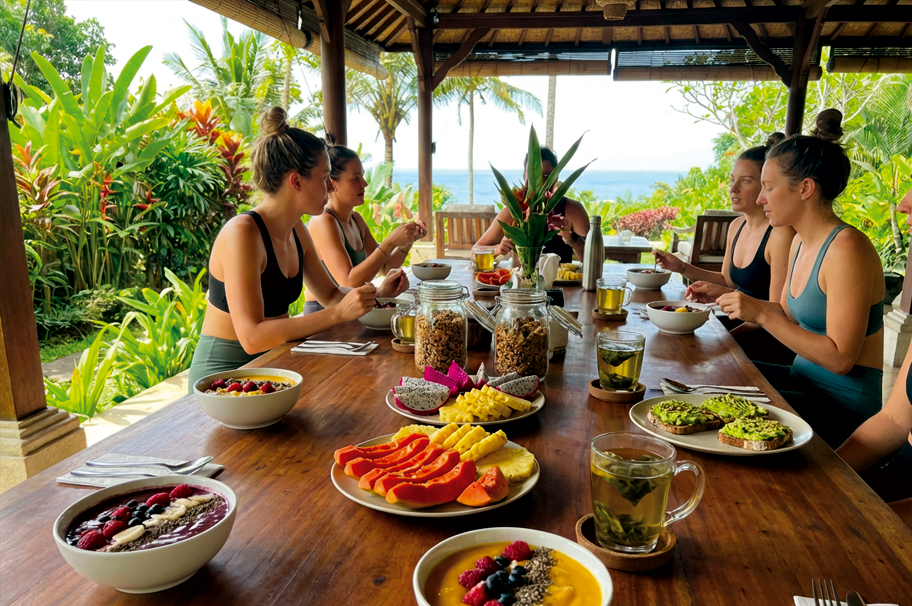
Most yoga retreats include meals — typically breakfast and dinner, sometimes all three. The food is almost always healthy and often vegetarian or vegan. Expect fresh fruit, whole grains, salads, and locally sourced ingredients. If you have dietary requirements (gluten-free, allergies), check with the retreat in advance. Most accommodate restrictions, but some smaller operations have limited flexibility.
Don’t expect huge buffets or gourmet dining at every retreat. Budget retreats may serve simple but nourishing food. Luxury retreats invest heavily in their kitchens. What matters more than presentation is whether the food supports your practice — you don’t want to feel heavy before a 90-minute class.
Rooms
Accommodation ranges from shared dormitory-style rooms (budget retreats) to private villas with pools (luxury retreats). Most mid-range retreats offer private rooms with en-suite bathrooms. Shared rooms are significantly cheaper and a good way to meet people, but consider whether you need privacy to fully relax. Some retreats offer both options at different price points.
What’s typically included in the price
This varies by retreat, so always check. As a general guideline:
Usually included: Accommodation, daily yoga classes, some or all meals, meditation sessions, use of retreat facilities.
Sometimes included: Airport transfers, one spa treatment, excursions or day trips, workshops (cooking, breathwork, journaling).
Usually extra: Additional spa treatments, private yoga sessions, surfing/diving lessons, laundry, alcoholic drinks.

How much does a yoga retreat cost?
The range is wide. Here’s a realistic breakdown for a 7-day retreat with accommodation and meals:
| Budget level | Price range | What to expect |
| Budget | €300 – €600 | Southeast Asia, India, Central America. Shared rooms, simple but clean. Good yoga, basic facilities. |
| Mid-range | €600 – €1,200 | Bali, Thailand, Portugal, Spain, Costa Rica. Private rooms, good food, pool or beach access. |
| Luxury | €1,200 – €3,000+ | High-end resorts, private villas, gourmet dining, spa included, small groups, premium locations. |
Tip: cost doesn’t always correlate with yoga quality. Some of the best teaching happens at budget retreats run by passionate, experienced teachers. Luxury retreats may offer a more comfortable experience, but the yoga isn’t necessarily better.
Do I need yoga experience?
No. The majority of yoga retreats welcome beginners. In fact, many attendees are there specifically because they want to start or restart a yoga practice in an immersive setting. The key is choosing a retreat that matches your level.
If you’re a complete beginner: Look for retreats that explicitly state “all levels” or “beginner-friendly.” Avoid retreats labelled as “advanced,” “ashtanga intensive,” or “yoga teacher training” — these assume a foundation.
If you already practice: You’ll benefit from more intensive retreats or those focused on a specific style (yin, ashtanga, kundalini). The retreat becomes about depth rather than introduction.
One thing to keep in mind: flexibility is not a prerequisite. You don’t need to touch your toes. You don’t need special clothing. Teachers are trained to offer modifications. The person on the mat next to you is usually far more focused on their own practice than on watching yours.
Going alone: is it weird?
Not at all. Roughly 60–70% of yoga retreat guests travel solo. It’s one of the most common ways people attend. The shared schedule — practising together, eating together, having free time in the same space — creates natural connection without forcing it. Many people say the friendships they made on retreat surprised them.
If anything, going alone removes the social dynamic of travelling with someone you know. You’re free to fully engage with the experience on your own terms — attend what you want, skip what you don’t, rest when you need to.
What to pack for a yoga retreat
Essentials: Comfortable, breathable yoga clothing (2–3 sets). A light layer for cooler mornings or air-conditioned spaces. Swimwear if the retreat has a pool or beach. Sandals or flip-flops. Sunscreen and insect repellent (especially in tropical locations). A reusable water bottle.
Nice to have: Your own yoga mat (most retreats provide them, but some people prefer their own). A journal and pen. A book for downtime. Earplugs if you’re in a shared room. A small torch/flashlight for retreats in nature.
Leave behind: Expectations of perfection. A packed schedule of sightseeing. Anything you’d bring for a “productive” holiday. The point is to slow down.
5 mistakes first-timers make
1. Choosing by price alone. The cheapest retreat isn’t always the best value. Read reviews carefully, check what’s included, and look at the teacher’s background. A €400 retreat with an inexperienced teacher and thin content is worse value than a €700 retreat with strong instruction and good food.
2. Overpacking the schedule. Some people try to combine a retreat with intensive sightseeing, arriving jetlagged and exhausted. Give yourself at least a day before and after the retreat to travel and settle.
3. Expecting a resort experience. Most yoga retreats are not hotels. The accommodation may be simpler than you’re used to. Wifi might be spotty. The food is healthy, not gourmet. If luxury matters to you, choose accordingly — but know that simplicity is part of the point.
4. Not reading the retreat description carefully. A “yoga and surf” retreat is very different from a “yoga and meditation” retreat. A detox retreat is very different from a relaxation retreat. The details matter. Check the daily schedule, the yoga style, the group size, and the cancellation policy.
5. Pushing too hard in class. You’ll be doing more yoga than usual, and your body needs time to adjust. Listen to your body, take rest days if you need them, and don’t compare yourself to anyone else in the room.
How to choose the right yoga retreat
There are thousands of yoga retreats worldwide. These filters help narrow down what’s right for you:
- Yoga style and level: Match the retreat to your experience and what you want to practice.
- Duration: 3–4 days for a first taste. 7 days for a meaningful reset. 10+ days for deep immersion.
- Location and setting: Beach, jungle, mountains, or countryside? Tropical or temperate? The setting shapes the experience.
- Group size: Small groups (under 12) offer intimacy and personal attention. Larger groups can feel more social and energetic.
- Teacher credentials: Look for teachers with recognized training (200-hour or 500-hour YTT minimum) and years of teaching experience. Read reviews specifically about the instruction, not just the location.
- Reviews: Check multiple platforms. Look for specific, detailed reviews rather than generic praise. Patterns in feedback (“food was amazing” or “schedule was too packed”) are more reliable than any single review.
Browse yoga retreats by style, destination, and budget
Coming home: what to expect after
The first few days after a retreat can feel strange. You’ve been in a quiet, structured, nourishing environment — and now you’re back in traffic, emails, and noise. This is normal.
A few ways to extend the benefits: maintain a short daily practice (even 15 minutes matters), eat well for the first week back, resist the urge to immediately fill your schedule, and be patient with the contrast. Some people feel euphoric. Others feel irritable or emotional. Both are valid responses to having slowed down long enough to actually feel something.
Frequently asked questions
What if I’m not flexible enough for a yoga retreat?
Flexibility is a result of yoga, not a prerequisite. Every pose has modifications. Teachers expect a range of abilities and will guide you accordingly. No one is watching you or judging your range of motion.
Can I go on a yoga retreat if I’ve never done yoga before?
Yes. Many retreats are designed specifically for beginners. Look for “all levels welcome” or “beginner-friendly” in the description. A retreat is actually one of the best ways to start, because you get immersive, daily instruction in a supportive environment.
Are yoga retreats only for women?
No. While some retreats are women-only (and explicitly marketed as such), most are open to all genders. The demographic skews slightly female, but male attendees are common and welcome. Co-ed retreats and men’s retreats also exist.
Do I need to bring my own yoga mat?
Most retreats provide mats and props (blocks, straps, bolsters). If you have a mat you love and don’t mind travelling with it, bring it. Otherwise, the retreat’s mats are fine.
How far in advance should I book?
Popular retreats in peak season (January, summer months) can fill up 2–3 months in advance. Smaller, boutique retreats fill faster than large centres. Booking 4–8 weeks ahead is generally safe. Last-minute deals sometimes appear for retreats that haven’t filled.
Will there be wifi?
Usually yes, at least in common areas. Some retreats encourage a digital detox and limit wifi access to specific times or areas. If connectivity matters to you (remote work, staying in touch), check the retreat’s policy beforehand.
Can I skip sessions if I’m tired?
Almost always yes. Most yoga retreats are not mandatory-attendance environments. Rest is part of the practice. If your body tells you to skip the afternoon class and take a nap, that’s a valid choice. Intensive programmes and teacher trainings may have stricter attendance expectations.
Is alcohol served at yoga retreats?
Some retreats are completely alcohol-free. Others serve wine or cocktails with dinner. A few luxury retreats have full bars. If this matters to you either way, check in advance. The general culture at most yoga retreats leans toward moderation.
Ready to book?
A yoga retreat isn’t about escaping your life. It’s about giving yourself enough space and quiet to actually be in it — to feel your body, settle your mind, and remember what it’s like to not be constantly “on.” Whether you go for a weekend or a full week, the pause itself is the point.
> Browse yoga retreats worldwide
Ready to experience it for yourself?
Browse our curated collection of yoga retreats worldwide—from gentle wellness escapes to transformative immersions.