How to Prepare for a Detox Retreat: Pre-Cleanse Tips

Affiliate Disclosure
We partner with retreat centers and booking platforms. When you book through our links, we may earn a commission at no extra cost to you. This supports our work and allows us to keep providing honest, in-depth reviews. Read our editorial policy
Table Of Content
- Affiliate Disclosure
- Introduction
- Why Preparation Matters
- The 4-Week Preparation Timeline
- How to Prepare for a Detox Retreat: Dietary Guidelines
- Caffeine Tapering: The Critical Step
- Mental and Emotional Preparation
- Practical Preparation: What to Pack
- Life Logistics: Setting Up for Disconnection
- Physical Preparation: Body Readiness
- Supplements and Medications
- The Week Before: Final Checklist
- Common Preparation Mistakes to Avoid
- Special Considerations
- The Day Before Departure
- FAQ: How to Prepare for a Detox Retreat
- Final Thoughts
Introduction
You’ve booked your detox retreat. Dates are confirmed, deposit paid, anticipation building. Now the real question: how do you prepare for a detox retreat properly?
How you prepare for a detox retreat in the weeks and days before arrival can make the difference between struggling through your cleanse and flowing through it. Proper preparation reduces withdrawal symptoms, minimizes detox discomfort, and helps you hit the ground running from day one.
Think of it like training for a marathon. You wouldn’t show up on race day having never run before. The same principle applies here—your body needs time to adjust, and your mind needs time to prepare.
This guide gives you a complete pre-cleanse protocol. We’ll cover what to eat (and avoid), how to taper off substances that cause withdrawal, what to pack, how to prepare mentally, and how to set up your life so you can fully disconnect. Follow these steps, and you’ll arrive at your retreat ready to receive maximum benefit from the experience.
Let’s get you prepared.
Why Preparation Matters
Skipping preparation is the most common mistake first-time retreat guests make. Here’s what happens when you don’t prepare for a detox retreat properly:
Without preparation:
- Severe caffeine withdrawal headaches (days 1–3)
- Intense sugar cravings and mood swings
- Digestive shock from sudden dietary change
- Difficulty sleeping in new environment
- Mental resistance and wanting to quit
- Missing the first few days to discomfort
With proper preparation:
- Mild or no withdrawal symptoms
- Smoother transition into cleanse
- Better sleep from night one
- Mental readiness for the journey
- Maximizing every day of your investment
- Deeper results in the same timeframe
The difference is significant. A 7-day retreat with proper preparation often delivers better results than a 10-day retreat without it.
The 4-Week Preparation Timeline
Here’s your complete timeline to prepare for a detox retreat effectively:
Weeks 4–3 Before: Foundation Phase
Focus: Begin dietary shifts and lifestyle adjustments
Dietary changes:
- Reduce processed foods by 50%
- Cut back on sugar and refined carbohydrates
- Increase vegetable intake (aim for 5+ servings daily)
- Start drinking more water (8+ glasses)
- Reduce alcohol to weekends only (or less)
Lifestyle adjustments:
- Begin waking up 30 minutes earlier
- Establish a simple morning routine
- Reduce screen time in evenings
- Start a basic journaling practice (5 minutes daily)
Substance tapering (start now if heavy user):
- If drinking 3+ coffees daily: reduce to 2
- If drinking alcohol daily: reduce to every other day
- If smoking: begin reduction plan
Weeks 2–1 Before: Intensification Phase
Focus: Deepen dietary changes and complete substance tapering
Dietary changes:
- Eliminate processed foods completely
- Remove refined sugar
- Cut out fried foods
- Reduce or eliminate dairy
- Reduce or eliminate red meat
- Eat primarily whole foods: vegetables, fruits, whole grains, legumes
Substance tapering:
- Coffee: reduce to 1 cup (or switch to green tea)
- Alcohol: eliminate completely
- Smoking: reduce to minimum (ideally quit)
Mental preparation:
- Set clear intentions for your retreat
- Begin digital detox practice (phone-free evenings)
- Read about detox to understand what’s coming
- Start longer meditation sessions (10–15 minutes)
The Final Week: Pre-Cleanse Phase
Focus: Final preparation and pre-cleanse eating
Days 7–4 before:
- Eat clean, whole foods only
- Eliminate caffeine completely (switch to herbal tea)
- No alcohol
- Increase raw foods (salads, fruits, smoothies)
- Continue hydration (add lemon water)
- Finalize packing and logistics
Days 3–1 before:
- Eat light, easily digestible meals
- Consider a day of just smoothies and soups
- Complete all work obligations
- Set up out-of-office messages
- Final packing check
- Early bedtimes

How to Prepare for a Detox Retreat: Dietary Guidelines
What you eat before your retreat directly impacts your experience. Here’s your complete dietary guide to prepare for a detox retreat.
Foods to Increase
| Food Category | Examples | Why |
|---|---|---|
| Leafy greens | Spinach, kale, arugula, chard | Alkalizing, nutrient-dense, supports liver |
| Vegetables | Broccoli, cauliflower, carrots, beets | Fiber, vitamins, gentle on digestion |
| Fresh fruits | Berries, apples, citrus, papaya | Enzymes, hydration, natural sugars |
| Whole grains | Quinoa, brown rice, oats | Sustained energy, fiber, B vitamins |
| Legumes | Lentils, chickpeas, black beans | Protein, fiber, grounding |
| Healthy fats | Avocado, olive oil, nuts, seeds | Brain function, satiety, nutrient absorption |
| Fermented foods | Sauerkraut, kimchi, kefir | Gut health, probiotics |
| Herbal teas | Peppermint, ginger, chamomile | Hydration, digestive support |
Foods to Reduce and Eliminate
| Food Category | When to Reduce | When to Eliminate |
|---|---|---|
| Processed foods | 4 weeks before | 2 weeks before |
| Refined sugar | 4 weeks before | 2 weeks before |
| Fried foods | 3 weeks before | 2 weeks before |
| Red meat | 2 weeks before | 1 week before |
| Dairy | 2 weeks before | 1 week before |
| Gluten (optional) | 2 weeks before | 1 week before |
| Caffeine | 2 weeks before (taper) | 1 week before |
| Alcohol | 2 weeks before | 2 weeks before |
Sample Pre-Cleanse Day (Final Week)
Morning:
- Warm lemon water upon waking
- Green smoothie (spinach, banana, berries, plant milk)
- Herbal tea
Midday:
- Large salad with mixed greens, vegetables, avocado
- Quinoa or brown rice
- Olive oil and lemon dressing
Afternoon:
- Fresh fruit
- Handful of raw nuts
- Herbal tea or water
Evening:
- Vegetable soup or steamed vegetables
- Small portion of legumes or fish (if eating animal protein)
- Herbal tea
Before bed:
- Chamomile tea
- No food 3 hours before sleep
Caffeine Tapering: The Critical Step
Caffeine withdrawal causes the most discomfort during detox retreats. According to the Cleveland Clinic, symptoms include headaches, fatigue, irritability, and difficulty concentrating—exactly what you don’t want during your retreat.
Why Caffeine Withdrawal Is So Difficult
- Caffeine is physically addictive
- Withdrawal symptoms peak 24–48 hours after last dose
- Headaches can be severe and debilitating
- Symptoms can last 2–9 days
- Withdrawal during retreat wastes precious cleansing time
The Caffeine Tapering Protocol
If you drink 3+ cups of coffee daily:
| Timeline | Action |
|---|---|
| 4 weeks before | Reduce to 2 cups |
| 3 weeks before | Reduce to 1.5 cups |
| 2 weeks before | Reduce to 1 cup |
| 10 days before | Switch to half-caf or green tea |
| 1 week before | Green tea only (1–2 cups) |
| 3 days before | Herbal tea only |
If you drink 1–2 cups daily:
| Timeline | Action |
|---|---|
| 2 weeks before | Reduce to 1 cup |
| 10 days before | Switch to green tea |
| 1 week before | Green tea only |
| 3 days before | Herbal tea only |
Managing Withdrawal Symptoms During Tapering
- Stay well hydrated (dehydration worsens headaches)
- Get extra sleep
- Take pain reliever if needed (during tapering, not at retreat)
- Exercise gently (increases natural energy)
- Be patient—it’s temporary
Mental and Emotional Preparation
Physical preparation is only half the equation. Here’s how to prepare for a detox retreat mentally and emotionally.
Setting Intentions
Your intention is your anchor during challenging moments. Take time to clarify:
Questions to journal:
- Why am I doing this retreat?
- What do I hope to release or let go of?
- What do I want to gain or cultivate?
- How do I want to feel when I leave?
- What am I willing to do differently after?
Example intentions:
- “I intend to reset my relationship with food”
- “I intend to create space for clarity about my next chapter”
- “I intend to prove to myself I can do hard things”
- “I intend to release the stress I’ve been carrying”
- “I intend to reconnect with my body’s wisdom”
Write your intention down. Bring it with you.
Preparing for Discomfort
Detox isn’t always comfortable. Mentally prepare by:
Accepting in advance:
- There will be challenging moments
- You may want to quit (this is normal)
- Discomfort is temporary and purposeful
- The difficult parts often precede breakthroughs
Building mental resilience:
- Practice sitting with discomfort (cold showers, delayed gratification)
- Develop a mantra for hard moments (“This too shall pass”)
- Visualize yourself completing the retreat successfully
- Remember your “why” when motivation wavers
Emotional Readiness
Detox can surface emotions. Prepare by:
- Acknowledging that emotional release may happen
- Giving yourself permission to feel whatever arises
- Understanding that tears, anger, or grief are normal
- Knowing that emotional release is part of healing
- Trusting the process and the support available
Research from Harvard Health confirms the gut-brain connection—physical cleansing can trigger emotional processing.
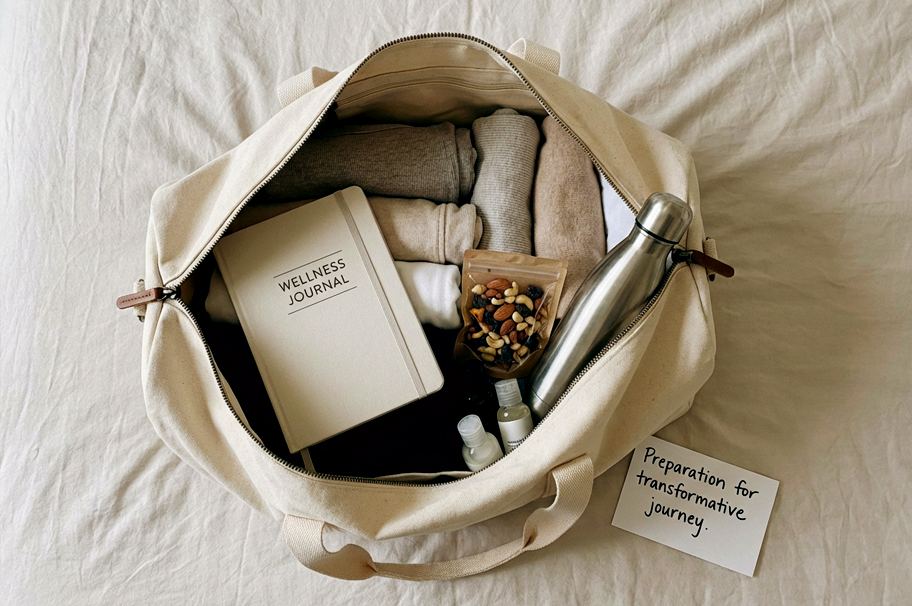
Practical Preparation: What to Pack
Packing right helps you prepare for a detox retreat without stress.
Clothing Essentials
| Item | Quantity | Notes |
|---|---|---|
| Comfortable yoga/lounge clothes | 4–5 sets | Loose, breathable fabrics |
| Layers (sweater, light jacket) | 2–3 | Temperatures vary; you may feel cold during fasting |
| Swimsuit | 1–2 | For pools, saunas, water treatments |
| Walking shoes | 1 pair | Comfortable for nature walks |
| Sandals/flip-flops | 1 pair | For around the retreat |
| Sleepwear | 2 sets | Comfortable, natural fabrics |
| Warm socks | 3–4 pairs | Feet often get cold during detox |
| Hat/sun protection | 1 | For outdoor activities |
Wellness Items
| Item | Purpose |
|---|---|
| Journal and pen | Daily reflection, intention work |
| Book(s) | Quiet time reading (choose uplifting content) |
| Reusable water bottle | Staying hydrated |
| Tongue scraper | Morning detox routine |
| Dry brush | Skin detox support |
| Essential oils | Relaxation (lavender, peppermint) |
| Eye mask | Better sleep |
| Earplugs | Sound-sensitive sleepers |
What NOT to Pack
- Work laptop (leave it home if possible)
- Snacks or food (trust the program)
- Excessive electronics
- Negative or heavy reading material
- Too many clothes (you’ll live simply)
Life Logistics: Setting Up for Disconnection
To fully benefit from your retreat, you need to disconnect. Here’s how to prepare your life:
Work Preparation
2 weeks before:
- Inform colleagues of your absence
- Begin delegating tasks
- Set project deadlines before departure
- Identify backup contacts for emergencies
1 week before:
- Complete critical deliverables
- Brief your backup thoroughly
- Set expectations for response times
- Prepare out-of-office message
Out-of-office message example:
“I’m currently on a wellness retreat with limited connectivity. I’ll respond to emails upon my return. For urgent matters, please contact [backup name] at [email]. Thank you for your patience.”
Home and Family
- Arrange childcare or pet care
- Prepare meals for family if needed
- Handle bills and obligations due during absence
- Give emergency contact information to someone trusted
- Set up mail collection if away long
Digital Preparation
Decide your digital boundaries:
- Complete disconnection (recommended)
- Limited check-ins (once daily, 15 minutes)
- Emergency-only contact
Prepare accordingly:
- Download any needed content (meditation apps, music) for offline use
- Set up emergency contact protocol with family
- Remove work apps from phone
- Consider leaving phone in room during activities
Physical Preparation: Body Readiness
Beyond diet, prepare your body physically to prepare for a detox retreat optimally.
Movement and Exercise
4–2 weeks before:
- Maintain your regular exercise routine
- Add gentle stretching or yoga if not already practicing
- Focus on movement that feels good, not punishing
1 week before:
- Reduce intensity of workouts
- Focus on gentle movement: walking, swimming, yoga
- Prioritize rest and recovery
- Don’t start any new intense exercise programs
Why reduce intensity:
- Your body needs energy for pre-cleanse
- Avoid arriving depleted or injured
- Gentle movement supports detoxification
- Rest prepares you for the retreat schedule
Sleep Optimization
Good sleep before your retreat sets you up for success:
2 weeks before:
- Begin moving bedtime earlier (15 minutes every few days)
- Aim for 7–9 hours nightly
- Reduce screen time before bed
- Create a calming bedtime routine
1 week before:
- Bedtime by 10 PM if possible
- No screens 1 hour before sleep
- No caffeine after noon (you should be off it by now)
- Cool, dark sleeping environment
Hydration
Proper hydration supports every aspect of preparation:
Daily targets:
- Minimum 8 glasses (2 liters) of water
- More if exercising or in hot climate
- Start each day with warm lemon water
- Reduce or eliminate sodas and sugary drinks
Signs you’re well-hydrated:
- Urine is light yellow or clear
- You’re not constantly thirsty
- Skin feels supple
- Energy levels are stable
Supplements and Medications
Discuss with Your Retreat
Before arrival, communicate with your retreat about:
- All prescription medications you take
- Supplements you currently use
- Any over-the-counter medications you rely on
- Allergies or sensitivities
Most retreats will advise on:
- Which medications to continue
- Which supplements to pause
- What they provide on-site
- Any contraindications with their program
Common Pre-Cleanse Supplements
Some people add supportive supplements during preparation (consult healthcare provider):
| Supplement | Purpose | Timing |
|---|---|---|
| Probiotics | Gut health support | 2–4 weeks before |
| Milk thistle | Liver support | 2–4 weeks before |
| Magnesium | Relaxation, bowel regularity | 2 weeks before |
| Vitamin C | Immune support, antioxidant | 2 weeks before |
| Digestive enzymes | Digestive support | 1–2 weeks before |
Note: Many retreats prefer you arrive without supplements so they can assess your baseline. Check with your specific retreat.
Medications to Discuss
If you take any of the following, discuss with both your doctor and the retreat:
- Blood pressure medications
- Diabetes medications (blood sugar will change during fasting)
- Antidepressants or anti-anxiety medications
- Blood thinners
- Thyroid medications
- Any medication affected by food intake
The Week Before: Final Checklist
Use this checklist to ensure you’re fully ready:
Logistics
- Travel booked and confirmed
- Retreat confirmation and details printed/saved
- Travel insurance arranged (if applicable)
- Emergency contacts shared with family
- Out-of-office message prepared
- Work handover complete
- Home/pet/child care arranged
- Bills paid or scheduled
Physical Preparation
- Caffeine-free for 3+ days
- Alcohol-free for 2+ weeks
- Eating clean, whole foods
- Well-hydrated
- Sleep schedule adjusted
- Exercise intensity reduced
Packing
- Comfortable clothing packed
- Wellness items (journal, water bottle, etc.)
- Medications and approved supplements
- Travel documents
- Retreat confirmation details
- Intention written and packed
Mental/Emotional
- Intention clarified and written
- Expectations realistic
- Prepared for discomfort
- Support system informed
- Mindset positive and open
Common Preparation Mistakes to Avoid
Learn from others’ mistakes when you prepare for a detox retreat:
Mistake 1: The “Last Supper” Binge
What people do: Eat everything they’ll “miss” the week before—pizza, ice cream, alcohol, coffee.
Why it backfires: Makes the transition brutal. Your body has to detox from the binge AND adjust to the cleanse.
Instead: Gradually clean up your diet. The cleaner you arrive, the easier your retreat.
Mistake 2: Skipping Caffeine Tapering
What people do: Drink coffee until the morning they leave.
Why it backfires: Severe withdrawal headaches days 1–3, missing the benefits of early retreat days.
Instead: Follow the tapering protocol. Be caffeine-free at least 3 days before arrival.
Mistake 3: Over-Scheduling Before Departure
What people do: Cram work and social obligations until the last minute.
Why it backfires: Arrive exhausted, stressed, and unable to relax into the experience.
Instead: Clear your schedule the final 2–3 days. Rest before you arrive.
Mistake 4: Not Communicating Health Issues
What people do: Hide health conditions or medications from the retreat.
Why it backfires: Dangerous. Programs need this information to keep you safe.
Instead: Full disclosure on intake forms and during consultation. No judgment—only safety.
Mistake 5: Unrealistic Expectations
What people do: Expect complete transformation, dramatic weight loss, or all problems solved.
Why it backfires: Disappointment when reality doesn’t match fantasy.
Instead: Set realistic intentions. Trust the process. Be open to whatever emerges.
Special Considerations
First-Time Detoxers
If this is your first detox retreat:
- Start preparation earlier (4+ weeks)
- Be more gradual with dietary changes
- Consider a shorter retreat (5–7 days)
- Choose a retreat with strong support structure
- Read about what to expect at a detox retreat to reduce anxiety
Experienced Detoxers
If you’ve done retreats before:
- You may need less preparation time
- Focus on areas where you’ve struggled previously
- Consider deeper or longer programs
- Use preparation time for intention-setting
- Don’t get overconfident—respect the process
Those with Health Conditions
If you have any health conditions:
- Consult your doctor before booking
- Share full health history with retreat
- Follow medical advice on medications
- Choose retreats with medical supervision if needed
- Don’t attempt extreme protocols without guidance
According to the National Center for Complementary and Integrative Health, people with certain conditions should approach detox programs with caution and medical guidance.
The Day Before Departure
Your final day of preparation:
Morning
- Light breakfast (smoothie or fruit)
- Gentle movement (walk or stretching)
- Final packing check
- Confirm travel details
Afternoon
- Light lunch (salad or soup)
- Rest or gentle activity
- Tie up any last loose ends
- Begin mental transition
Evening
- Very light dinner (soup or smoothie)
- No screens after 7 PM
- Relaxing bath or shower
- Early bedtime (by 9 PM if possible)
- Read your intention before sleep
Mindset
- Release attachment to home and routine
- Embrace the adventure ahead
- Trust your preparation
- Feel excited, not anxious
- Know that you’re ready
FAQ: How to Prepare for a Detox Retreat
How far in advance should I start preparing? Ideally, begin 4 weeks before your retreat. This gives adequate time for gradual dietary changes and caffeine tapering without shock to your system. If you have less time, do what you can—even 1–2 weeks of preparation helps significantly. The caffeine taper is most critical; prioritize that if time is limited.
What if I can’t give up coffee completely before the retreat? At minimum, reduce to one cup and switch to green tea for the final week. Some caffeine withdrawal is manageable, but going from 3+ cups to zero causes severe symptoms. If you absolutely cannot taper fully, inform your retreat—some offer gentle caffeine support for the transition.
Should I do a pre-cleanse fast before arriving? A day or two of lighter eating (smoothies, soups, raw foods) is helpful. A full fast before the retreat is usually unnecessary and may leave you depleted for arrival. Follow your retreat’s specific pre-arrival guidelines if provided—some programs have detailed protocols.
What if I have dietary restrictions or allergies? Communicate all dietary needs when booking and again before arrival. Quality retreats accommodate allergies, intolerances, and preferences (vegan, gluten-free, etc.). Don’t assume they know—be explicit and confirm they can meet your needs.
Can I exercise normally during preparation? Maintain normal exercise during weeks 4–2, then reduce intensity in the final week. Avoid starting new intense programs right before your retreat. Gentle movement (walking, yoga, swimming) is ideal in the final days. You want to arrive rested, not depleted.
What if work won’t let me fully disconnect? Set clear boundaries and expectations. Brief check-ins (once daily, 15 minutes) are better than constant connectivity. Consider: if you truly cannot unplug for one week, that itself reveals something about your work-life balance worth examining. Most “emergencies” can wait or be handled by others.
Should I tell people I’m going to a detox retreat? Share with those who need to know (family, close friends, work). You don’t owe anyone an explanation. Some people face judgment or unsolicited opinions—share selectively if that’s a concern. Supportive people will encourage you; others’ opinions don’t matter.
What if I’m nervous about the retreat? Nervousness is completely normal and even healthy—it shows you’re taking this seriously. Prepare thoroughly (it builds confidence), read about what to expect, connect with the retreat if you have questions, and remember that thousands of people do this successfully. Your nervousness will transform into excitement.
Final Thoughts
The way you prepare for a detox retreat shapes your entire experience. Proper preparation isn’t about perfection—it’s about giving yourself the best possible foundation for transformation.
Every step you take in the weeks before arrival is an act of self-care. Every coffee you skip, every vegetable you eat, every early bedtime—these are investments in your future self. The you who arrives at the retreat will thank the you who prepared.
Remember: the retreat itself is just the container. Your preparation, your intention, your willingness to show up fully—these determine what you receive.
You’ve done the research. You have the plan. Now trust yourself to follow through.
Your transformation begins not when you arrive at the retreat, but right now, with your next choice.
Make it a good one.
Ready to book your detox retreat?
We’ve curated the best detox retreats worldwide—programs that support your preparation and guide your transformation. Find the perfect one for your journey.